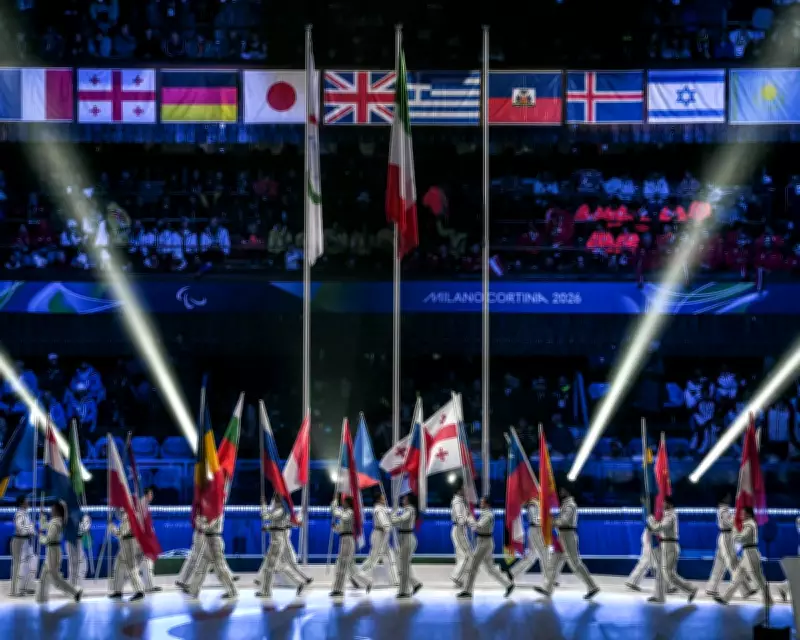
Milano Cortina 2026 Winter Paralympics Wraps Up with Historic Achievements and Political Undertones
The 2026 Winter Paralympic Games concluded in Cortina D'Ampezzo with a vibrant closing ceremony themed "Italian Souvenir," featuring performances by dancers and musicians, including Sofia Tansella, a young actress with spinal muscular atrophy. This event symbolized the broader aspirations of the Paralympic movement, which celebrated significant milestones during the two-week competition in Milano Cortina.
Record-Breaking Participation and Audience Engagement
Marking the 50th anniversary of the first Paralympics, these Games achieved unprecedented success. A record 55 countries competed, with 27 nations winning medals and 18 securing gold medals, tying the highest number in history. Female participation reached a new peak with 160 athletes, an 18% increase from the previous Winter Games and representing 26% of the total 611 competitors.
Audience interest surged dramatically, with para ice hockey tournaments drawing the largest crowds in the sport's history and slopes in Cortina bustling with spectators. Television broadcasts reached 126 countries free-to-air, while YouTube streaming generated approximately 414 million views, a 67% increase over the entire 2024 content, which included the Paris Summer Paralympics.
Intense Competition and Athletic Excellence
The level of competition was notably high, with no world records broken, partly due to challenging weather conditions, including fog on the final day. However, this underscored the parity among athletes, with few dominating their events. Standout performers included American para cross-country skiers Oksana Masters and Jake Adicoff, along with Austrian alpine skier Veronika Aigner, each winning four gold medals. Veronika's brother, Johannes Aigner, also secured two golds in a tight contest with Italian favorite Giacomo Bertagnolli, who won five medals in five races.
IPC President Andrew Parsons humorously noted that if the Aigners were a nation, they would have ranked fifth in the medal table. He emphasized, "When we let the athletes stop on the field of play, this is when the Paralympic movement shines the brightest. And I think we allow that to happen here."
Political Controversy and Russian Involvement
Despite the sporting achievements, the Games were overshadowed by political tensions due to Russia's participation. The IPC's decision to allow Russian athletes to compete led to a boycott of the closing ceremony by Ukraine, along with several other Central and Eastern European countries. Ukraine, a long-standing participant in the Paralympics for three decades, felt marginalized by this move.
Russia finished third in the medal standings, with its anthem played frequently as its six invited athletes won eight gold medals. In his final Games as president, Parsons addressed the controversy, advocating for sport as a unifying force. He stated, "I think sport should be a movement, [where] everyone is welcome, everyone is invited, and no one has to explain or have to pay for the acts of others." When questioned about Russia's inclusion, Parsons pointed to the medal table, noting that other top-five countries, such as China and the USA, are also involved in conflicts, highlighting the complex geopolitical landscape.
Future Directions and Legacy
Parsons, who will step down in 2029, expressed ambitions to expand the Winter Paralympic program beyond its current six sports. Potential additions include para bobsleigh and skating, with a strong focus on introducing women's ice hockey. He emphasized the need for greater female representation, citing that only one female athlete, Japan's Fukunishi Akari, participated in this year's mixed team event. Parsons pledged, "We will push really hard. If not in 2030, for sure in 2034."
The Milano Cortina Games demonstrated the Paralympic movement's growth in competitiveness and global reach, yet they also revealed ongoing challenges in balancing sport with political realities, setting the stage for future developments in disability sports.