Evonne Goolagong Cawley Day Celebrates Indigenous Culture at Australian Open
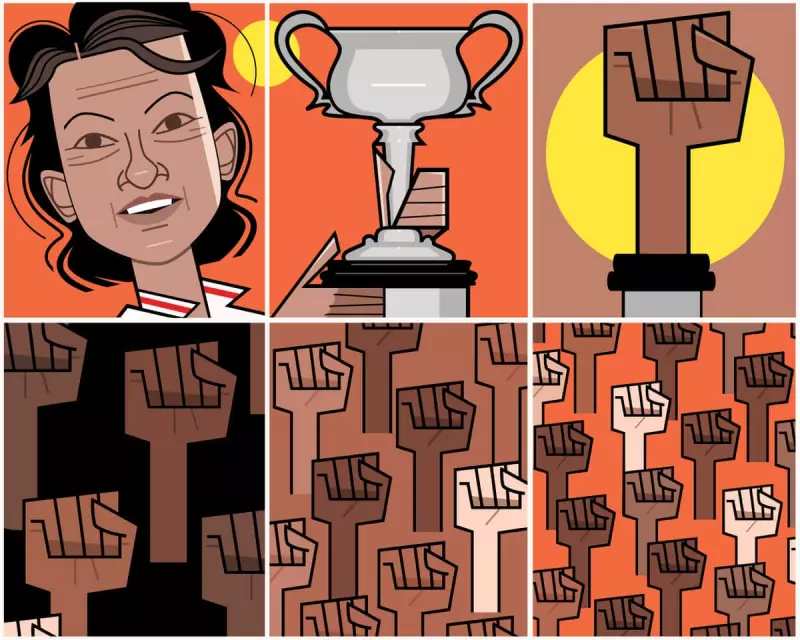
The Australian Open has dedicated a special day to honour Evonne Goolagong Cawley, recognising her lifelong advocacy for Indigenous peoples in sport. This annual event, now in its fifth year, transforms the Melbourne Park precinct into a vibrant celebration of First Nations culture and heritage.
A Scenic Path Symbolising Sport's Equality Journey
The riverside approach to the Australian Open courts has become more than just a thoroughfare for tennis fans. The concrete pathway features an artistic representation of eels migrating along the Yarra River, paying homage to the traditional food source of the Wurundjeri people. This symbolic artwork sets the tone for the tournament's commitment to acknowledging Australia's Indigenous heritage.
On Evonne Goolagong Cawley Day, the celebration moves inside the tennis complex with a packed schedule of cultural activities. These include traditional smoking ceremonies on the steps of Margaret Court Arena, question-and-answer sessions with Olympic champion Cathy Freeman, and performances from Indigenous artists. All ball children participating in the day's events come from tennis programmes specifically designed for Indigenous communities.
Goolagong Cawley's Enduring Legacy
Although the 74-year-old tennis legend was unable to attend this year's celebration due to illness, her influence remains powerfully present. A recent television drama about her life has highlighted not just her remarkable journey from rural Australia to Grand Slam success, but also her ongoing role as mentor and advocate for younger generations of Indigenous athletes.
Rob Hyatt, an educator with the Koorie Heritage Trust who participated in the day's events, emphasises the importance of connecting sport with cultural identity. "When participation supports their Aboriginality and identity, that can really encourage them to stick in sport," he explains. "We don't want to see drop-offs at certain ages."
The Persistent Challenge of Racism in Australian Sport
Despite these positive initiatives, Australian sport continues to grapple with systemic racism. Recent studies reveal troubling statistics about racial discrimination at both professional and community levels. A Sport Integrity Australia report found that 43% of athletes hesitate to report racism when they witness it, while research from Victoria University indicates more than half of those surveyed have either experienced or witnessed racism in community sports settings.
High-profile incidents in Australian rules football have exposed deep-seated issues within clubhouse cultures. The case of Taylor Walker's racial slur against teammate Robbie Young in 2021, and the subsequent public reaction, demonstrated how perpetrators can sometimes be reframed as victims in public discourse.
Moving Beyond Symbolic Gestures
Dr Franka Vaughan, a researcher studying racism in sport, acknowledges the value of events like Evonne Goolagong Cawley Day while emphasising the need for more substantial change. "Representation matters: to see someone like her highlighted is really important," she states. "Still, the question is: how do we go beyond the symbolic nature of that and transform our systems?"
Sports sociologist Ramon Spaaij argues that meaningful progress requires structural intervention. "If you want access to public investment in your sport, there should be conditions you have to comply with," he suggests, pointing to the need for stronger accountability mechanisms.
A Multi-Faceted Approach Required
As visitors enter Melbourne Park through the Birrarung Marr entrance, they pass an installation of five spears and shields representing the Kulin Nation's language groups. Each spear features a unique point designed for different purposes - a fitting metaphor for the varied approaches needed to address racism in Australian sport.
While inclusion policies and reconciliation action plans exist, their effectiveness depends entirely on individual clubs' commitment to implementation. The Australian Football League Players' Association reported last year that more than half of Indigenous players remained dissatisfied with how racism incidents were handled, indicating that current measures often focus on crisis management rather than prevention.
The Australian Open's celebration of Evonne Goolagong Cawley represents an important step toward greater inclusivity in tennis. However, as experts consistently emphasise, combating deeply entrenched racism requires coordinated efforts across all levels of Australian sport - from grassroots community clubs to professional leagues. Only through sustained, structural change can meaningful progress toward genuine equality be achieved.