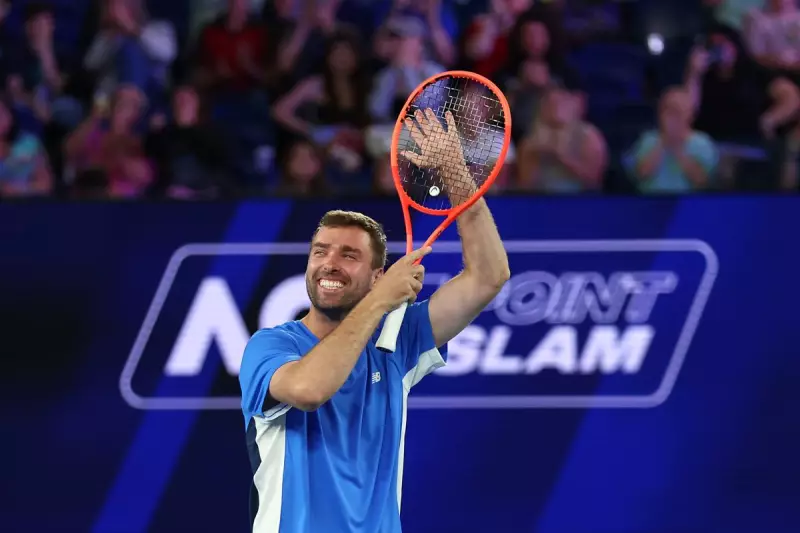
While the main draw of the 2026 Australian Open is just beginning, the tournament's most captivating story may have already been written. Before a single competitive ball was struck, a little-known Sydney tennis coach, Jordan Smith, secured a life-changing A$1 million prize by winning the One Point Slam.
The Spectacle That Delivered Substance
The One Point Slam, a made-for-TV event featuring a mix of professionals, celebrities, and personalities, seemed to epitomise modern sport's drift towards pure entertainment. With a punchy prize fund and a format designed for viral social media clips, it appeared to be another sign of the times. Yet, its outcome delivered a powerful, old-fashioned narrative.
Smith, a qualifier who earned his place by winning his state championship, defeated a series of big names on his way to the title, including world number two and defending Australian Open champion Jannik Sinner. His victory wasn't scripted for cameras or built on a social media following; it was earned point by point on the court.

Merocracy Under Pressure in the Modern Era
The success of Smith's win raises a poignant question at a time when the lines between sport, content creation, and celebrity are increasingly blurred. Over the past decade, the traditional Darwinian model of sport—where the most skilful ultimately triumph—has faced significant challenges.
Athletes now build profiles as influencers, while social media stars secure headline boxing bouts. Invitational tours like LIV Golf and personality-driven football leagues prioritise visibility and narrative alongside, and sometimes above, pure competitive results. In this landscape, performance is no longer the only currency that matters.
Why Smith's Story Resonated
Jordan Smith's triumph cut through the noise precisely because it was unmanufactured. His post-match interviews were nervy and unpolished, a refreshing contrast to the media-trained responses of established stars. His story was created organically through competition, not cast by producers.
In a matter of hours, he transformed from an anonymous coach to a global talking point, not for his off-court persona, but for his effectiveness on it. This demonstrates that competitive pressure and consequence remain the most reliable engines for generating authentic sporting drama.
The One Point Slam proves that innovation in format and the pursuit of new audiences need not come at the expense of merit. Events can invite the world in and bend the rules, but the moment that truly captures the public imagination remains timeless: someone earning their place and seizing victory when it counts.
As sport continues to experiment with hybrid models, the lesson from Melbourne is clear: you can manufacture characters, or you can let competition discover them for you.