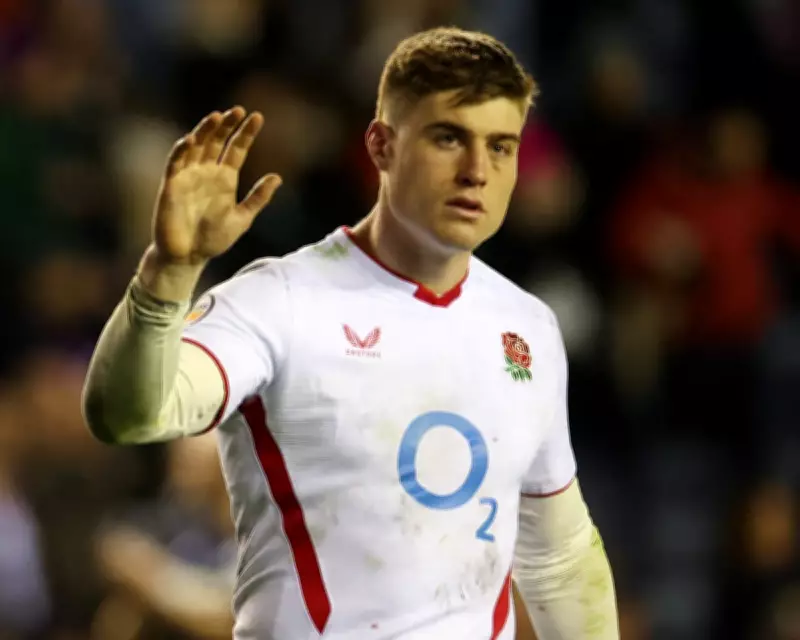
England's Tommy Freeman Opens Up About Mental Health Struggles Following Demanding Rugby Season
England rugby international Tommy Freeman has candidly revealed the significant mental toll he experienced following a grueling season that included a victorious British & Irish Lions tour of Australia. The 24-year-old wing, who plays for Northampton Saints, exceeded player welfare limits by making 34 appearances last season across club, country, and Lions commitments.
The Heavy Workload That Took Its Toll
Freeman's remarkable season included 19 appearances for Northampton Saints, nine for England, and six for the British & Irish Lions during their successful tour of Australia. While the mandated limit for player appearances is typically 30, special dispensation was granted for Lions participants with the condition they receive five weeks off upon returning from Australia and miss the first two rounds of the 2025-26 season.
"I struggled without realising it, I think," Freeman admitted. "I had the five weeks off, the body felt good, but my mental state wasn't in the best spot."

The Northampton star, who started all three Tests against the Wallabies, described experiencing "a mix of up and downs" and "a built-up anxiety" resulting from the intense schedule. He returned to action for Northampton in October's third round but credits his Saints coaches Phil Dowson and Sam Vesty for recognizing something was amiss and adjusting his workload accordingly.
Coaches' Intervention and Recovery Process
Freeman's coaches at Northampton demonstrated exceptional awareness by noticing subtle signs of mental fatigue and implementing a modified training regimen. "Saints did really well at noticing that and giving me the time," Freeman explained. "England as well, picking that up and getting me back into the games in the right way."
The recovery process involved strategic adjustments to Freeman's schedule:
- Reduced gym sessions and running drills
- Modified training components
- Selective game participation
- Careful monitoring of overall workload
Freeman reflected on the cumulative effect of his demanding season: "Obviously, you go on a big Lions tour, and I think it was off the back of 34 games or so. It's a lot of rugby, and then I could probably have managed my off time better."
Looking Ahead to Ireland Clash
As England prepares to face Ireland at Twickenham this weekend, Freeman is likely to retain his place in Steve Borthwick's lineup, either at center or on the wing. The match represents a crucial opportunity for England to bounce back following their 31-20 defeat against Scotland at Murrayfield last weekend.
England's selection considerations include potential changes to enhance physicality and creativity. Tom Curry, who replaced Sam Underhill at halftime against Scotland, is pushing for a starting position to bolster England's physical presence. Meanwhile, Borthwick is contemplating whether to include Marcus Smith or George Furbank in the squad to add creative attacking options.
Curry emphasized the need for improved performance: "We have to front up better physically, especially the first 20-25 minutes. There are a couple of things that probably didn't go our way with regard to the bounce of the ball and that sort of stuff but still we had multiple opportunities to put our best foot forward and we probably didn't."
Broader Context of Player Welfare
Freeman's experience highlights ongoing concerns about player welfare in professional rugby. He was one of 15 England players who participated in the Lions tour, while Ireland contributed 18 players to the squad overseen by their head coach Andy Farrell.
The Northampton star described the peculiar sensation of mental fatigue that accompanied his physical recovery: "Without realising it, I think I was tired. My body felt like I was OK to go and I was saying to coaches: 'Yeah I'm fine, I'm fine.' I just think mentally it was a bit more of a struggle."

Freeman's openness about his mental health challenges represents a significant moment in professional sports, where athletes are increasingly speaking about the psychological demands of elite competition. His experience serves as a reminder of the importance of comprehensive player welfare programs that address both physical and mental wellbeing.