Winter Olympics 2026 Opens in Italy Amid Political Storm
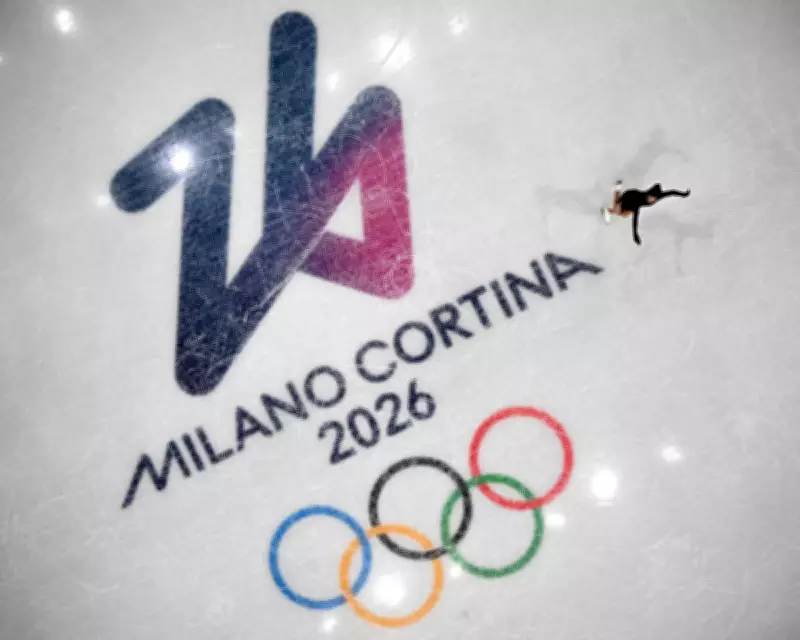
The Milano Cortina 2026 Winter Olympics officially commence in Italy this Friday, promising sixteen days of breathtaking winter sports spectacle. However, behind the dazzling displays of athletic prowess, a complex web of global political tensions threatens to overshadow the celebration.
A Stage Set for Controversy
Organisers have envisioned these Games as a triumphant celebration of winter sport, yet current geopolitical realities ensure that political undercurrents will remain prominently visible. The International Olympic Committee (IOC) finds itself navigating treacherous waters as multiple controversies converge upon the Italian host cities.
Neutral Ground in a Divided World
IOC President Kirsty Coventry recently articulated the aspiration for sport to serve as "a neutral ground," distinct from political conflicts and governmental actions. This noble sentiment faces immediate challenges in practice, as demonstrated by recent developments that highlight the difficulty of separating athletics from international affairs.
American Olympic officials made a significant symbolic adjustment this week, renaming their athlete hospitality space in Milan from "Ice House" to "Winter House." This change followed protests concerning fatal shootings by US Immigration and Customs Enforcement (ICE) officers. American figure skater Amber Glenn acknowledged the necessity of this alteration, noting the unfortunate associations that now accompany the term "ice" in certain contexts.
Security Concerns and Cyber Threats
Italy's foreign minister revealed that the country has successfully thwarted a series of cyberattacks, allegedly "of Russian origin," targeting websites connected to the Winter Olympics. This security breach occurs alongside growing momentum within Milan for the reintegration of Russian teams, currently banned due to the ongoing war in Ukraine.
Only thirteen Russian competitors are participating under the Authorised Neutral Athletes banner, yet Moscow maintains hope that emerging talents like eighteen-year-old skating champion Adelia Petrosian will make their mark. The presence of these athletes has generated considerable controversy, particularly among Ukrainian competitors who view their participation as inappropriate given current circumstances.
Coaching Controversies and Ethical Questions
Further complicating matters is the presence of controversial Georgian coach Eteri Tutberidze, who mentors Petrosian in Milan. Tutberidze faced severe criticism from the IOC four years ago for her "tremendous coldness" toward then-fifteen-year-old skater Kamila Valieva during high-pressure competition. The Georgian coach's involvement raises ongoing questions about athlete welfare and coaching ethics that are likely to surface throughout the Games.
Ukrainian Athletes Voice Their Protest
Ukrainian competitors continue to express outrage at Russian participation in the Olympics. Skeleton star Vladyslav Heraskevych, who gained global attention in Beijing by displaying a "No War In Ukraine" sign, articulates the profound disconnect between sporting normalcy and wartime reality.
"There is war fatigue, which makes people start to forget that Russia is a terrorist state," Heraskevych explained. "We see them more often in sports arenas. We see them more in the cinema. Everywhere in the world. But Ukrainians are getting bombed every day. We are sitting in houses without water, without heating, and it's minus 20 degrees outside."
The athlete revealed that the IOC has issued warnings against further protests following demonstrations at previous competitions, creating a tense atmosphere for Ukrainian competitors who wish to draw attention to their country's plight.
Additional Flashpoints on the Horizon
Multiple potential controversies loom as the Games progress. Pro-Palestinian activists plan demonstrations when the Olympic flame arrives in Milan to protest Israel's participation. Environmental groups have also organised marches scheduled for later in the week, adding another dimension to the political landscape surrounding the event.
The IOC faced additional scrutiny regarding the head of the Los Angeles 2028 Olympics, Casey Wasserman, whose name appears in the Epstein files, and the election of the first Iranian woman, Soraya Aghaei, to the IOC committee shortly after violent suppression of protests in Iran.
International Relations on Ice
Even traditional sporting rivalries carry heightened political significance this year. The Valentine's Day ice hockey match between Denmark and the United States assumes additional weight following ominous threats against Greenland by former US President Donald Trump. Recent polling indicates only 17% of Danes view the US as an ally, with 60% considering them an adversary, reflecting broader international tensions that may manifest during competition.
When questioned about potential booing of the American team during the Opening Ceremony, President Coventry expressed hope for respectful behaviour, stating: "I hope that the Opening Ceremony is seen by everyone as an opportunity to be respectful towards each other. I hope for everyone watching I hope it will be a really good showcase of possibilities and inspiration."
A Celebration Amidst Division
Friday's Opening Ceremony at San Siro will feature performances by international stars including Mariah Carey, Andrea Bocelli, and Snoop Dogg, with creative lead Marco Balich emphasising harmony as the central theme. President Coventry reinforced this message when addressing potential protesters, describing the Games as "a place where people can be reminded of the best of humanity."
Yet as the world descends upon Italy for this global sporting spectacle, the numerous political, ethical, and security challenges facing the Milano Cortina 2026 Winter Olympics suggest that achieving this harmonious vision may prove exceptionally difficult. The coming days will reveal whether sport can truly transcend the profound divisions currently defining international relations.