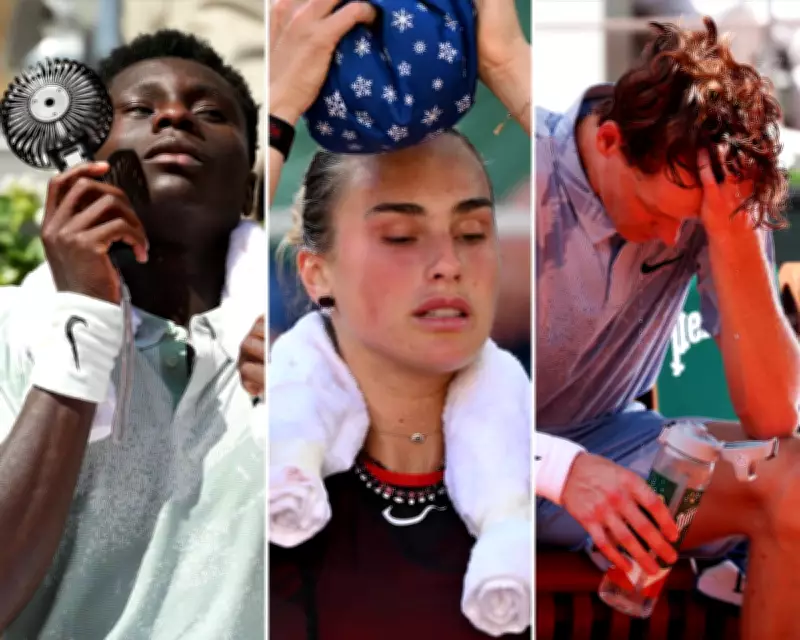
The French Open has become a furnace this year, with temperatures soaring and players struggling to cope with the extreme heat. On-court temperatures have exceeded 50 degrees Celsius, turning the clay courts into a baking surface that tests the limits of human endurance.
Players Voice Concerns
Several top players have spoken out about the challenging conditions. Novak Djokovic described the heat as 'brutal' and called for better scheduling to avoid the hottest part of the day. 'It's not just about winning matches; it's about surviving out there,' he said after a grueling five-set victory.
Health Risks and Adaptations
Medical experts warn that such extreme heat poses serious health risks, including heatstroke and dehydration. Players are using ice towels, cooling vests, and taking more frequent breaks during matches. The tournament organizers have implemented heat protocols, but many feel they are insufficient.
One player collapsed on court during a match and required medical attention, highlighting the dangers. 'We are pushing our bodies to the limit,' said a player who wished to remain anonymous. 'The heat is unbearable.'
Scheduling Debates
The scheduling of matches has become a contentious issue. Some argue that matches should be moved to evening sessions or even delayed until cooler weather. However, television broadcasters and fans have different priorities, creating a conflict between commercial interests and player welfare.
Rafael Nadal, a 14-time champion at Roland Garros, noted that the heat is part of the challenge but acknowledged that it has become more extreme in recent years. 'We have to adapt, but there is a limit,' he said.
Scientific Perspective
Climate scientists point out that rising global temperatures are making such heat waves more frequent and intense. The French Open is not alone; other Grand Slam events have also faced extreme heat conditions. The tennis community is grappling with how to address this new reality.
Options include moving the tournament to a cooler time of year, installing roof structures on all main courts, or implementing more flexible scheduling. However, each solution comes with its own set of challenges and costs.
Fan Experience
Spectators are also feeling the heat. Long queues for water and shade have been reported, and some fans have fainted in the stands. Organizers have increased the number of water stations and misting fans, but the heat remains a major concern for everyone at the venue.
Despite the difficulties, the tournament continues, with players showing remarkable resilience. The question remains: how much heat can the sport endure before changes are made?