Augusta National's Unyielding Defense Against Ticket Scalpers and External Influence
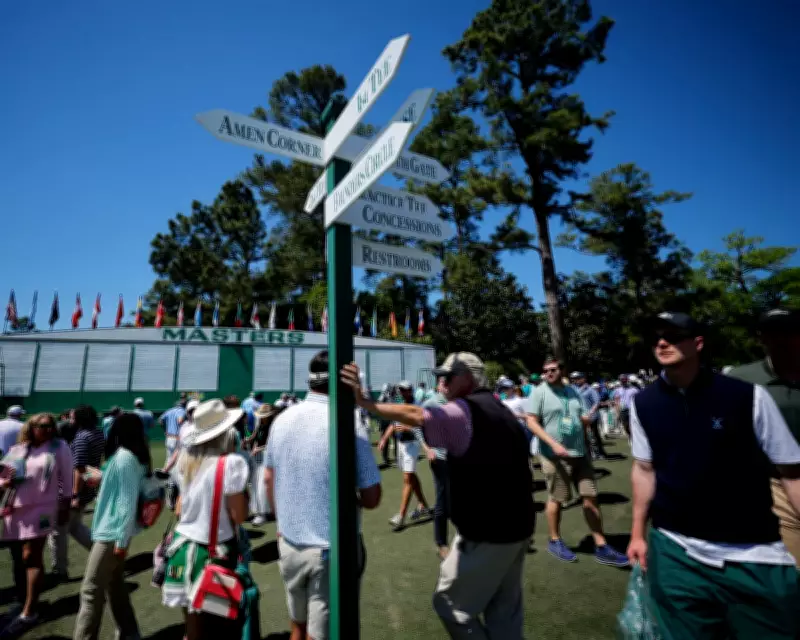
Patrons gather around a signpost near the main leaderboard at Augusta National, a scene captured in a photograph by Mike Blake for Reuters. This iconic setting underscores the exclusivity and tradition of the Masters tournament, where money often fails to breach the gates. The club's stringent rules are designed to keep ticket touts at bay, a lesson in how prestige can trump wealth.
The Epstein-Bannon Exchange: A Failed Attempt at Infiltration
In July 2019, Jeffrey Epstein, whose network extended across elite circles, found Augusta National beyond his reach. He messaged Steve Bannon seeking help to secure membership for Brad Karp, former chair of Paul, Weiss, Rifkind, Wharton & Garrison. Bannon, in a racist and misogynistic conversation, speculated that the club is controlled by "seven Atlanta and Augusta families" from the "Old South," who he claimed are prejudiced against lawyers and investment bankers. Despite their efforts, they remained clueless about how to gain entry, highlighting Augusta's imperviousness to such influence.
Ticket Access: A Closed System with Limited Avenues
For most, simply attending the Masters during tournament week is a dream. Admission follows unique rules: lifetime patrons from the local community pass down badges through generations, a practice halted in the 1970s. The alternative is an annual lottery, with odds so slim they rival Tiger Woods' chances of winning a sixth Green Jacket. Officially, these are the only paths in, but historically, resellers exploited loopholes, selling tickets at up to 50 times face value online, despite Georgia laws criminalizing scalping near the property.
Crackdown on Resale: Technology and Enforcement in Action
Augusta National recently intensified its fight against ticket resale, driven by a desire to reclaim profits lost to third-party companies. Last year's Masters saw a "bloodbath" as hundreds of ticket holders were detained or refused entry at the gates. Reports indicate up to 200 individuals were turned away, with some subjected to interrogations akin to police stops. Rumors suggest the club uses radio-frequency identification chips in tickets to trace their movement, employs undercover agents to question patrons, and even buys back resale tickets to identify and ban sellers permanently.
Impact on Resale Platforms and Consumer Fallout
The crackdown has forced major resale platforms to adapt. StubHub now imposes a stringent contract making sellers solely liable if buyers are denied entry, while SeatGeek has ceased offering Masters tickets this year. Although this may disappoint those who purchased second-hand tickets, it signals Augusta's success in maintaining control over its event, a rare victory against the commodification of sports access.
Exclusivity Beyond Tickets: Keeping Figures Like Trump at Bay
Augusta National's resistance extends to political figures, notably Donald Trump, who has been unable to leverage his influence to gain entry. This reinforces the club's stance that money and power have limits here, preserving its sanctity as one of the few U.S. sports events free from such intrusions. The Masters remains a bastion of tradition, where rules are enforced with precision to uphold its elite status.