Tennis Stars Threaten Grand Slam Boycott Over Revenue Share Dispute
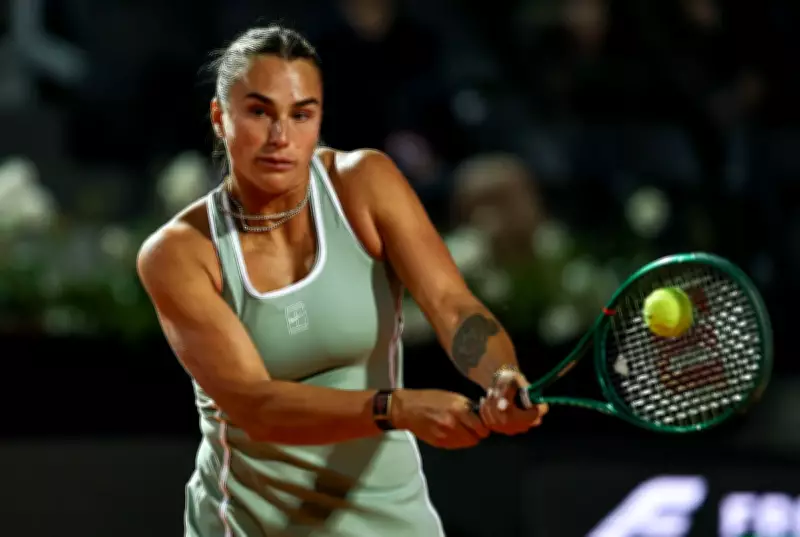
Aryna Sabalenka has made a bold statement, suggesting that a boycott may be the only way for tennis players to secure fair treatment from grand slam tournaments. The world number one's comments came during a press conference ahead of the Italian Open, where she addressed the ongoing dispute over revenue sharing.
"I think at some point we will boycott it, yeah," Sabalenka said. "I feel like that's going to be the only way to fight for our rights."
This marks a significant escalation in a pay dispute that has been simmering for over a year. In March 2025, players sent their first letter to the grand slam tournaments, requesting a greater percentage of revenues, contributions to player welfare initiatives such as pension funds, and closer consultation through a grand slam player council. However, the tournaments have yet to provide substantial responses to these requests.
Sabalenka's remarks were initially met with skepticism, given her previous reluctance to engage on the topic. At the Australian Open in January, she avoided the question entirely. However, other top players have now joined the chorus. Jannik Sinner accused the grand slams of not treating players with "respect" by ignoring their concerns, while Coco Gauff and Iga Swiatek have also voiced their support for the cause.
Despite the strong rhetoric, the prospect of an actual boycott remains uncertain. Top players earn significant prize money and are focused on their personal goals. Sabalenka herself is on track to become the second female athlete to earn $50 million in prize money, after Serena Williams. However, the players argue that the current revenue share of 13-15% from grand slams is too low. Roland Garros's recent prize money announcement, which ignored player concerns, was a particular blow. Adjusted for inflation, prize money has risen only 14% since 2019, despite the tournament's claims of a 45% increase.
From the grand slams' perspective, the events transcend individual players. Most revenue is reinvested into the sport, including infrastructure and national federations. For example, 90% of Wimbledon's surplus goes to the Lawn Tennis Association, amounting to £48.1 million last year. However, players from countries with minimal federation support, like Belarus or Bulgaria, are unmoved by these arguments.
The grand slams have so far opted to ignore the demands, but the players are now presenting a united front. As the dispute continues, all eyes are on Wimbledon's upcoming prize money announcement. A more constructive approach would involve engaging players in good faith and finding a compromise.