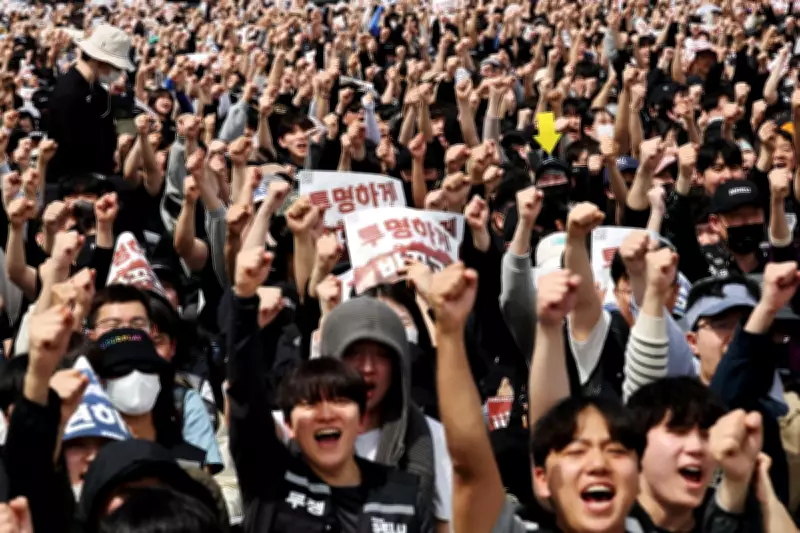
Samsung Electronics is confronting its most severe labor dispute ever, as nearly 48,000 workers threaten to walk off production lines for 18 days starting Thursday. The conflict centers on bonus payouts, with the union demanding a cap removal and a share of operating profits.
What the Union Demands
The union requests abolishing the current cap that limits bonuses to 50% of annual salaries. It also demands that 15% of annual operating profit be allocated to a bonus pool for workers. Additionally, the union wants these changes to be binding beyond this year.
Samsung's Counteroffer
In March negotiations, Samsung proposed bonuses exceeding those at rival SK Hynix for memory chip workers, citing estimates that some SK Hynix staff could receive bonuses equivalent to 607% of their annual salary. For logic chip staff, Samsung offered bonuses of 50% to 100%. However, these are one-off payments for this year only, and the company refuses to abolish the 50% cap on bonuses.
Why Workers Seek More Pay Now
The global memory chip shortage, driven by the AI boom, has propelled Samsung and SK Hynix to record profits. Last year, SK Hynix abolished its bonus cap for 10 years, leading to bonuses three times higher than Samsung's. This prompted many Samsung workers to switch jobs, fueling union membership growth.
How the Strike Could Unfold
The strike is far larger than the 2024 walkout involving 6,000 workers. Nearly 48,000 employees, mostly chip workers, have signed up, representing 38% of Samsung Electronics' domestic workforce. A court partially granted Samsung's injunction, requiring 7,087 essential workers to remain on duty. Samsung's chip factories operate 24/7 in three shifts across Pyeongtaek and Hwaseong.
Concerns Over Global Impact
Samsung is the world's largest DRAM maker with a 36% market share. An 18-day strike could disrupt global DRAM supply by 3-4% and NAND supply by 2-3%, likely driving up prices. Samsung accounts for nearly a quarter of South Korea's exports. A central bank official warned that a worst-case scenario could shave 0.5 percentage points off the forecast 2.0% economic growth, assuming about 30 trillion won ($19.9bn) in lost chip production and additional weeks of disruption.