
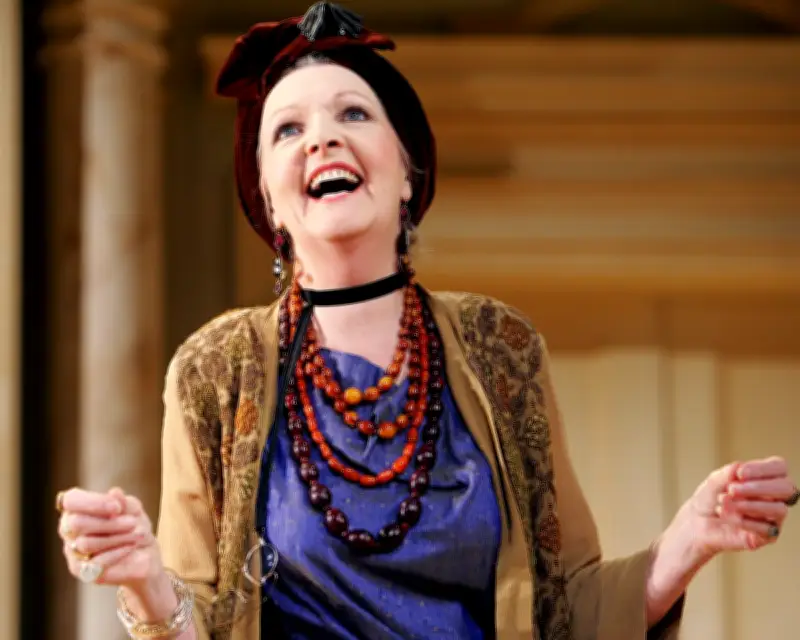
Penelope Keith, the actor who became famous for her classy hauteur and mischief in TV sitcoms such as The Good Life and To the Manor Born, has died aged 86. Her sophisticated comic technique was honed early in her career, according to those who knew her.
Early career and comic beginnings
Michael Billington, who first met Keith at Lincoln Theatre Royal in the early 1960s, recalled her surveying an exhibition of paintings in the theatre foyer and commenting, “Busy lady!” before sweeping out. Such style and assurance in a 23-year-old was rare, he noted. The mischief was also present from the start: at the RSC, during a production of Julius Caesar, when Mark Antony urged the citizens to lend him their ears, her voice pierced the crowd with a cry of “Ave an ear then.”
Keith starred in the first play Billington reviewed for the Guardian, Francis Durbridge’s Suddenly at Home in 1971, playing an acid-tongued murderee. But comedy was her forte, and her breakthrough came in Alan Ayckbourn’s The Norman Conquests at Greenwich theatre and the West End in 1974. As the strait-laced Sarah, she brilliantly suggested a woman whose emotions had been buried under domesticity. One critic wrote: “She can rouse the house to hilarity with the straight delivery of a line like, ‘I’ve had a lot of nervous trouble’ while polishing the dining table as she speaks.”
TV fame and theatrical hits
Keith was paired with Felicity Kendal in The Good Life, and as Kendal pointed out, the fact that the two of them plus Richard Briers and Paul Eddington had about 50 years of rep experience behind them was key to the show’s success. Keith capitalised on her TV fame in theatrical hits, including Michael Frayn’s Donkeys’ Years, where she was hilarious as an Oxbridge master’s wife filled with thwarted desire. She was also striking in two Shaw revivals: as a silk-trousered king’s mistress in The Apple Cart and as the eponymous heroine of The Millionairess.
She worked through many classic roles: Judith Bliss in Hay Fever, Madame Arcati in Blithe Spirit, and Lady Bracknell in The Importance of Being Earnest. But she had the capacity to go beyond comedy. Early in her career, she was impressive as one of the sexually frustrated daughters in Lorca’s The House of Bernarda Alba. Later, she was powerful as Hester Collyer in Terence Rattigan’s The Deep Blue Sea; when her test-pilot lover announced he was abandoning her, the flicker of pain that crossed her face became the mirror to her tortured soul.
Legacy and impact
On the whole, Keith avoided the icier regions of high tragedy. What was treasured was her ability to make audiences laugh and to suggest that under the starched conventionality of upper-class English womanhood lurked impishness, mischief, and a desire for adventure. Her life in pictures and her role as the most spectacular sitcom snob ever to grace screens have been celebrated in retrospectives.