
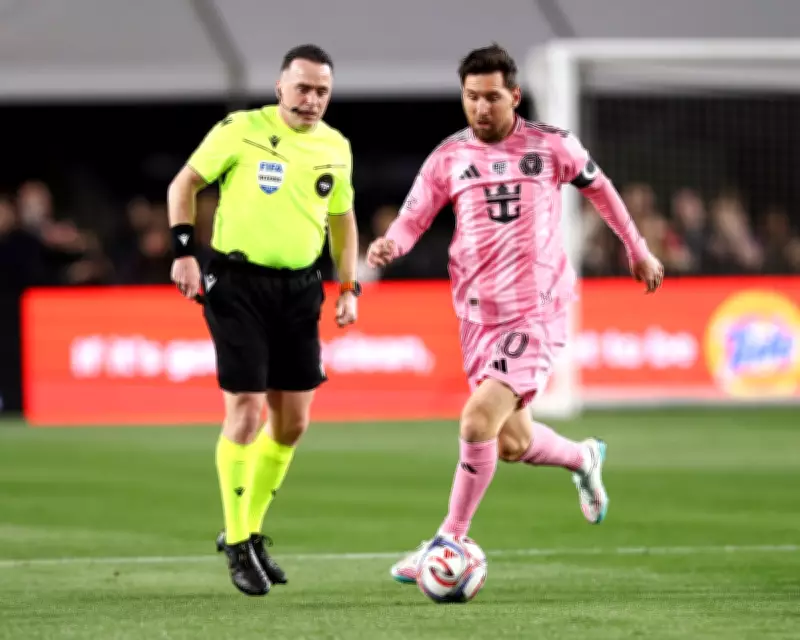
MLS Rule Changes Set for Global Adoption After Sparking Player Debate
The experimental rule changes introduced by Major League Soccer (MLS) to combat time-wasting and accelerate matchplay are poised to go global, following their successful implementation in the United States. These innovations, which have stirred controversy among players, including superstar Lionel Messi, are expected to be adopted by the International Football Association Board (Ifab) at its upcoming meeting this weekend.
Key Rule Changes and Their Impact
MLS introduced two pivotal rules aimed at reducing delays during matches. The first, known as the timed substitution rule, mandates that if a player takes longer than 10 seconds to exit the pitch, their team must play with one fewer player for a full minute. The second, the off-field treatment rule, requires a player who remains on the ground for over 15 seconds after an injury to leave the field for a minute, with exceptions for serious incidents like head injuries or foul play.
These changes, initially tested in MLS Next Pro in 2022 and later integrated into MLS in 2024, have yielded dramatic results. Injury-related stoppages in MLS plummeted by 72%, dropping from an average of five to six per match to just 1.50. Similarly, the timed substitution rule saw minimal violations, with only 12 infractions recorded across 4,346 substitutions in 510 matches during 2025.
Player Reactions and High-Profile Incidents
The rules have not been without controversy, drawing criticism from high-profile figures like Lionel Messi. In a 2024 match against CF Montréal, Messi was removed from play for two minutes after staying down with an injury, leading to a heated exchange with officials where he expressed frustration, stating, "With these types of rules, we're going nowhere."
Ali Curtis, president of MLS Next Pro and executive vice-president of sporting development for MLS, highlighted the immediate effects of the rules. He cited examples such as Inter Miami forward Luis Suárez, who initially violated the timed substitution rule but later adapted by sprinting off the field to avoid penalties. Curtis emphasized, "The impact was overnight. We saw it in Next Pro early on and very quickly in MLS. These rules have been working and we believe they are good for the game."
Historical Context of American Rule Experimentation
The United States has a long history of pioneering football rule changes, some of which have influenced the global game. For instance, the American Soccer League of the 1920s was the first to implement substitutes, decades before their worldwide adoption. The North American Soccer League (NASL) experimented with the backpass rule and red cards for denial of goal-scoring opportunities, innovations later embraced internationally.
However, not all American experiments have succeeded. The United States Interregional Soccer League (USISL) in the 1990s trialed bizarre rules like kick-ins and a "stampede kick" shootout, many of which were abandoned. MLS itself initially used quirks like a 35-yard shootout and a countdown clock, but these were phased out due to international criticism.
Global Adoption and Future Implications
With Ifab's expected endorsement, the MLS-led rules could reshape football globally, potentially influencing play at events like the 2026 World Cup. Curtis noted a shift in perception, stating, "We are connected to the global football community. We have thoughtful conversations with our global partners, focusing on improving the game rather than how we're viewed."
Beyond these changes, Ifab is also considering adjustments to address time-wasting on goal kicks and throw-ins, as well as revisions to VAR protocols, such as reversing incorrectly awarded corner kicks or second yellow cards. These discussions underscore an ongoing effort to enhance the sport's pace and fairness worldwide.