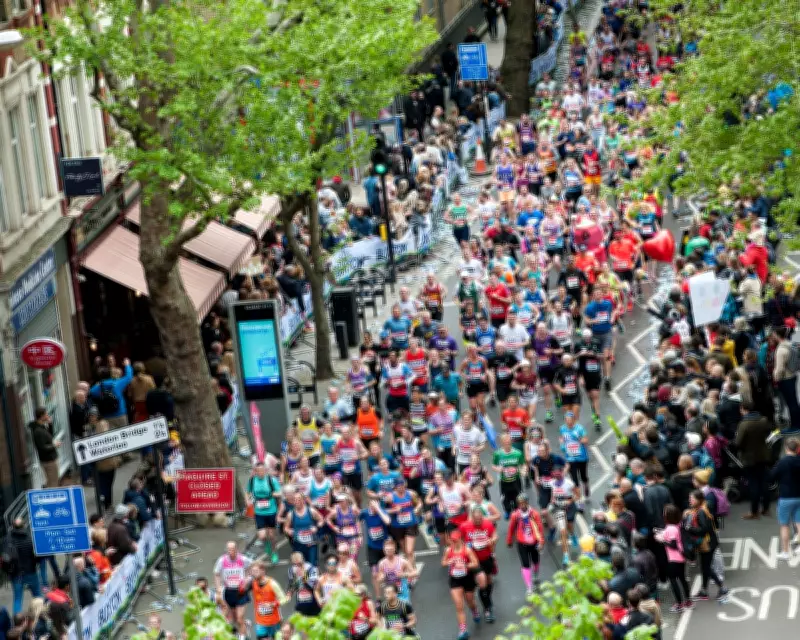
The London Marathon is experiencing an unprecedented surge in popularity, with organisers planning to split the event over two days in 2027 to allow 100,000 people to participate. This year's race on Sunday will see a world-record 59,000 runners take part, raising close to £100 million for charity while consuming 93,024 energy gels along the 26.2-mile course from Greenwich to the Mall.
Record-Breaking Participation
More than 1.1 million people entered the ballot for this year's race, a staggering increase of 750,000 compared to four years ago. Notably, a third of entrants were aged 18-29, with women making up the largest percentage of those under 30. The boom is driven by Gen Z, women, and social media, creating a new golden era of running.
The Rise of Running Clubs
The explosion of informal running clubs or 'crews' has been key to this growth. Unlike traditional clubs, these groups focus on inclusivity, enjoyment, and social connection rather than super-fast times. Jenny Mannion, founder of the female-running group Runners and Stunners, notes that many young women are seeking real-life experiences post-pandemic. 'Instead of finding human connection by going to the pub, they are choosing to run,' she says. Social media platforms like TikTok and Instagram have amplified this trend, making running accessible and empowering.
Lillie Bleasdale, who runs the online coaching company Passa, adds that running in groups provides safety and support, encouraging newcomers to stick with it. 'Women are actively seeking out spaces where they feel comfortable and safe,' she says. 'Word of mouth has been a huge driver of our growth.'
Brands and Culture Shift
Major sports brands are adapting to this cultural shift. Kevin Fitzpatrick, vice-president of running at New Balance, says the pandemic rewrote run culture. 'We're seeing a lot more inclusivity, driven by younger runners and creatives from music, art, and fashion,' he explains. New Balance's Ellipse shoe, designed for comfort and style, has attracted new customers. The brand maintains a two-way conversation with evolving culture.
The London Marathon has come a long way since its inception in 1981, when only 6,255 finishers participated, 95% of them men. Even 15 years ago, the race was overwhelmingly male. Today, the event reflects a diverse and inclusive running community.
A Message of Unity
Race director Hugh Brasher highlights the marathon's role in bringing people together amidst global conflicts and economic uncertainty. 'Marathon running genuinely brings people together,' he says. 'We know we are far more similar than we are different. The London Marathon shows the kindness and welcoming nature of people. We need more of that community spirit.'