Liam Rosenior's Chelsea Departure: A Symbol of Football's Corporate Chaos
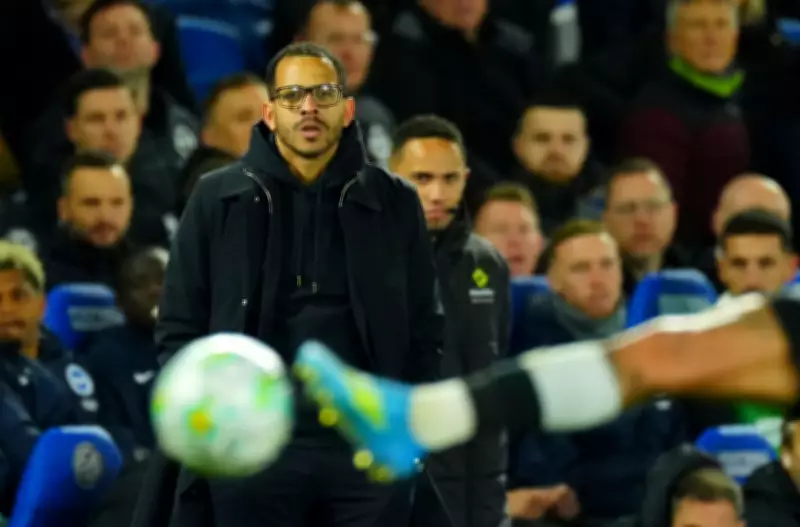
Liam Rosenior watched helplessly from the sidelines as Chelsea suffered a decisive defeat to Brighton, a moment captured in a photograph that encapsulates the turmoil at the club. This image serves as a stark reminder of the novice coach's brief and ill-fated tenure under the bizarre BlueCo regime, which has been described as a ChatGPT version of football management.
The Swift and Strange Sacking of Rosenior
Rosenior's exit from Chelsea came just three and a half months into a contract that was set to run until 2032, a move that underscores the erratic decision-making at the highest levels of the club. On Wednesday morning, news broke that Chelsea's executives were holding a meeting, a rare event in a culture where action often supersedes deliberation. In a boardroom filled with what insiders call "rainmakers" and "finance super-bros," the decision to sack the manager was inevitable, yet it reflects a deeper dysfunction.
The club's leadership justified the move by pointing to Chelsea's poor on-field performance, including a lack of league goals that harkened back to a bygone era. However, this choice stems from a series of prior missteps, most notably the decision to hire Rosenior on a six-year deal in January only to terminate it in April. This flip-flop highlights a fundamental lack of coherence in BlueCo's strategy.
Rosenior's Unstained Future and Chelsea's Flawed Structure
Despite the abrupt end to his Chelsea career, Rosenior emerges from this debacle largely unscathed. His future remains wide open, with potential paths including corporate ventures or further coaching development in a more stable environment. Critics have argued that he was not up to the job, but in reality, no one could thrive in such a skewed setup. Rosenior's intelligence, honesty, and candid post-match interviews, particularly after the defeat to Brighton, reveal a man trapped in a brittle and empty project.
His departure marks him as just another casualty in the BlueCo era, a regime so fundamentally strange that it resembles a public art installation critiquing corporate vapidity. This period serves as a warning about the future of football, where hedge-fund tactics and talent clearing houses prioritize profits over passion.
The Broader Implications of BlueCo's Mismanagement
Todd Boehly, one of the main figures behind Chelsea's slide into dysfunction, has openly discussed ambitions to transform the Premier League into a global tech platform, with football as a mere vehicle for super profits. This vision, while appealing in finance circles, has led to practical incompetence on the ground. Boehly's initial role as a de facto sporting director, buying players based on market trends rather than footballing merit, created a team devoid of balance, intelligence, and human qualities.
Club executives have claimed, based on commissioned data, that managers are interchangeable—a theory blatantly disproven by the successes of figures like Jürgen Klopp and Pep Guardiola. This ignorance extends to a broader emptiness at Chelsea, where the club's cultural connection to fans is being hollowed out by commodification and pricing strategies.
The Chilling Emptiness and Future Prospects
The real horror of BlueCo Chelsea lies in its emptiness, as seen in the haunting Sky Sports footage of players and fans at the Amex Stadium, reflecting a shared sense of despair. This scenario threatens football's status as a source of cultural unity, replaced by leverage and alienation. In the short term, fixing Chelsea requires either a change in ownership or a humbling acceptance of ignorance, with a reinfusion of footballing knowledge into the decision-making process.
For now, BlueCo Chelsea stands as a stark expression of late-American capitalism in sports—an empire driven by arrogance and isolation, yet likely to profit regardless of the mess left behind. As Rosenior moves on, his experience serves as a cautionary tale for the sport at large.