Kevin Keegan, one of football's most iconic figures, has died at the age of 75 after a battle with cancer. The former Liverpool, Newcastle United and England star, who later managed the national side, passed away peacefully, his family confirmed.
Keegan's career spanned from a miner's son in Yorkshire to the pinnacle of European football. He won the Ballon d'Or twice, in 1978 and 1979, while playing for Hamburger SV, and was a key part of Liverpool's first European Cup triumph in 1977. His playing style, characterized by relentless energy and predatory instincts, earned him 63 England caps, 21 goals, and the captaincy under Don Revie.
Early life and rise to stardom
Born in Armthorpe, near Doncaster, on 14 February 1951, Keegan was the son of a coalminer. He was rejected by Doncaster Rovers as a schoolboy but joined Scunthorpe United as an apprentice in 1968. After 124 league games and 18 goals for Scunthorpe, Liverpool manager Bill Shankly signed him for £33,000 in 1971. Keegan made an instant impact, scoring on his debut against Nottingham Forest.
At Liverpool, he won three league titles, the FA Cup, two UEFA Cups, and the European Cup. His partnership with John Toshack was prolific, and his departure to Hamburg in 1977 for a British record £500,000 marked a new chapter.
Hamburg and Ballon d'Or success
In Germany, Keegan overcame a difficult start by learning the language during a suspension. He led Hamburg to the Bundesliga title in 1979 and the European Cup final in 1980, where they lost to Nottingham Forest. His individual brilliance earned him the Ballon d'Or twice, making him only the third Englishman to win the award.
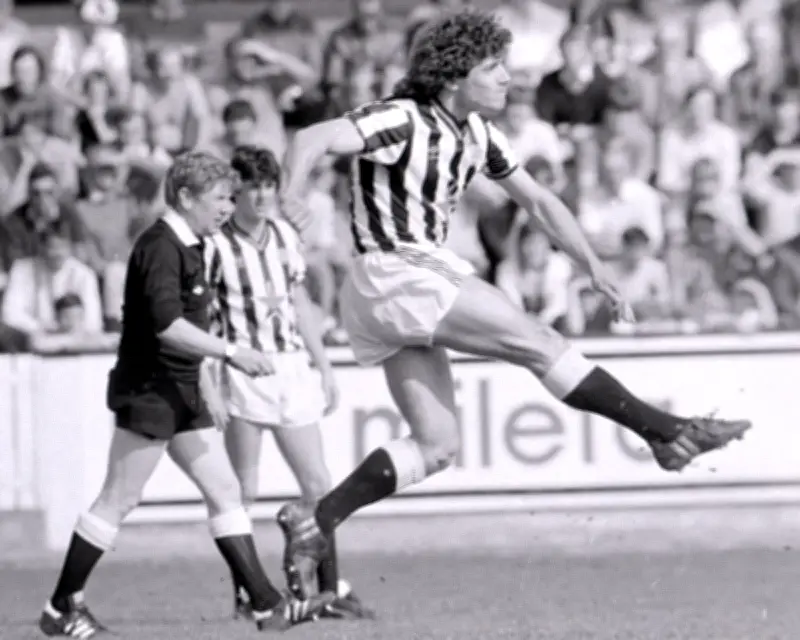
After Hamburg, Keegan moved to Southampton in 1980 for £500,000, helping the club achieve top-seven finishes. He then joined Newcastle United in 1982 for £100,000, fulfilling a boyhood dream. In his first season, he scored 21 goals, and the following year, he led Newcastle to promotion to the First Division. His final appearance for Newcastle in May 1984 was a dramatic farewell: a helicopter landed on the pitch at St James' Park and flew him off, still in his kit, to the cheers of 36,000 fans.
Managerial career and famous moments
Keegan's managerial career began at Newcastle in 1992, rescuing them from relegation and then guiding them to third in the Premier League in 1994. His team, featuring David Ginola and Les Ferdinand, famously blew a 12-point lead in the 1995-96 season, culminating in his emotional TV outburst: "I would love it if we beat them! Love it!" He signed Alan Shearer for a world record £15m in 1996 but resigned six months later.
He then managed Fulham, leading them to promotion, before taking the England job in 1999. His tenure was short-lived, ending after a 1-0 defeat to Germany in the Euro 2000 qualifiers, where he resigned in the Wembley dressing room toilets, admitting he had "come up short." He later managed Manchester City, guiding them back to the Premier League, and had a brief second spell at Newcastle in 2008, resigning after a dispute with director of football Dennis Wise.
Legacy and personal life
Keegan was appointed OBE in 1982. He is survived by his wife Jean, whom he married in 1974, and their daughters Laura and Sarah. His autobiography, My Life in Football (2018), summed up his career: "I was the mongrel who made it to Crufts, and that was fine by me."
His impact on English football, both as a player and manager, remains profound. Tributes have poured in from across the football world, remembering him as a passionate, hard-working, and inspirational figure.