
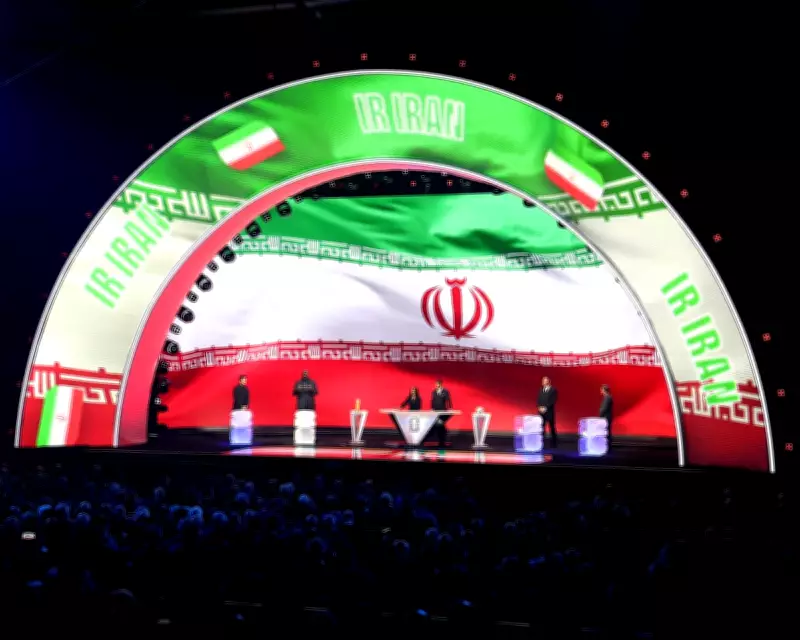
Middle East Crisis Threatens Iran's World Cup Participation
The 2026 FIFA World Cup faces unprecedented uncertainty as geopolitical tensions in the Middle East could force Iran's withdrawal from the tournament. Should Iran pull out, FIFA regulations suggest Iraq and the United Arab Emirates are the most probable replacements, marking what would be the first such replacement since 1950.
FIFA's Vague Replacement Protocol
FIFA's World Cup regulations provide minimal guidance on replacing qualified teams, stating only that the organization maintains "sole discretion" to "take whatever action is deemed necessary" and "may decide to replace the participating member association in question with another association." This ambiguity leaves FIFA with significant flexibility but little precedent to follow.
FIFA General Secretary Mattias Grafström emphasized on Saturday that "our focus is to have a safe World Cup with everybody participating," yet the Iranian Football Federation's president, Mehdi Taj, has publicly questioned his country's participation, stating: "After this attack, we cannot be expected to look forward to the World Cup with hope."
Potential Succession Scenarios
Iran secured their World Cup berth by winning Group A in the third round of Asian Football Confederation qualifying. Their scheduled group matches include fixtures against New Zealand and Belgium in Los Angeles, followed by Egypt in Seattle.
The replacement hierarchy appears clear according to FIFA sources:
- Iraq stands as the primary replacement candidate if they fail to qualify through their upcoming intercontinental playoff against Bolivia or Suriname on March 31 in Monterrey
- United Arab Emirates would become the default replacement if Iraq successfully qualifies through that playoff
The UAE previously lost a playoff against Iraq, which propelled Iraq to their current playoff opportunity. The UAE represents the next highest-ranked Asian nation without a World Cup qualification.
Historical Precedent and Current Challenges
Iran's withdrawal would represent the first instance since 1950 when both France and India declined participation, citing prohibitive travel costs. No nation has withdrawn after the tournament draw in the modern era.
Beyond geopolitical tensions, practical obstacles complicate Iran's participation. The United States government has implemented restrictions barring most Iranian citizens from entering the country, with limited exceptions for national team members and support staff. Several Iranian Football Federation officials, including President Taj, were denied visas to attend the World Cup draw in Washington D.C. last December.
FIFA remains committed to conducting the World Cup as scheduled beginning June 11, despite the complex diplomatic landscape between Iran and host nation United States. The organization has maintained silence since Grafström's weekend comments, focusing instead on contingency planning should circumstances necessitate Iran's replacement.
The coming weeks will prove critical as FIFA monitors Middle East developments while preparing for potential tournament adjustments. The World Cup's integrity faces its most significant geopolitical test in decades, with football's global governing body navigating uncharted territory between sport and international diplomacy.