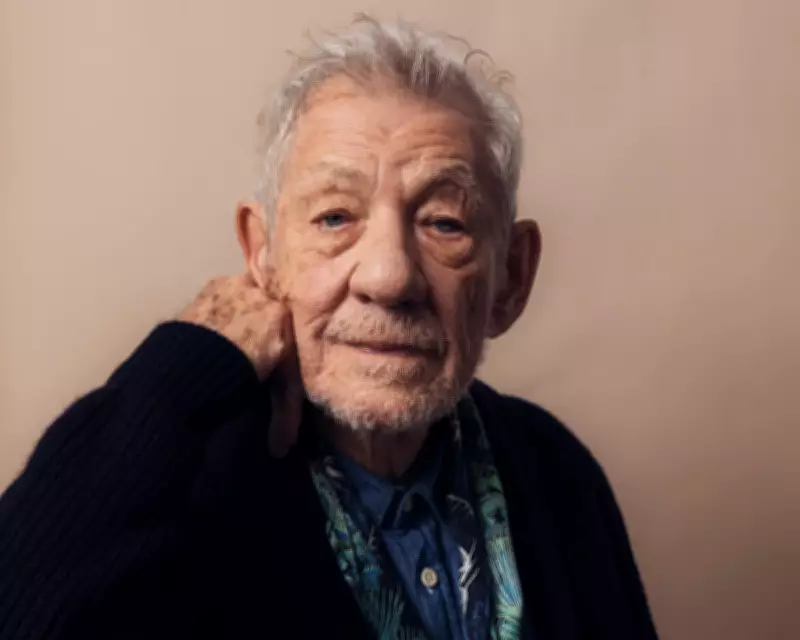
In more than six decades of acting, Ian McKellen has seen the industry transform. His first job in 1961 was at the Belgrade theatre in Coventry, the first British civic theatre built after World War II with public funds. His weekly wage was £8, enough to cover his flat and meals. Back then, every city had a repertory company, offering new productions every two weeks and training for young actors. Today, no such rep companies exist in the UK, and the system for nurturing talent is gone. However, audience enthusiasm for live theatre remains unchanged.
Warm-ups and Shakespeare
McKellen still warms up with fellow actors before shows, stretching muscles, clearing vocal cords, and gossiping. He recalls that putting on plays is a communal business. When asked what he would ask Shakespeare if given a time machine, he said: 'So did you write the plays and act in them? I'm sure you did, but a few quite sensible people don't believe it. Also, could you please sketch a plan of the original Globe theatre, which I suspect didn't have those two obtrusive columns that restrict sightlines from the stage of the so-called Shakespeare's Globe on the South Bank. Oh and: have you seen Hamnet yet?'
Glastonbury and Gandalf vs Dumbledore
McKellen fondly remembers his 2025 Glastonbury appearance with the Scissor Sisters, calling it 'heady stuff' and 'like one long curtain call of love and thanks.' On the eternal question of Gandalf versus Dumbledore, he declared: 'Why on earth would they be fighting? But Gandy, of course, would win. The original wizard.'
Family, Faith, and Pantomime
McKellen's father was a lay preacher, but it was actors who inspired him. His grandfather, a nonconformist preacher, once ran out of steam during a sermon and quipped, 'This is worrying you all a lot more than it does me.' McKellen stopped worshipping in his teens but admires Quakers for their pacifism and early support of gay rights. He loves pantomime for its use of every theatrical device: slapstick, song, dance, cross-dressing, and audience participation. He calls it 'a matchless introduction to all that is possible in a theatre' and a homegrown art form that Americans find baffling.
David Bowie and Gandalf
Dominic Monaghan once saw David Bowie in the casting office for Lord of the Rings. McKellen has never confirmed if Bowie was considered for Gandalf. He noted that Bowie was not alone among music stars who wanted movie success but never quite achieved it. For McKellen, Gandalf's humanity attracted him most: 'the sort of hirsute tramp of a geezer who you might hope to meet traipsing through Middle-Earth's highways and byways.' Bowie's striking looks might have emphasized the supernatural side.
Pub Life and Bad Advice
As a pub landlord, McKellen has never had to throw anyone out, perhaps because Gandalf's staff stands behind the bar. The worst advice he ever received came from Alec Guinness after a 1979 performance of Bent. Guinness invited him to lunch and urged him to withdraw from Stonewall, the gay rights lobby group McKellen helped found. McKellen declined the advice. He later saw a solo show about Guinness's latent bisexuality, which would have upset the actor.
Regrets and Hamlet's Wisdom
McKellen once wondered 'Why on earth am I doing this?' while playing Dame Celia Johnson's son in a BBC version of Noël Coward's Hay Fever. He had admired her but found her distant. On Hamlet's 'To be or not to be,' he said that in his 20s he interpreted 'be' as 'live life to the full.' Returning to the role years later, he realized Hamlet answers the question with 'Let be' in the final act. And so says McKellen.