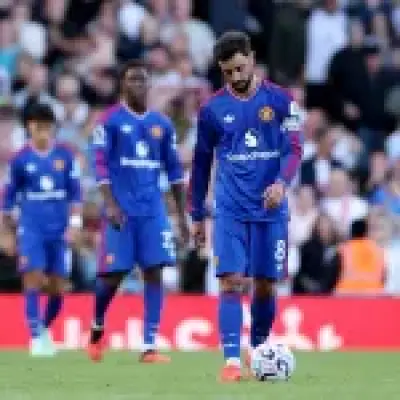
England's quest for a second World Cup win, or final appearance, will stretch beyond the 60-year mark after their semi-final defeat to Argentina on Wednesday. The match ended in a 2-1 loss, with Enzo Fernández scoring the decisive goal in the 85th minute.
Hope in the Dark
In her book Hope in the Dark, author Rebecca Solnit examines whether hope is possible amid human suffering, quoting Bulgarian writer Maria Popova: "Critical thinking without hope is cynicism, but hope without critical thinking is naivety." Solnit argues for hope as a catalyst for social change.
Meanwhile, Graham Burrell wrote: "It is the hope that kills you" after Lincoln City's 2-1 home defeat to Wigan in 2024. "I feel perhaps our playoff push was finally killed off yesterday." The phrase's origins are unclear, attributed to figures from William Shakespeare to Peter Ustinov. Ted Lasso countered: "I think it's the lack of hope that comes and gets you." Jackson Lamb from Slow Horses added: "It's not the hope that kills you. It's knowing it's the hope that kills you – that kills you."
The Ordeal of the Game
For England fans, hope as a pure emotion is incapacitating. It begins with fear—during the buildup, the 10-second countdown, and as the ball rolls back to Jordan Pickford. The heart beats at twice its normal rate. As the game settles, it becomes base-level angst with pockets of rage, especially as Giuliano Simeone harries and hacks without a yellow card. By half-time, pessimism creeps in: the longer it goes, the more likely Argentina will win, relying on "muscle memory" and being "wily bastards."
The goal—a perfect cross and finish—brings an outpouring of joy, relief, and possibility. It is the first real moment of hope, combined with the thought, "At least they need two now." Another ecstatic moment is Djed Spence's tackle on Lionel Messi, celebrated like Giorgio Chiellini and Leonardo Bonucci. "Yes, Djed!" I shout. It is the greatest England tackle since Eric Dier on Sergio Ramos—and wildly more important.
The Fleeting Hope
The retreat started before the hydration break. With 10 men at the Azteca, it made sense, but could England see it out? In the 82nd minute, Nico O'Reilly blocks a pass and chases it down. We are in their half—a foreign land. I shout to my colleague John Brewin: "That's saved eight seconds." A minute later, Messi lofts a cross harmlessly out of play. That was the moment I thought maybe. Just maybe.
I began to think about England being in a World Cup final—selfishly, what a dream few days in New York, preview podcasts and TalkSport shows writing themselves. Then, at 84'24, Enzo Fernández shoots from distance; Pickford tips it over. But at 84'55, Enzo has too much time on the edge of the box. He shoots and scores—and we all know it's done.
Two minutes and 55 seconds. That's how long I really genuinely had hope. And it didn't kill me. It was thrilling, terrifying, and life-affirming. I have spoken before about whether I'll ever be ready to see England's men win anything—and maybe I'll never have to test that emotion. But for now, hope is enough. Just a morsel of it. If hope can be a catalyst for social change, it can help us imagine Adam Wharton lifting the European Championship trophy in 2028, even for a fleeting moment.