
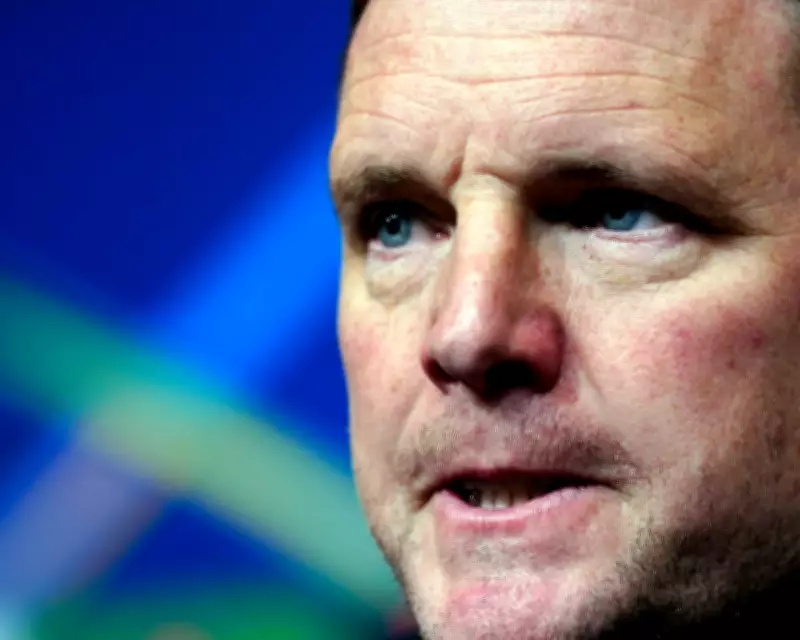
Newcastle's Season of Promise Turns to Frustration for Eddie Howe
A campaign that had delicately balanced on the edge of success has now collapsed into profound disappointment for Newcastle United and their manager, Eddie Howe. What began with high hopes following last season's triumphs has unraveled into a period of intense scrutiny and mounting pressure.
The Critical Juncture That Defined Newcastle's Downfall
When the Premier League fixtures were announced last summer, astute observers could have predicted that mid-March would become the crisis point for Newcastle United. The club faced a defining period that included Champions League quarter-final aspirations and a crucial Tyne-Wear derby at St James' Park. Success in these matches could have overshadowed numerous other frustrations and revitalized their season.
Even more significantly, that derby against Sunderland would have been postponed entirely had Newcastle reached what would have been their third Carabao Cup final since 2023. The celebratory atmosphere of just twelve months ago now feels like a distant memory, though the current mood could have been dramatically different with slightly altered outcomes.
Missed Opportunities and Structural Weaknesses
Newcastle demonstrated genuine quality in their Champions League last-16 home leg against Barcelona, playing as the superior side for significant periods. Only a late, questionable penalty decision prevented them from securing victory. During the away leg's first half, they remained a persistent threat on counterattacks. The comprehensive 7-2 defeat in the second half exaggerated the actual gap between the teams.
The derby followed a similar pattern of missed opportunities. Newcastle led at halftime and struck the post, but their concerning trend of second-half collapses continued. Sunderland's comeback, culminating in Brian Brobbey's winner from Granit Xhaka's straightforward pass, highlighted recurring issues. Both Hansi Flick's Barcelona and Régis Le Bris's Sunderland exploited surprising spaces in Newcastle's midfield during late game phases.
Mounting Pressure on Howe's Leadership
This accumulation of disappointments has transformed a season that teetered on the brink into one of profound frustration. Serious discussions now circulate regarding Eddie Howe's job security. Chief executive David Hopkinson's recent comments did little to reassure supporters, offering only the non-committal statement that "we'll talk about the future when it's time" rather than providing unequivocal backing for the manager.
Howe arrived at Newcastle in November 2021, shortly after the Saudi-led Public Investment Fund acquired the club from Mike Ashley. He has navigated the transition with professionalism, guiding Newcastle to Champions League qualification twice and delivering their first domestic trophy in seventy years with the Carabao Cup victory. At this same point last season, nobody questioned his position.
Structural Deficiencies and Recruitment Failures
The current concerns extend beyond on-pitch performances to fundamental structural issues within the club. Most of this season's problems can be attributed to inadequate recruitment, an area where Howe exercised significant influence. With no sporting director in place last summer, Howe's nephew Andy Howe collaborated with Steve Nickson on first-team recruitment decisions.
The Alexander Isak transfer saga was handled particularly poorly, dominating the summer window and concluding with a departure that felt like a defeat. With the Swedish forward determined to leave, the club should have maximized his transfer fee earlier in the window, creating time to reinvest in broader squad strengthening. More imaginative leadership might have explored creative solutions, such as negotiating with Liverpool for Isak while securing priority access to alternative targets like Hugo Ekitiké.
Newcastle experienced misfortune with Yoane Wissa's early injury after joining, but the signing of Nick Woltemade appeared to lack clear strategic purpose regarding how to utilize his unconventional attributes. Anthony Elanga and Jacob Ramsey have made limited impacts, leaving Malick Thiaw as the only summer signing currently viewed as successful.
Squad Limitations and Organizational Challenges
Consequently, the squad lacked necessary depth for competing simultaneously in the Champions League, Carabao Cup semi-finals, and FA Cup fifth round. Newcastle's frequent second-half fatigue becomes understandable given these demands, raising questions about broader organizational structures.
While Dan Ashworth's departure for Manchester United was largely unavoidable, the subsequent exit of his replacement Paul Mitchell created a summer vacuum. Mitchell reportedly became disillusioned with club ownership and clashed with Howe over player conditioning. Ross Wilson arrived as sporting director in October with Howe's approval but faces substantial challenges, including suggestions that decision-making processes among Newcastle's ownership lack necessary efficiency.
Financial Realities and Future Uncertainties
Although club officials describe the stadium sale to a subsidiary as bureaucratic streamlining, financial pressures have intensified sufficiently that Newcastle face a potential UEFA fine for 2025. The Isak sale and Champions League qualification should alleviate some pressure, while transitioning from profitability regulations to squad cost ratios may benefit wealthy owners. However, the Public Investment Fund's commitment level remains uncertain amid broader Saudi retrenchment, with stadium expansion talks notably absent for nearly a year.
Hopkinson's characterization of Newcastle as "a trading club" rather than purely buying or selling appears realistic, yet also seems to prepare supporters for potential departures. Sandro Tonali, Anthony Gordon, and Tino Livramento appear most likely to exit, suggesting that even with softening economic conditions, Newcastle may not capitalize aggressively. The probable absence of Champions League football next season resets expectations substantially.
The Fundamental Question of Club Direction
The core issue revolves around how Newcastle United operates as an organization and the considerable influence Howe has accumulated amid an ill-defined hierarchy. From purely footballing perspectives, little justification exists for replacing him, and without European competition demands, performance likely would improve naturally.
However, if Newcastle genuinely aspire to transform their culture and become a serious modern football institution, Eddie Howe's departure might represent a necessary component of comprehensive restructuring. The manager who guided them to recent successes may ultimately become collateral damage in the pursuit of greater organizational coherence and long-term ambition.