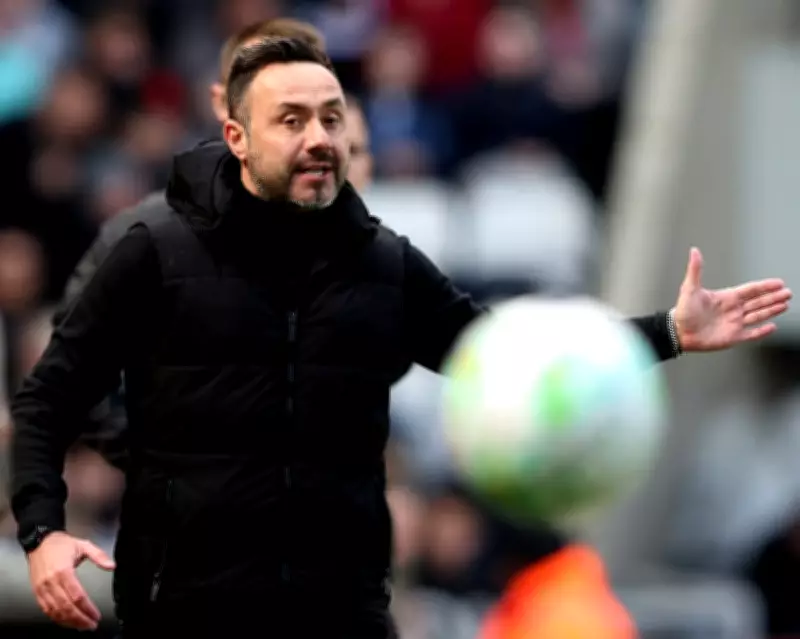
Roberto De Zerbi's Psychological Mission to Keep Tottenham in the Premier League
Roberto De Zerbi has just six matches remaining to perform what seems like an impossible task: keeping Tottenham Hotspur in the Premier League. The Italian tactician finds himself at the helm of a club that, despite its global stature and state-of-the-art stadium, sits 18th in the league table with only 30 points from 32 games. Tottenham's situation appears dire, with no victories in 2026 and just five points collected from their last 42 available. The numbers alone would typically confirm relegation as inevitable, yet De Zerbi represents a final, desperate gamble by the club's hierarchy.
A Legacy of Instability and Poor Decisions
Tottenham's decline has not been sudden but rather a gradual unraveling that spans from the boardroom to the pitch. The club has cycled through four managers in the past twelve months alone, creating a toxic environment of constant change and uncertainty. Since Mauricio Pochettino's departure in 2019, Tottenham has experimented with nearly every managerial profile imaginable, leaving the squad without a clear identity or direction.
José Mourinho's tenure ended abruptly just before a cup final, Nuno Espírito Santo lasted merely four months, and Antonio Conte departed after explosive criticism of the club's leadership. More recently, Ange Postecoglou delivered the club's first trophy since 2008 only to be dismissed sixteen days later, while Thomas Frank and Igor Tudor both failed to implement their contrasting styles during brief, unsuccessful stints. This revolving door of tactical philosophies has left players confused and lacking both tactical discipline and self-belief.
The Psychological Approach Over Tactical Overhaul
De Zerbi has quickly identified that Tottenham's primary problem lies not in their footballing ability but in their collective mentality. After a disappointing 1-0 defeat to Sunderland in his first match in charge, the manager offered unexpected sympathy to his players, stating they "don't need a coach" but rather emotional support. This represents a significant departure from his typically fiery, passionate demeanor, suggesting he recognizes the depth of the psychological crisis within the squad.
The Italian manager emphasized that "the most important part in football is the mental part," particularly for a Tottenham team that has lost fourteen consecutive matches. Rather than attempting to implement his complex, high-risk tactical system immediately, De Zerbi is focusing on restoring confidence and harnessing the existing talent within a demoralized group. He aims to build upon principles established under Postecoglou while incorporating defensive structures introduced by Tudor, creating a hybrid approach that might provide stability.
Compounding Factors: Injuries and Attacking Deficiencies
Tottenham's struggles extend beyond managerial instability to significant personnel issues. Long-term injuries to key creative players have devastated their attacking capabilities. Dejan Kulusevski continues to recover from a patella injury, James Maddison suffered an ACL tear in preseason, and Mohammed Kudus picked up a thigh injury in January. These absences have left the team desperately short of creativity and goal-scoring threat.
The departure of prolific attackers has compounded these problems. Son Heung-min, Harry Kane, and Brennan Johnson have all left in recent seasons, and Tottenham has failed to adequately replace their production. The club's embarrassing failures in the transfer market, including last-minute hijackings by rivals and rejected advances, have left them with the fourth-lowest expected goals in the Premier League. Tellingly, two of Tottenham's top scorers this season are center-backs Cristian Romero and Micky van de Ven, highlighting the complete breakdown of their attacking structure.
The Final Six-Game Challenge
With matches against Brighton and Wolves approaching, Tottenham has limited opportunities to gather points and rebuild confidence. De Zerbi faces the monumental task of convincing a team that has forgotten how to win that they possess the quality to survive. His approach represents a psychological experiment as much as a footballing one, attempting to instill belief where none currently exists.
The question remains whether the rot has spread too deeply through the club's culture. Years of poor decisions, constant change, and neglected long-term planning have created a perfect storm of underperformance. De Zerbi's success or failure will depend not on tactical brilliance but on his ability to reach players who have been failed by the system around them. For Tottenham supporters, these final six games will determine whether their club faces the unthinkable prospect of Championship football next season.