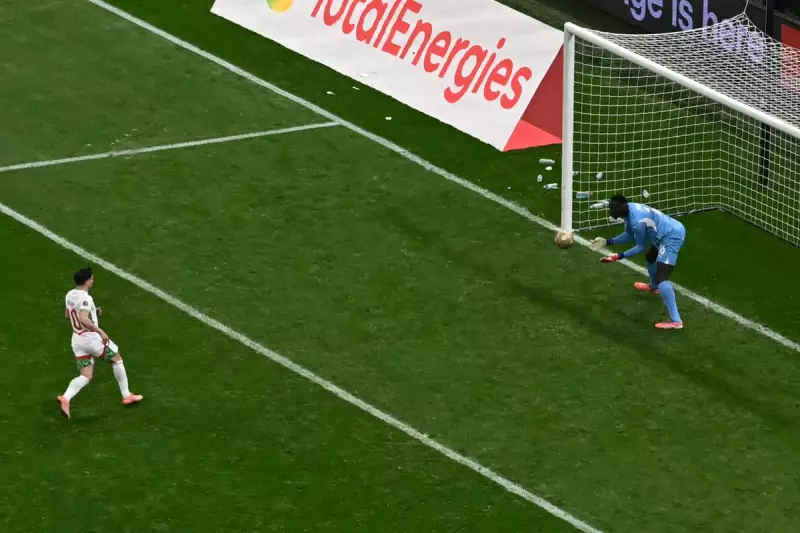
The dream of continental glory on home soil was shattered by a moment of audacious, ill-fated showmanship. In the dying moments of a pulsating Africa Cup of Nations 2025 final, Morocco's Brahim Díaz stepped up for a penalty that could have sealed the title. Instead of opting for power or placement, the Real Madrid forward attempted a delicate, chipped 'Panenka' – only to see it float meekly into the grateful hands of Senegal's stationary goalkeeper, Édouard Mendy.
The Agonising Moment That Decided a Tournament
Díaz had a full 15 minutes to contemplate his fateful decision, following a dramatic and chaotic conclusion to normal time in Rabat. With the score level and the trophy within reach, he chose to replicate the iconic technique pioneered by Czechoslovakia's Antonin Panenka in the 1976 European Championship final. The stakes were identical: a continental crown hung in the balance. Yet, where Panenka enjoyed the element of surprise against West Germany's Sepp Maier, Díaz faced a goalkeeper primed for the possibility.
Édouard Mendy, the Senegal and Chelsea stalwart, had previous experience, having saved a Panenka from Manchester City's Sergio Agüero in May 2021. In the white-hot atmosphere of a packed Stade de Rabat, with over 60,000 fans expecting celebration, Mendy held his nerve. He remained centrally planted, rendering Díaz's delicate chip a simple catch. Senegal would go on to win the match in extra time, leaving Díaz to collect the tournament's Golden Boot award with the weight of national disappointment on his shoulders.
The Fine Line Between Genius and Folly
The Panenka penalty represents the ultimate act of footballing bravado. When it succeeds, it immortalises the taker as a cool-headed genius and humiliates the goalkeeper. However, the cost of failure is disproportionately high, transforming the player from hero to villain in an instant. "My soul hurts," a devastated Díaz confessed afterwards, a stark contrast to Panenka's original vision of giving fans "something new to see."
Díaz is far from alone in suffering this very public misfortune. Recent Premier League history is littered with failed attempts. Danny Welbeck's effort for Brighton against West Ham, which struck the bar, was seen as insulting by home fans and cost his team momentum. Similarly, Enzo Le Fée's weak chip for Sunderland against Brentford was easily caught by Caoimhín Kelleher, squandering a crucial chance. Even Cristiano Ronaldo has erred with the technique against Athletic Bilbao.
Why the High-Risk Move Persists
Statistically, there is a logical argument for aiming down the middle. In the Premier League this season, 90% of penalties sent centrally have been successful, a higher conversion rate than those aimed to the left or right. Goalkeepers are trained to dive, and the fear of looking foolish by staying still often plays into the taker's hands. However, as Díaz's miss brutally demonstrated, if the keeper does not commit, a softly struck ball offers no chance of success. A powerfully driven shot, even if aimed centrally, retains a possibility of beating a stationary keeper through pace alone.
The psychology is key. Díaz, as Morocco's key man with five goals in six games before the final, was brimming with confidence. He had previously scored a conventional penalty against Mali. This likely led to overthinking; he reasoned the goalkeeper might remember his previous action, making the audacious chip the unexpected choice. In the end, it was a catastrophic miscalculation.
The legacy of the 2025 Afcon final will forever be intertwined with that one moment. Antonin Panenka's name is etched in folklore for his innovation and success. Brahim Díaz's moment, however, serves as a stark reminder that in a team sport, the selfish act of the showman carries a risk that can outweigh the reward, with consequences that echo far beyond a single saved spot-kick.