
The Bundesliga's Marquee Matchup: Bayern Munich vs Borussia Dortmund
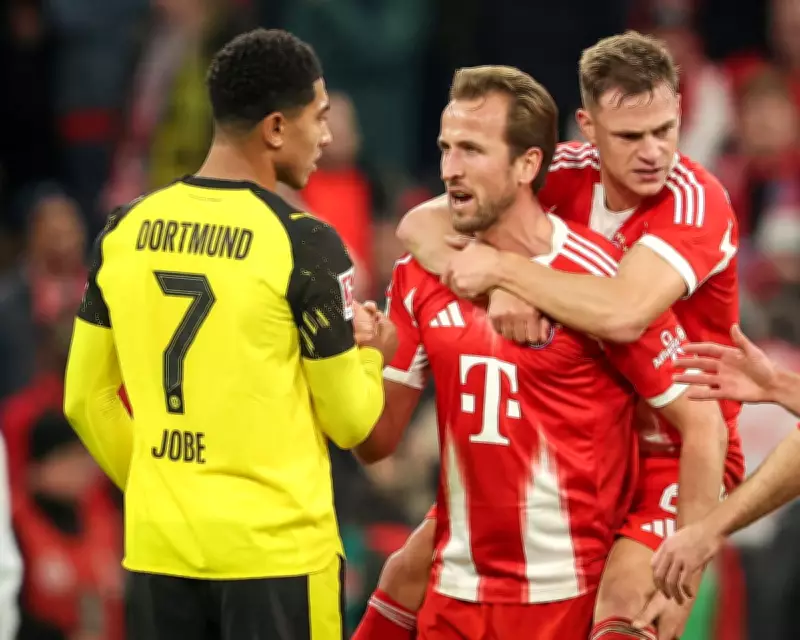
This weekend brings another installment of Der Klassiker, the Bundesliga's most heavily marketed fixture between Bayern Munich and Borussia Dortmund. The German league's promotional machinery has been operating at full capacity ahead of Saturday evening's encounter, which traditionally attracts significant global attention to German football. However, persistent questions surround whether this matchup constitutes a genuine, historic rivalry comparable to Europe's other great derbies.
A Lopsided History of Dominance
Borussia Dortmund's last Bundesliga triumph occurred in 2012 under Jürgen Klopp's management. Since that championship season, Bayern Munich has celebrated league titles with traditional Rathaus gatherings every year except 2024, when Xabi Alonso's Bayer Leverkusen completed an unbeaten campaign to claim the crown. Bayern's domestic supremacy extends far beyond recent years, with their Bundesliga dominance tracing back to the 1968-69 season when they succeeded Eintracht Braunschweig and Nürnberg as champions.
During the 1970s, Borussia Mönchengladbach emerged as Bayern's primary rivals, featuring legendary players like Günter Netzer and Allan Simonsen. Dortmund only entered the rivalry conversation during the mid-1990s, capturing two domestic titles and the 1997 Champions League with memorable contributions from players like Lars Ricken. This period marked the beginning of genuine needle between the clubs, highlighted by confrontations between Lothar Matthäus and Andy Möller in 1996, followed by Oliver Kahn's notorious incidents involving Stéphane Chapuisat and Heiko Herrlich in 1999.
Modern Dynamics and Current Form
Following near-bankruptcy after their 2002 Bundesliga success, Dortmund required Klopp's revolutionary "heavy-metal football" to challenge Bayern's supremacy. In contemporary times, while Bayern continues collecting trophies, Dortmund has transformed into football's premier development club, more renowned as a finishing school for emerging talent than as a consistent title challenger.
This season finds Bayern eight points clear of Dortmund at the Bundesliga summit. Only a Dortmund victory at Westfalenstadion can prevent another Bayern procession toward the championship. Bayern manager Vincent Kompany emphasized the fixture's significance, declaring: "For me, it's always a title in its own right, even if people say we can't win anything more now. These games are also important to the masses."
Key Factors and Player Spotlight
Dortmund approaches the match still processing their recent Champions League disappointment against Atalanta, particularly Ramy Bensebaini's controversial challenge on Nikola Krstovic. Manager Niko Kovac faces additional concerns about containing Harry Kane, who has maintained exceptional standards this season with 45 goals in 37 appearances for club and country, continuing legacies established by Robert Lewandowski and Gerd Müller during Bayern's golden eras.
The broader European football landscape provides context for this domestic clash. Recent Champions League draws have paired familiar opponents repeatedly, including Real Madrid versus Manchester City for the ninth time in under three years. While increased competition frequency theoretically delivers more glamour fixtures, it sometimes diminishes their special nature through overexposure.
Financial Realities and Wider Context
Financial disparities further illustrate the clubs' different trajectories. Recent data reveals Liverpool operated with the Premier League's highest wage bill at £428 million during their title-winning campaign. Chelsea recorded staggering losses of £355 million in 2024-25, more than double Lyon's second-worst European figure of £171 million. Manchester United's managerial changes have proven costly, with Ruben Amorim's departure potentially costing nearly £16 million.
As Bayern and Dortmund prepare for their latest encounter, the fundamental question persists: Does Der Klassiker represent a genuine historic rivalry, or merely a marketing construct highlighting German football's competitive imbalance? The answer may depend on whether Dortmund can transform occasional victories into sustained challenges to Bayern's long-established hegemony.