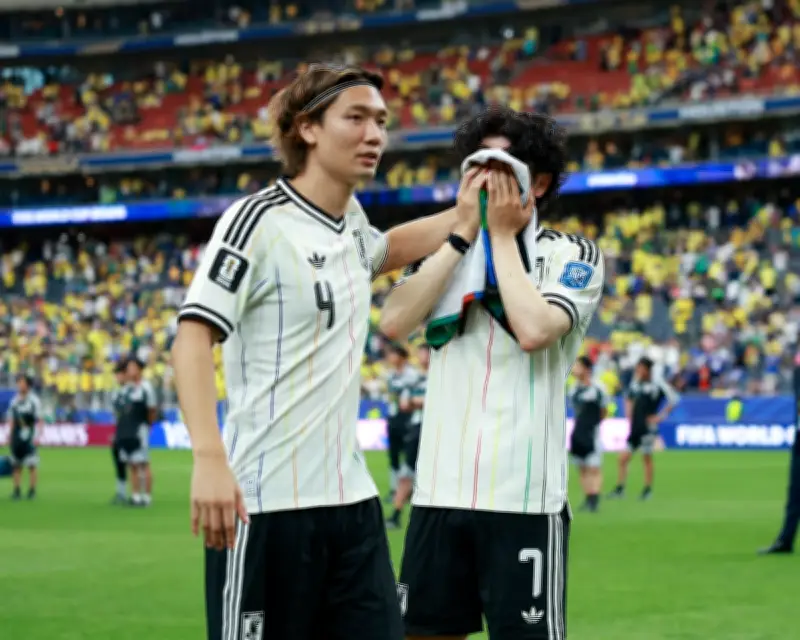
Japan's spirited performance against Brazil ended in a 2-1 defeat in the last 32, dashing hopes of a historic Asian triumph. Despite leading for much of the match, the Samurai Blue faded in the second half and conceded a 96th-minute winner. Coach Hajime Moriyasu noted before the game, "We are representing Asia. I know that other Asian teams are not as successful. I would like us to be able to encourage other Asian teams as well, and we would like to be their hope." The absence of key players Kaoru Mitoma, Wataru Endo, Takumi Minamino, and Takefusa Kubo due to injury was a significant blow. Japan's long-term vision, patience, and determination remain a model for the continent, but the overall tournament has been a disappointment for Asia.
Asia's Woeful Record: Seven Teams Eliminated
Of Asia's nine representatives, only Australia advanced to the knockout stage, facing Egypt. Seven teams fell at the first hurdle—a stark contrast to Africa, where only one of ten teams failed to progress. Iran, despite drawing all three group matches, came close to advancing but faced extraordinary obstacles. The country was attacked by the US and Israel in February, disrupting preparations, and Team Melli received unequal treatment in North America. Debutants Jordan, Uzbekistan, and Iraq showed promise but lacked experience. Jordan scored in all three games despite injuries, while Iraq competed in a tough group with France, Norway, and Senegal. All three lost all their matches, but the results do not fully reflect their competitiveness.
Saudi Arabia and Qatar: Domestic Talent Limitations
Saudi Arabia and Qatar fielded overwhelmingly domestic-based squads, a factor that limits exposure to higher competition. Saudi Arabia changed coach from Hervé Renard to Giorgios Donis in April, indicating a lack of long-term planning. The Green Falcons managed two draws, but Qatar suffered a humiliating 6-0 defeat to Canada, arguably Asia's worst result given the opponent's level. The Asian Football Confederation's (AFC) structure, including Champions League scheduling that favors larger nations like Saudi Arabia, has been criticized. Qualification processes also benefited Saudi Arabia and Qatar with home advantage and favorable schedules.
South Korea's Disappointment and Fallout
South Korea, perhaps the most disappointing Asian team, won their opening match against Czechia but followed with passive displays against Mexico and South Africa, failing to advance. The defeat sparked unprecedented anger, leading to coach Hong Myung-bo's resignation. Star player Son Heung-min could not prevent the early exit. The AFC president Salman bin Ibrahim Al Khalifa praised Japan and Australia, but the overall outcome suggests it may be time for new leadership at the confederation, which has been under his tenure since 2013.
Looking Ahead: Asian Cup and Long-Term Planning
With the Asian Cup starting in Saudi Arabia in January, there is little time for reflection. Uzbekistan's successful youth system offers hope, and Jordan's coach Jamal Sellami emphasized the need for more players in top leagues: "Our players are young and we need to take advantage of the experience we had here and ensure we do better at a higher level of competition. To be at the top level we need to have more players to play at that high level." Asia must follow Japan's example of long-term thinking to reach future knockout stages.