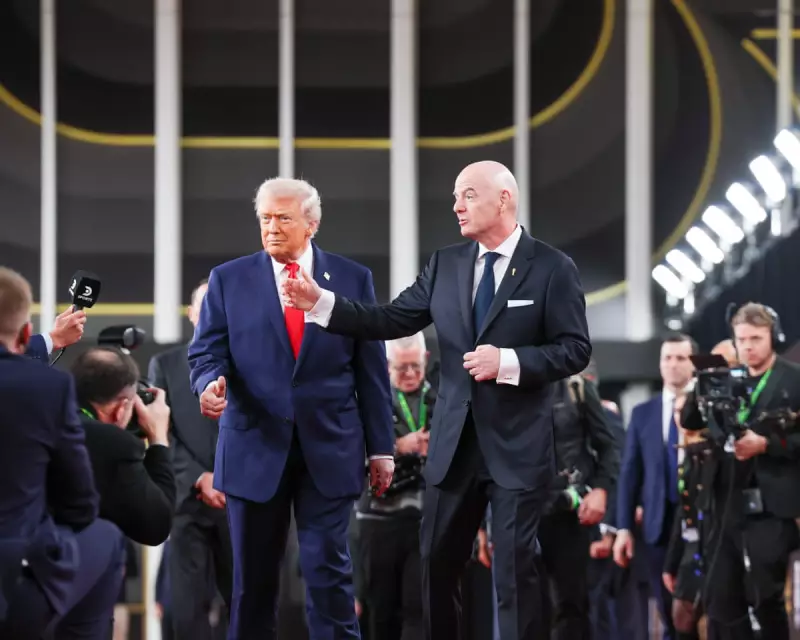
The 2026 FIFA World Cup, to be hosted across North America, is now firmly positioned to join some of the tournament's most controversial and shameful historical chapters. This follows a series of aggressive foreign policy moves by the United States, culminating in last week's forceful abduction of Venezuela's president.
A Legacy of Authoritarian Exploitation
History shows a disturbing pattern of World Cups being leveraged by repressive regimes. In 1934, Benito Mussolini's fascist Italy used the tournament for propaganda, even replacing the official trophy. By the end of that decade, Mussolini had invaded Ethiopia and Albania.
Similarly, in 1978, Argentina's military junta under General Jorge Rafaél Videla hosted the event while systematically torturing and murdering political dissidents. FIFA President João Havelange infamously praised the regime at the opening ceremony, accepting a medal from Videla.
More recently, Vladimir Putin presided over the 2018 World Cup in Russia, four years after annexing Crimea. FIFA raised no substantive objection.
2026: A New Chapter of Geopolitical Mayhem
The context for the 2026 tournament, shared with Canada and Mexico but dominated by the United States, has crystallised into something alarmingly familiar. The defining moment was President Donald Trump's announcement that Venezuela was now effectively American-run territory, following the bloody abduction of its sitting president and his wife.
This action is part of a broader, chaotic foreign policy that has seen the Trump administration threaten to invade Mexico, annex Canada and Greenland, start global trade wars, and soften support for Ukraine against Russia.
Despite this, FIFA President Gianni Infantino has shown immovable support for Trump, with awards and medals flowing between them. The World Cup will proceed as planned.
The Inevitable Slide of a Tarnished Tournament
The 2026 edition fits neatly into a modern era of deeply compromised World Cups. The 2022 Qatar tournament was mired in corruption and human rights abuses. The 2030 event will span three continents, creating a huge environmental footprint. The 2034 Cup has already been awarded to Saudi Arabia under Mohammed bin Salman.
FIFA, like the Olympic movement and Formula One, has made peace with the sordid baggage of its highest bidders. The World Cup is now a convenient vehicle for dangerously self-interested political aims.
While fan boycotts are discussed, the slow acceptance of this new normal suggests little will change. The beautiful game has lost its way, and the 2026 World Cup—hosted problematically, embarrassingly, and irredeemably by the United States—will be the definitive symbol of that loss.