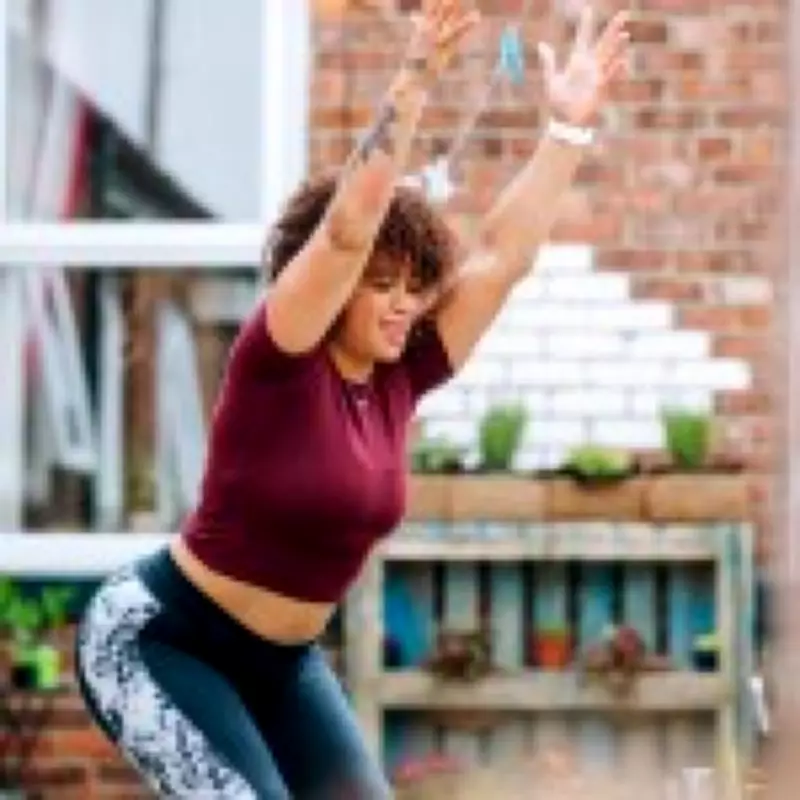
Finding time to exercise can feel impossible when life gets busy, but a short workout does not mean a lesser one. Celebrity personal trainer Aimee Victoria Long explains that many people skip workouts if they believe they need 45 to 60 minutes to see benefits. However, studies on high-intensity interval formats, even brief ones, show improvements in cardiovascular indicators and insulin sensitivity compared with doing nothing at all. Even a quick session releases endorphins, reduces cortisol, and can reset focus for the rest of the day, especially helpful if you are overwhelmed or tight on time.
Not only that, but 10 minutes of home exercise could be enough to get you back on the horse if you are feeling too out of practice for a gym class. Aimee notes that longer workouts would be desirable when you have the time, but fitting in this 10-minute session could be perfect for those off days or to even get you back in the flow. To get started, Aimee has created a 10-minute full-body workout that balances strength, stability, mobility, and core work. Complete two rounds of the following five exercises with 40 seconds of work and 20 seconds of rest.
Exercise 1: Plié
How to do it:
- Stand with your feet wider than hip-width apart, toes turned out.
- Engage your core and keep your chest upright.
- Bend your knees and lower your hips straight down, ensuring your knees track over your toes.
- Lower as far as feels comfortable while maintaining good posture.
- Press through your heels to return to standing.
Why it works: This move warms up your hip and groin area and improves posture, perfect for everyday function. It also activates glutes, quads, and inner thighs, which are key for walking, climbing stairs, and daily activities. It improves hip mobility and stance mechanics.
Exercise 2: Wall Assisted Curtsy Lunge
How to do it:
- Stand tall with feet hip-width apart, facing a wall for support.
- Step one foot behind you and to the side into a curtsy position, lowering the back knee toward the floor.
- Keep your chest lifted and your front knee aligned over your toes.
- Push through the front heel to return to standing, alternating sides.
Why it works: Lunging patterns mimic walking, stepping, and multi-directional movement, boosting confidence and reducing injury risk. They also build lower-body strength in a functional pattern, engage stabilizers for better balance and coordination, and are gentle on joints thanks to wall support.
Exercise 3: Bird Dog
How to do it:
- Start on all fours with your wrists directly under your shoulders and knees under your hips.
- Extend one arm forward and the opposite leg back simultaneously.
- Hold for a moment, focusing on balance and stability.
- Return to the starting position and switch sides.
Why it works: Core stability is a common weak link, and improving it helps everything from lifting groceries to holding a plank longer. This move targets deep core muscles essential for posture and spinal support, trains contralateral limb movement for balance and coordinated strength, and is low impact and safe for all fitness levels.
Exercise 4: Hollow Hold
How to do it:
- Lie on your back with your arms extended overhead and legs straight.
- Engage your core and lift your arms, head, shoulders, and legs off the ground.
- Hold this position, keeping your lower back pressed into the floor.
- Breathe steadily while maintaining the position.
Why it works: This is a challenging but brief stimulus that creates lasting resiliency if done consistently. It targets the deep abdominal wall, improves trunk support for posture, running form, and lower back health, and the static hold teaches control before adding dynamic movements.
Exercise 5: Push-Ups
How to do it:
- Start in a plank position with your hands shoulder-width apart and feet hip-width apart.
- Lower your body by bending your elbows, keeping them close to your sides.
- Push back up to the starting position, engaging your core throughout.
- Modify by dropping to your knees if needed.
Why it works: Push-ups are one of the most efficient compound movements for upper-body strength and can be easily modified from wall to knee to full push-up, so everyone can progress. They work the chest, shoulders, triceps, and core simultaneously, and push patterns are essential for functional tasks like pushing doors or lifting objects.
For more workouts, consider trying a standing abs workout that strengthens your core while the kettle is boiling, or five simple stretches before bed that could improve your sleep. Remember, consistency is key, and even a 10-minute session can make a significant difference in your overall fitness and well-being.