In the spring of 2011, I visited the MCC Library at Lord's, the world's largest collection of printed material on cricket. I was beginning a PhD on the history of women's cricket and expected to find ample source material. Instead, curator Neil Robinson showed me a shelf with just three books, including Rachael Heyhoe Flint's 1978 autobiography. The MCC archives held nothing on women's cricket.
I resolved then to write a book that would one day sit on that shelf. A decade later, during the Covid lockdown, I finally had time. The result is "The Women in Whites: A History of Women's Cricket in England," published on 1 June. I hope the MCC acquires a copy soon.
In 2011, I faced a challenge: how to write a history without sources? England's 2009 double World Cup win had brought attention, but I knew women's cricket predated that. By the time the ECB took over in 1998, the Women's Cricket Association (WCA) had run the sport for over 70 years. The first women's Tests were in Australia in 1934-35, and more than 140 women had played for England by my visit to Lord's.
I became a detective, tracking down former players and persuading them to be interviewed. One interview took place in a golf buggy, with me being shushed during swings. Heyhoe Flint invited me to tea at the House of Lords. Enid Bakewell spoke for three and a half hours until I had to leave for my last train.
Many stories highlighted the WCA's financial struggles. England batter Chris Watmough described writing hundreds of letters seeking sponsorship for the 1968-69 tour to Australia and New Zealand. The lingerie brand Berlei responded, so England traveled wearing sponsored bras.
Ruth Prideaux, who coached England to the 1993 World Cup final at Lord's, wanted a proper training program but had so little money that players slept on blow-up mattresses in her living room and ran along Eastbourne beach for workouts. Norma Izard borrowed a wok from MCC kitchens in July 1998 to burn a miniature bat signed by both teams, creating the first Women's Ashes trophy.
One day, I struck gold. Someone told me the WCA archive was in a Lancashire hamlet near Blackpool. It turned out to be in a former cowshed on the farm of former England player Carole Cornthwaite (née Hodges), who scored a hundred against Australia in the 1993 World Cup. I spent two weeks there, walking six miles daily from a B&B. Among garden furniture and rusty equipment, I found minute books dating back to 1926, scrapbooks, letters, tour diaries, and newspaper cuttings.
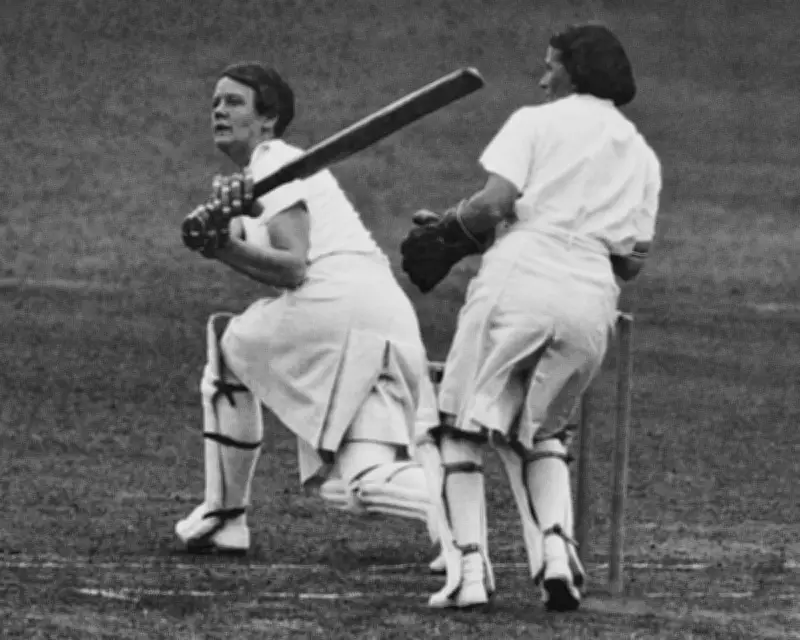
I pieced together the women's game and met key characters. Betty Archdale, captain on the 1934-35 tour, had such a distinctive style and haircut that players nicknamed her "Hitler." Myrtle Maclagan, daughter of an army officer, looked down on Australians for their working-class roots and wrote that men in Perth "smelt foul." She took seven for 10 in the first women's Test at Brisbane and scored the first Test hundred at the SCG. WCA founder Marjorie Pollard, described as "a nuisance and an old know-all," insisted on skirts, so women played international cricket in them until 1997.
These pioneers have since died, but I hope they live on through this book. As we celebrate a fully professional women's game in England and Wales, we must remember those who came before.
Today, the MCC Library has the complete WCA archive, acquired in 2017. The boxes moved from the Lancashire farm to Lord's via Taunton. Other researchers can now explore this treasure. We could use more books on women's cricket.
"The Women in Whites: A History of Women's Cricket in England" is available for pre-order. This is an extract from the Guardian's weekly cricket email, The Spin.