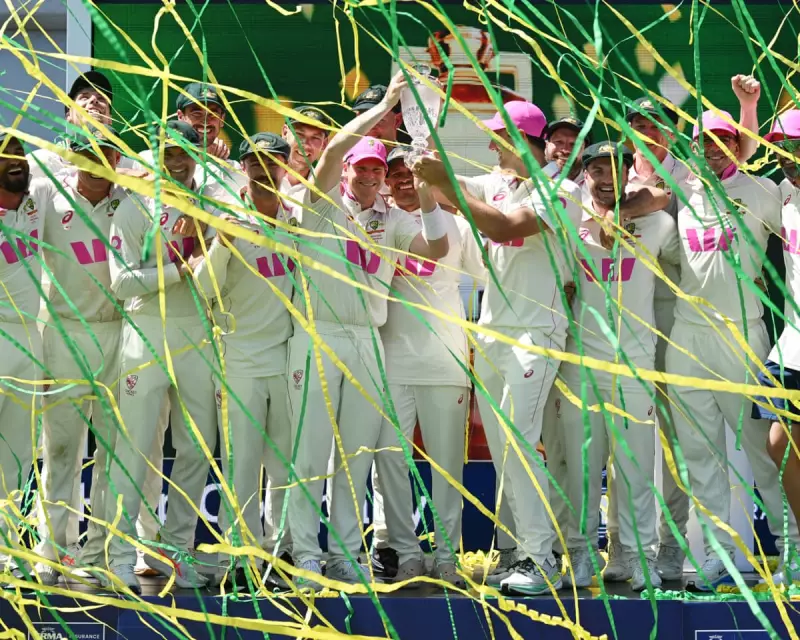
Australia lifted the Ashes urn at the Sydney Cricket Ground after a comprehensive 4-1 series victory, yet the celebrations felt strangely hollow. The triumph, sealed under sunny skies, was overshadowed by a pervasive sense of disappointment regarding the quality of cricket played over the five Tests.
A Hollow Victory in the Sydney Sun
The series concluded with a familiar scene: the host team celebrating with the trophy as fans enjoyed the SCG turf. For Usman Khawaja, it marked an emotional farewell to Test cricket surrounded by family. However, the finale failed to mask the underwhelming nature of the preceding contest. The series was decided after just 31 hours of play across the first two Tests, leaving a long, anticlimactic wait before the remaining matches played out.
England's Ill-Prepared Campaign and Australia's Mediocrity
England arrived in Australia as a rabble, their much-vaunted 'Bazball' philosophy exposed by a fundamental lack of preparation for local conditions. The approach under Brendon McCullum and Ben Stokes, built towards this tour, crumbled under pressure. Their strategy resembled entitlement rather than a crafted plan, assuming a positive mindset alone would suffice.

Critically, Australia were scarcely better. The 4-1 scoreline flattered the hosts, who were saved by their bowlers, wicketkeeper Alex Carey, and batter Travis Head. Steve Smith found form only when the series was already decided. The batting from both sides was largely poor; only Head, Smith, Carey, England's Joe Root, and the surprisingly selected Jacob Bethell averaged over 40. Most specialists languished between 18 and 27.
The two-day Test in Melbourne was a low point, impossible without dramatic collapses from both line-ups. England's chronic dropped catches proved decisive, squandering chances to capitalise on an Australian team that was there for the taking.
Baffling Selections and an Unfulfilling Spectacle
Team management from both camps appeared confused. England's persistent selection issues were mirrored by Australia's erratic decisions, such as batting Usman Khawaja away from his opening position and using Josh Inglis as a specialist batter at number seven. Cameron Green's place was never in doubt despite poor returns, while England's Ollie Pope struggled painfully at the crease.
The selection of Jacob Bethell, with a negligible first-class record, was hailed as a success after a sparkling innings, but it highlighted the tour's gamble-heavy approach. Brydon Carse's 22 wickets, the most for an Englishman in Australia since Jimmy Anderson in 2011, came despite generally unthreatening bowling, underscoring the mediocre standard.
For the nearly one million spectators who attended, and the many more who missed seven days of play, the overwhelming feeling was one of being "unfulfilled". The Ashes remains a pinnacle, but this edition will be remembered for a glaring absence of quality at its core, making the Australian victory a curiously unsatisfying conclusion.