Historic Boxing Bout Between Ukrainian Double-Amputee Veterans
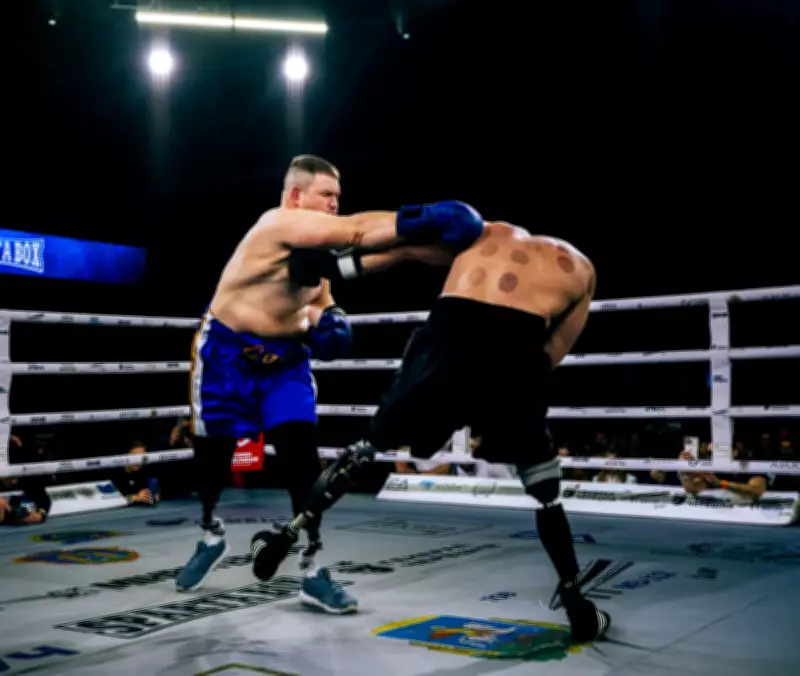
In a groundbreaking event that redefined athletic competition, two Ukrainian war veterans faced off in what organizers have declared the world's first competitive boxing bout between double-amputee fighters. Artem Khrebet emerged victorious over Mykhailo Drobotenko in a three-round heavyweight match held in Brovary, just outside Kyiv, showcasing extraordinary resilience and determination.
A New Rhythm in the Ring
The fight unfolded over three intense two-minute rounds, with the boxers adapting their techniques to prosthetic legs. Movement was deliberate and measured, as each step required careful balance. Once settled, the exchanges mirrored traditional boxing, with jabs and short combinations delivered in bursts. The crowd, which had earlier evacuated due to an air raid alert amid Russian attacks, returned to witness an unprecedented spectacle, initially unsure how to react but soon roaring in support of the fighters' perseverance.
Fighters' Stories of Resilience
Artem Khrebet, known by the military call sign Grizzly, lost both legs in Ukraine's eastern Luhansk region during artillery fire in early 2022. At the weigh-in, he emphasized his motivation: "I am boxing to remind people that, whatever happens, Ukraine and its people will get through this." He rejected pity, stating, "We don't want pity. Even after serious injuries like mine, life goes on. Give us the opportunity and the resources, and we'll do the rest."
Mykhailo Drobotenko, a former special forces member, lost his legs after stepping on a mine. He described the fight as a personal test: "I wanted to test myself and show other guys, my fellow veterans, that despite serious injuries, you can keep living and improving." Both veterans highlighted boxing as a psychological release, with Khrebet noting it offers focus and a sense of normality, even making him forget his missing legs at times.
Adaptive Boxing and Veteran Support
Ukraine faces a daunting rehabilitation challenge, with estimates suggesting over 100,000 people have lost limbs since Russia's full-scale invasion began. Scott Welch, a former British heavyweight champion and advocate for adaptive boxing, observed from ringside. He has promoted boxing for amputees, often in wheelchairs, for over a decade. Welch commented, "Ukraine has so many veterans starting a new life, a new chapter. Boxing builds their confidence and helps their minds. It lets them feel invincible and put on a great show."
The event also featured a wheelchair bout between other Ukrainian veterans, using specialized wheelchairs brought from the UK. However, Khrebet and Drobotenko insisted on fighting on prosthetics to push boundaries. Their coach, Igor Faniian, noted that while adaptive boxing typically avoids winners and losers, these fighters demanded competition for extra motivation.
The Bout's Outcome and Future Prospects
In the third round, Drobotenko struggled with balance under Khrebet's punches, a challenge exacerbated by his higher leg amputations affecting his center of gravity. Khrebet was declared the winner, claiming the Ukrainian veterans' championship belt. Post-fight, Drobotenko remained undeterred, calling for a rematch: "I'm asking for a rematch. I'm not done with him yet."
This historic match not only highlighted the fighters' physical and mental strength but also underscored the potential of adaptive sports in aiding veteran recovery. As Ukraine continues to grapple with the aftermath of war, events like this offer a beacon of hope and resilience, proving that life and competition can thrive even in the face of profound adversity.