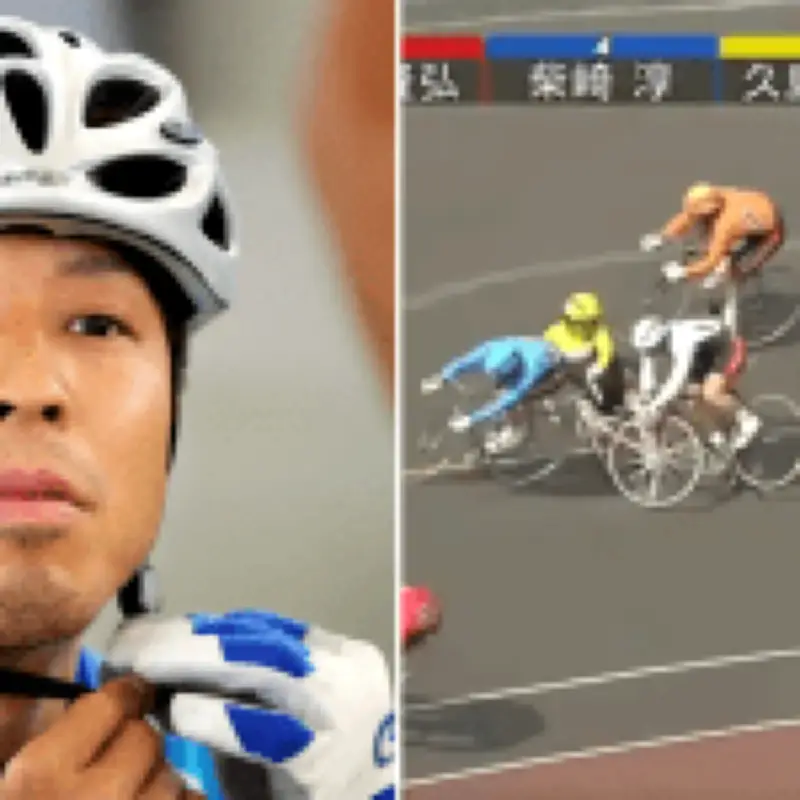
Japanese Olympic silver medalist Toshiaki Fushimi has died at the age of 50 after a crash during a keirin race in Matsusaka, Mie Prefecture. The accident occurred on Saturday during the Matsusaka Keirin tournament.
Crash details and injuries
Fushimi was moving from the back of the pack when riders ahead of him collided, forcing him to swerve. He crashed into a safety barrier, suffering fractures to his cervical vertebrae and skull. He was taken to hospital but died on Sunday at 10:15 a.m., according to the Japan Keirin Autorace Foundation (JKA), which governs the sport.
Fushimi's final words
Before the race, Fushimi expressed a 'strong determination' to reach the S-class final of the Matsusaka Keirin. In a YouTube video posted by Matsusaka Keirin on Friday, after winning several races that day, he said: 'The final race will be a tough one. But I just want to give it my all so that I have no regrets.'
Career highlights
Fushimi, from Fukushima Prefecture, turned professional in 1995. Over his career, he competed in 2,423 races, winning 619. He won the top KEIRIN Grand Prix twice, in 2001 and 2007, and secured five G1 titles. He represented Japan at the 2004 Athens Olympics, winning a silver medal in the men's team sprint alongside Tomohiro Nagatsuka and Masaki Inoue. After a four-year hiatus, he made a comeback in May at the Hiratsuka G1 Japan Championship.
Reactions from officials and peers
JKA chairman Hiroshi Kido said: 'It is truly heartbreaking that he lost his life in an accident during a race. We will reconfirm our safety measures and thoroughly ensure fair and safe races.'
Keirin racer Yudai Nitta, who called Fushimi a friend since school and considered him a mentor, said: 'He was the one who taught me what it means to be able to participate in the Olympics. He also taught me how to behave when competing as a keirin racer. Fushimi was someone who always sought results. Those of us who are left behind want to respond by producing results. I think that would make him happy.'
Nitta added that while he was worried about Fushimi's fall, his death not being reported in the morning papers put him at ease. 'We were saying that even if he was injured, his life was not in danger. So when I heard [he had died] after the race, I was really shocked.'
Shoko Inoue, who raced with Fushimi on Japan's national keirin team, said he had long looked up to him. 'He was very serious and had a solid way of thinking, so there were times when I was concerned about him. All that we who are left can do is work hard, and we have no choice but to show him that we can do that.'