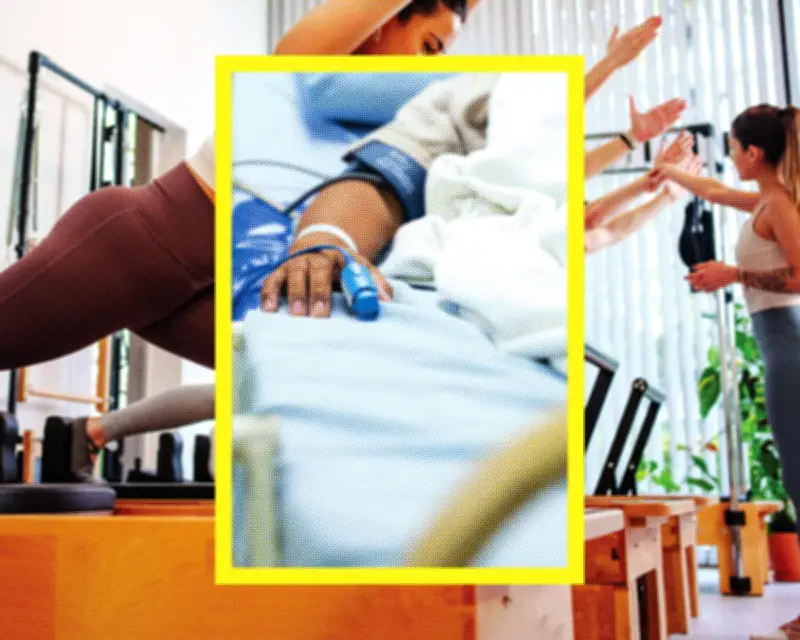
In January 2025, a writer attended her first bootcamp class, seeking an intense workout to relieve stress. The class involved lateral shuffle push-ups and weight-bearing exercises. Despite initial caution, she pushed through exhaustion, collapsing on reps. Later that night, she felt typical soreness, but the next day experienced searing pain and stiffness. Two days later, she couldn't raise her arms and noticed dark urine. Googling her symptoms led her to exertional rhabdomyolysis, a condition where extreme exercise causes muscle cell contents to flood the bloodstream, potentially overwhelming the kidneys.
What Is Exertional Rhabdomyolysis?
Normally, exercise causes minor muscle tears that rebuild, with some creatine kinase (CK) entering the blood, which healthy kidneys filter. But excessive exercise damages muscle cells so much that their contents, including CK and myoglobin, overload the system. Dr. Barry Boden, an orthopaedic surgeon specializing in sports medicine, explains: "When the cell membrane starts to break down, the chemicals within the muscle cells start to get released, which can cause damage to other organs around the body. If there’s enough of those chemicals from the muscle that reach the kidney, it can cause damage to the kidney." Symptoms include muscle pain, weakness, and dark urine, though few experience all three. Treatment involves early IV fluids to help kidneys filter toxins. Mild cases may be managed with oral hydration, but consulting a doctor is crucial, says Dr. Petr Schlegel, a CrossFit trainer and professor at the University of Hradec Králové. The condition is dangerous and fatal in rare cases; researchers estimate 10% of patients develop acute kidney injury (AKI).
How Common Is Exertional Rhabdomyolysis?
The writer had never heard of it before, but it can happen to anyone, including elite athletes. Dr. Boden notes, "Anybody can get it – anybody that’s pushed to an extreme, taking a big jump in their exercise level, or doing something they’re not used to doing." His study estimated over 40,000 cases in US hospitals from 2000 to 2019, but this is likely an underestimate due to under-reporting. Data from Norway, Australia, and the US show an increase between the 2000s and 2010s, and a Canadian province reported a surge in 2024. Researchers suspect the rise is linked to the popularity of high-intensity workouts. "Evidence suggests that high-intensity exercise, especially when combining strength and endurance elements, carries the greatest potential to induce exertional rhabdomyolysis," says Schlegel.
Can You Prevent Exertional Rhabdomyolysis?
Prevention guidance includes varying exercises, incorporating rest, and gradually building intensity. Starting low is especially important for large muscle groups. "It’s that hyperintense going from zero to 100, really intense workouts of large muscle groups, that puts people at risk," says Dr. Bryant Walrod, sports medicine physician for Ohio State Buckeyes. Eccentric exercises like push-ups are particularly likely to cause injury. The National Federation of State High School Associations called push-ups the "No 1 cause" of rhabdomyolysis in a 2024 article. In April, Texas families sued a charter school after 20 children were hospitalized after hundreds of pushups. Walrod notes that collegiate sports professionals became more vigilant after University of Iowa football players were hospitalized in 2011. "Where we see most of the cases is that athletes are being pushed or threatened or punished [contrary to industry standards]," says Dr. Rebecca Stearns, COO at the Korey Stringer Institute. Coaches and fitness instructors may lack adequate training to prevent overexertion.
How Do You Identify Overexertion?
The writer was discharged with a month of no exercise except walking. Learning to self-monitor and advocate for oneself is key. "You know your body the best, and if you feel like something isn’t right, it’s time to speak up," says Walrod. Sports medicine physicians advise stopping exercise immediately if unusual pain occurs. Speaking up in class can be difficult, but Dr. Natalia Petrzela, author of Fit Nation and longtime fitness instructor, tells participants, "Only you know what you can do today." This helps them find the line between safe discomfort and overexertion. The writer now opts for low-impact methods like barre and pilates, where she can modify and avoid keeping pace with others. She tells instructors about her medical history and avoids new or difficult workouts on hard days. "Fitness culture taught me that pain is gain – but now I know that’s not always true," she concludes.