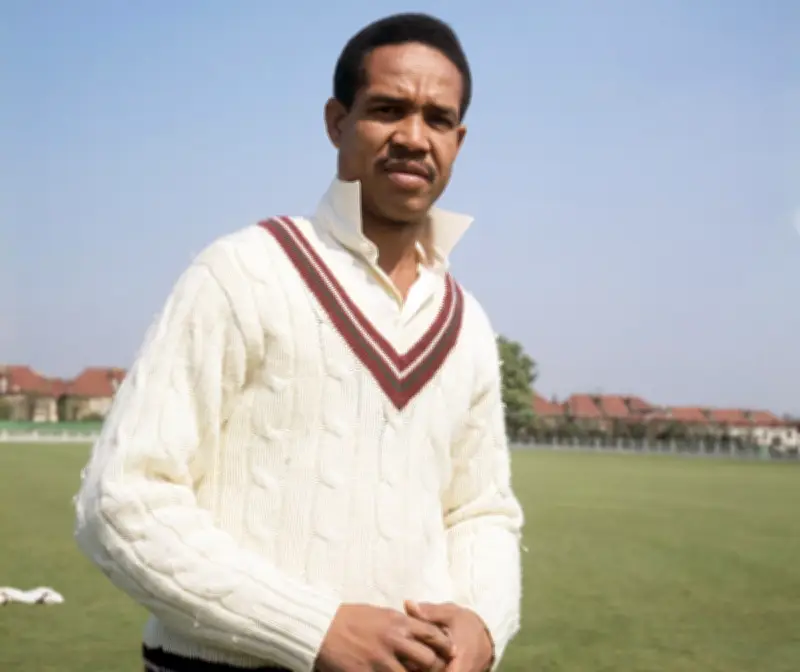
Garry Sobers, the West Indies cricketer widely regarded as the greatest all-rounder in the history of the sport, has died at the age of 89. His career, spanning 93 Test matches from 1954 to 1974, produced 8,032 runs at an average of 57.78 and 235 wickets at 34.03, alongside exceptional fielding.
Unanimous acclaim as the best all-rounder
Unlike debates over the best fast bowler or wicketkeeper, the title of best all-rounder has long been settled in Sobers' favor. The only other candidate, WG Grace, played so long ago that comparisons rely on guesswork. Sobers' batting was sublime, with Don Bradman himself declaring after watching Sobers hit 254 for the Rest of the World against Australia in Melbourne in January 1972: “I believe his innings was probably the best ever seen in Australia.”
Versatile bowling and brilliant fielding
Sobers' bowling was exceptional in three modes: orthodox finger-spin, wrist-spin, and pace bowling. He was also a brilliant fielder, particularly at short leg to off-spinner Lance Gibbs. His all-round prowess defined an era of West Indies cricket that combined victory with joyous freedom.
Early career and record-breaking feats
Sobers made his Test debut at age 17 against England in Kingston, Jamaica, in 1954, replacing ill spinner Alf Valentine. He batted at No. 9—never again—and took Trevor Bailey as his first wicket. Bailey later wrote a biography of Sobers in 1976, stating: “He has, quite simply, been the greatest of all time, the most complete all-rounder ever.” Bailey also noted Sobers' human frailties, including a passion for gambling and a period of heavy drinking, but emphasized his “extraordinary zest for living” and “absolute honesty.”
Sobers reached his first Test century in his 17th match in 1958, scoring 365 not out against Pakistan in Kingston—surpassing Len Hutton's record Test score. He hit 38 fours and no sixes, an oddity for a man who later became the first to hit six sixes in a first-class over, at Swansea in 1968. He followed with two more hundreds in the next Test in Guyana.
Captaincy and style
Sobers captained West Indies for seven years from 1965, initially with great success driven by his own performances. As his form waned, so did the team until Clive Lloyd's era. He famously declared in 1968 in Trinidad, setting England 215 to win in 165 minutes; England won by seven wickets, sparking a furore. Sobers was unrepentant: “That series was so boring. The first three Tests had been drawn. England were bowling something like 12 or 13 overs per hour. I was so fed up and this wasn’t what I thought of as cricket.”
Legacy and impact
Sobers was a cavalier in an era of roundheads, bringing style and grace to victories. His arrival at the crease, with collar up and a slow amble, belied his athleticism and promised a treat. Like Viv Richards after him, his presence alone was worth the entry money. Sobers could not abide tedium, a trait that endeared him to fans worldwide.