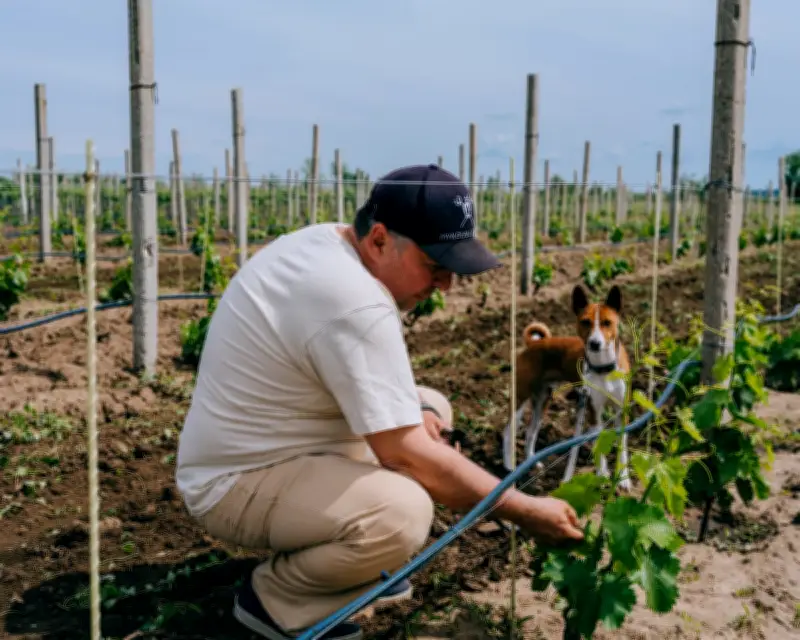
In the Mykolaiv region of Ukraine, winemaker Mykhailo Molchanov trims vine leaves with his dog Direktor at his heels, surrounded by the biodiverse grassland of southern Ukraine. The idyllic scene is marred by an unexploded Russian rocket half-buried between rows of Chardonnay grapes. The Molchanovs have chosen to work around it rather than risk damaging their vines with heavy removal machinery.
Living between the lines
When Russia's full-scale invasion began on 24 February 2022, the Molchanov family fled their home in Mykolaiv to their winery across the Southern Buh river. They found themselves between the lines of both armies, under artillery fire. Heorhii Molchanov, the son, recalled seeing rockets launching upward. The family's wine cellar served as a bomb shelter, though it once held a "pretty decent 2017 Cabernet." The defence of Mykolaiv was successful, preventing Russian forces from advancing on Odesa.
Expanding despite the war
Wine growing is inherently uncertain, with threats from bad weather, disease, and wildlife. Last year, wild goats and pigs destroyed at least a ton of grapes. Yet the Molchanovs have expanded their acreage since the invasion and plan to increase production from 10,000 bottles annually to 30,000-50,000 over the next decade. Mykhailo Molchanov is optimistic about Ukrainian wine's potential, comparing it to Italian wine in the 1960s. The family grows native Ukrainian grapes like telti kuruk and odesa black, alongside familiar varieties.
A hub for winemakers
The Molchanovs run a cooperative hub for local winemakers, some of whom have lost their vineyards. Olha Kashchenko, from Kherson, visited the winery with her son. She once dreamed of becoming a winemaker but her plot is now in a red zone, her country house destroyed. She plans to buy grapes and produce wine at the hub, hoping to return when the area is demined. "We plan to return, we will rebuild and plant our own grapes. But the area is mined, and who knows how long it will take," she said.
Devastating losses across Ukraine
According to Svitlana Tsybak, president of the Ukrainian Association of Craft Winemakers and co-owner of UA Wines, Ukraine's vineyard area dropped from 68,000 hectares in 2014 to 47,000 after Russia's annexation of Crimea, and now stands at 15,000 hectares. Many vineyards have been lost to occupation, the destruction of the Kakhovka dam, and farmers switching to sunflowers or wheat. Despite this, 82 craft wineries have been established since 2022, mostly in safer regions. Tsybak also runs Beykush winery, located on a cape near Mykolaiv, uncomfortably close to the front line. The winery produces about 65,000 bottles a year and is run by a skeleton team. Head winemaker Olha Romashko moved into the winery for safety, and the underground tasting rooms serve as a refuge. Missiles are a constant presence; Romashko noted that when there is no drone activity, "it's strange, and people start to be suspicious about what's on its way."
Planting for the future
In November 2022, Romashko and her deputy Oleksandr Pashkovsky planted malbec grapes, ordered two years prior. Pashkovsky emphasized the importance of not missing a single cycle: "You can't just stop taking care of it. You have to keep on." He added, "We have big hopes for these vines. You can see that they started to blossom. When you look at these buds, how could you possibly abandon them?"