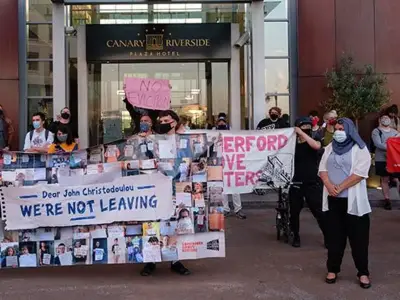
The Reserve Bank of Australia's third consecutive interest rate hike has dealt a harsh blow not only to mortgage holders but also to aspiring homeowners like Dani Hunterford and her husband, who have been diligently saving for a deposit. The latest increase has pushed their dream of owning a home further out of reach.
“It feels quite distressing to be honest with you,” Hunterford said, expressing the frustration shared by many would-be buyers facing rising borrowing costs.
Mixed Impact on Property Prices
While higher interest rates generally weigh on property prices by reducing borrowing capacity and slowing the economy, the impact has been uneven. Home values in Sydney and Melbourne have slid from record highs since late last year, with dwelling prices down 0.6% in April and 0.9% and 1.5% lower over three months, respectively.

However, Gerard Burg, head of research at Cotality, warns that these declines offer little relief for first-home buyers. “There has been weakness in Sydney and Melbourne property prices, but from a first home buyer perspective it hasn’t been in the markets that benefit them,” he said.
Entry-Level Prices Still Rising
In fact, the cheapest 25% of properties—where most first-time buyers focus—continue to climb. In April, prices in this segment rose by 0.5% in Melbourne and 1.5% in Sydney. Burg attributes this to the government’s expanded deposit guarantee scheme, which allows buyers to purchase with as little as a 5% deposit, boosting demand at the lower end.
“That’s been a big advantage to people who can access the scheme now, but for those who come in later, the higher prices will make it harder,” he added.
Borrowing Capacity Shrinks Faster Than Prices
Even where prices are falling, a potential buyer's borrowing capacity is declining more rapidly. The average first-home borrower takes out about $607,000, and with a household budget of around $106,000 per year, each rate hike can reduce the borrowing limit by $17,000. “That could be the difference between getting a property and not getting a property,” Burg said.
For 24-year-old Dani Hunterford, who works full-time while studying a postgraduate law degree, homeownership feels increasingly out of reach despite a “quite significant deposit” saved with her husband. “My husband and I live a pretty normal life. All we want is a place to call our own,” she said.
She noted that high rent payments make saving even harder, and fears landlords will pass on higher interest costs through rent increases. Hunterford, a former Greens candidate in the ACT, has heard similar concerns from voters about the prohibitive cost of homeownership.
Market Expectations and Regional Variations
Despite widespread worries about the future, a Westpac consumer survey found that over two-thirds of Australians expect home prices to continue rising in the coming year, with only 12% predicting a fall.
Sally Tindall, director of digital insights at Canstar, noted that some buyers—particularly those not borrowing to the maximum—might benefit from falling prices. “We could continue to see prices slide in these capital cities that have already taken a backward step,” she said, but warned that any drop is unlikely to offset the hit to borrowing capacity from higher rates.
In cities like Brisbane and Perth, prices continue to defy gravity. Home values in Perth have surged 9.2% so far this year. “It’s a very difficult task for somebody in Perth staring down the barrel of higher prices and higher rates and higher rents,” Tindall said.
Strategies for First-Home Buyers
Tindall advises buyers to boost their borrowing capacity by cutting up credit cards and shopping around for sharper rates. “But ultimately as a first home buyer you need to take into account how much debt you are locking in and do the ‘stress test’ yourself on whether you can afford your monthly repayments,” she said, factoring in potential further rate hikes. “Someone who bought perhaps at the end of last year thinking rates would go down not up would be the first to say how important it is to check and recheck your buffers.”