As the festive season winds down, the global sporting community is turning its gaze to a new year poised for both spectacular competition and significant legal confrontations. The landscape of sport in 2026 is set to be shaped not just by events on the field, but by high-stakes disputes in boardrooms and courtrooms.
FIFA World Cup 2026: A Political and Legal Storm
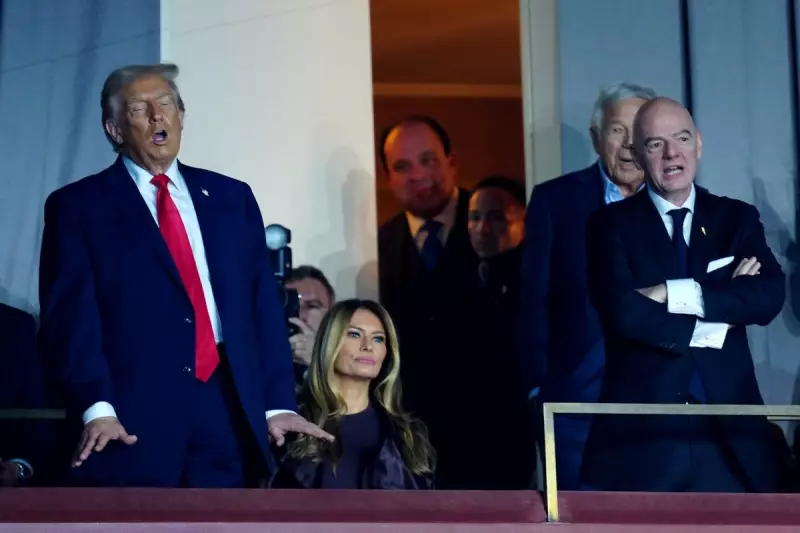
The 2026 FIFA World Cup, scheduled for June and July across the United States, Canada, and Mexico, is rapidly becoming one of the most politically contentious tournaments ever staged. At the heart of the controversy is the close alliance between FIFA President Gianni Infantino and US President Donald Trump, which has ignited accusations of political collusion.
Trump's administration has enforced travel restrictions affecting qualified nations like Iran and Haiti, sparking serious concerns over visa access for teams and supporters. Iran has already boycotted the tournament draw in protest, claiming FIFA failed to honour guarantees for its delegation.

Further uncertainty stems from Trump's threats to move matches away from cities such as Boston and Los Angeles, citing security issues. While potentially empty rhetoric, these statements create logistical and contractual headaches for organisers, broadcasters, and sponsors. The introduction of dynamic 'Oasis-style' ticket pricing and blockchain ticket tokens also risks making this the most expensive World Cup for fans, potentially triggering consumer rights disputes.
Human rights organisations have warned that discriminatory policies and mass surveillance could violate FIFA's own human rights commitments, opening the door to legal challenges from advocacy groups.
Premier League's Financial Revolution Faces Legal Backlash
Domestically, English football is braced for a major governance clash. The Premier League has approved sweeping new financial regulations, including the Squad Cost Ratio (SCR), set to take effect for the 2026–27 season. This rule will limit clubs to spending a maximum of 85% of their football revenue on player wages and transfer fees, replacing the current Profit and Sustainability Rules.
While the league argues this promotes financial stability and competitive balance, critics view it as an effective salary cap. The Professional Footballers' Association (PFA) has stated that legal challenges are "inevitable," arguing the rules infringe on players' rights and constitute a restriction of trade.
Major clubs, including Manchester City and Manchester United, are anticipated to oppose the changes. Competition law experts have also raised significant questions about whether the Premier League's new framework complies with UK law, setting the stage for a protracted legal battle.
The Enhanced Games: An Ethical and Legal Minefield
Scheduled for May 2026 in Las Vegas, the inaugural Enhanced Games plans to openly permit performance-enhancing drugs, positioning itself as a radical, science-focused alternative to the Olympic Games. Organisers promise to "rewrite the rulebook," offering athletes huge financial incentives, including bonuses of up to $1 million for breaking world records.
This provocative approach raises profound legal and ethical questions. Anti-doping agencies, international sports federations, and governments may challenge the event's legitimacy, arguing it undermines decades of work on fair play and athlete welfare. There is a tangible risk of litigation related to athlete health outcomes should the 'enhanced' protocols lead to long-term harm.
Insurance for participants and broadcasters presents another major flashpoint, as traditional insurers may refuse to cover an event encouraging banned substances. With backing from Silicon Valley investors and several high-profile athletes, disputes over sponsorship agreements, intellectual property, and regulatory compliance are expected to dominate the news cycle.

In conclusion, from the geopolitically charged World Cup to the ethically dubious Enhanced Games and the Premier League's financial overhaul, 2026 will rigorously test the limits of law, ethics, and governance in sport. For stakeholders, the defining victories of the year may well be secured in the courtroom rather than on the pitch.