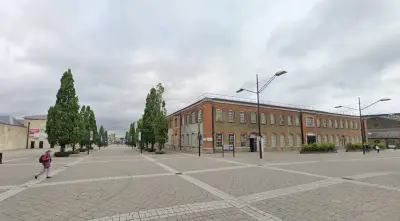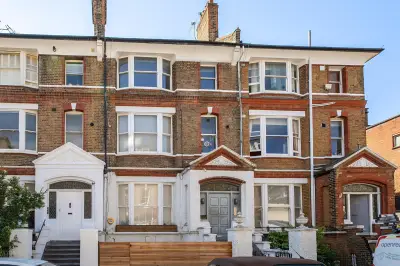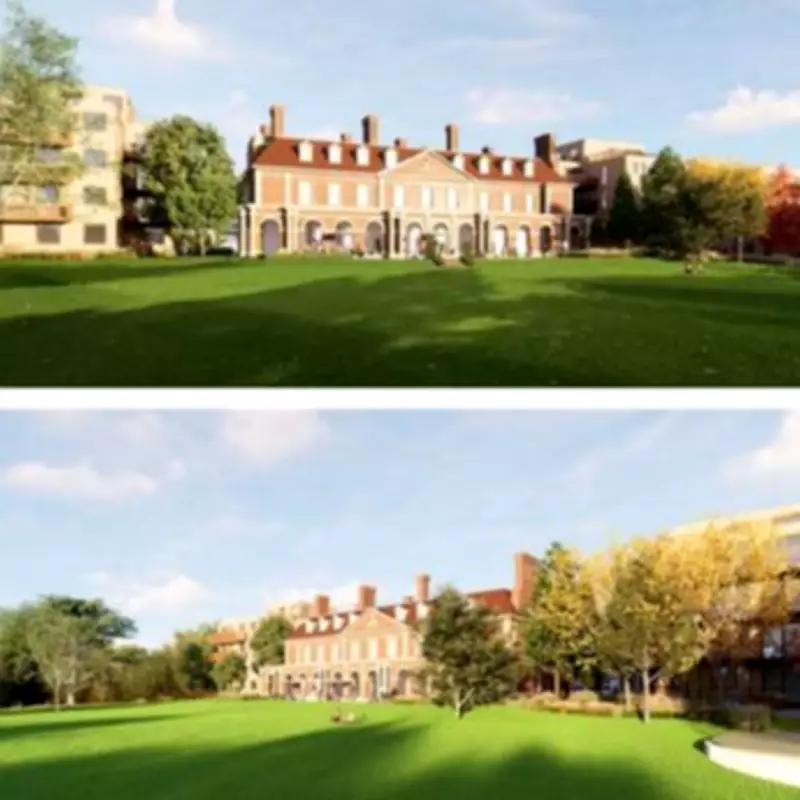
Plans to demolish the former Bromley Civic Centre and replace it with 222 apartments are set to be approved next week, despite strong opposition from local residents who label the proposal as overdevelopment. The Grade II listed Bromley Palace will also be converted into flats as part of the scheme.
Background of the Development
Developer Galliard Home purchased the 6.74-acre Stockwell Close site for £13.5 million last year. Bromley Council sold its former headquarters along with other council-owned properties in 2024 to avoid a £164 million maintenance and refurbishment cost for the outdated buildings.
An earlier proposal by Galliard to convert two former council office buildings into 128 flats was refused in July due to insufficient natural light. That plan also drew criticism for including 115 one-bedroom flats, deemed unsuitable for families.
Updated Proposal Details
The revised scheme includes 222 apartments across six new buildings, ranging from four to five storeys. Of these, 110 are one-bedroom, 95 are two-bedroom, 15 are three-bedroom, and two are studio flats. Additionally, 37 units will be designated as later living accommodation in a separate block.
Among the 222 homes, 200 will be for private sale or rent, while 22 will be affordable units. Bromley Palace will be converted into 11 residential units with a commercial space on the ground floor. The site will feature 23 parking spaces and 346 cycle spaces. Most existing council offices will be demolished.
Planning Officer Recommendation
Bromley planning officers have recommended approval, stating the homes will contribute to the borough's housing supply. They note that the units provide "adequate internal and external living spaces" and that most will have sufficient daylight and sunlight. The creation of publicly accessible open space is also praised.
The proposal will be discussed by the council's Development Control Committee on June 1.
Resident Opposition
Despite the positive recommendation, the plans have attracted 138 objections and only three letters of support. The Palace Estate Residents Association (PERA), representing over 1,300 households, argues that the number of one-bedroom flats is out of keeping with the surrounding family homes. PERA also criticizes the balconies as "inappropriate and out of keeping" with the area's heritage and claims that managing public parks would burden taxpayers.
The Friends of Bromley Palace Park group describes the proposal as "overdevelopment" and "inappropriate for a sensitive, historic, and family-orientated location." They echo concerns about building height and warn that new park access points could "create a haven for criminals" and harm biodiversity.
Other resident concerns include damage to the heritage asset of the palace, strain on the water ecosystem, and increased traffic congestion due to inadequate parking.