East London's rapid regeneration has spearheaded a sharp decline in the number of deprived neighbourhoods in the capital, new analysis has shown. The Indices of Multiple Deprivation (IMD) ranks each locality by income, employment rates, education, health crime, housing, access to services and living environment relative to where they are situated.
Since 2010, the figure has fallen from 23 to 16 per cent in London, according to a new paper from the Centre for Cities think tank. Among inner city neighbourhoods, the share plummeted from 36 to 22 per cent. The rate is now far below the national average for urban neighbourhoods, which now sits at 27 per cent.
It also represents one of the most dramatic reductions in the country, with Manchester and Liverpool also showing significant improvements.
East London Leads Transformation
Anthony Breach, Director of Policy and Research at the Centre for Cities, told the Local Democracy Reporting Service (LDRS) that London's transformation has been led by East London. "This is a continuation of the trend we have seen since the 1980s where East London has gone from being deprived to a more successful and prosperous place," he said.
"People are able to access jobs and thus have a higher standard of living than decades ago. There are plenty of problems still, and always will be - but decades of work by local and national government can take an area down on its luck and bring large parts of it out of the most deprived."
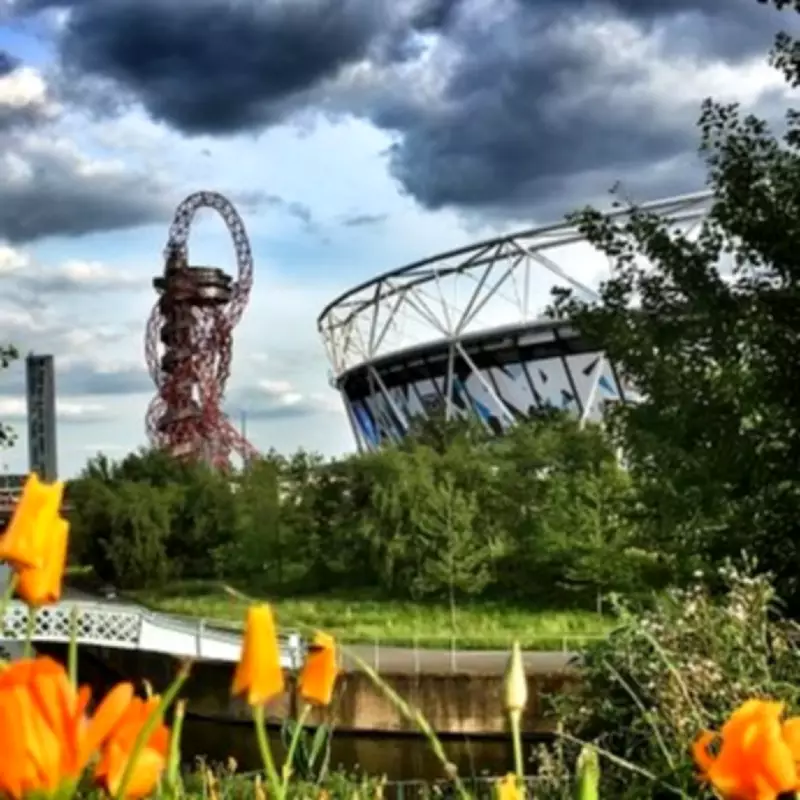
"It's a combination of factors - all the infrastructure and investment from the Olympics has seen the area around Stratford has seen larger decreases in deprivation. There is slightly more affluence within London as well as a whole - it's a more general story of growing opportunity across the capital."
Political Will and Investment
Mayor of London Sir Sadiq Khan has made a point of heavily investing in East London - in particular, ensuring that the area receives the legacy benefits of hosting the 2012 Olympic Games. Unmesh Desai, London Assembly Member for City & East, told the LDRS: "London is moving East, and that has not happened by accident.
"East London's regeneration has been driven by political will, from the last Labour Government, Labour Mayors of London and local councils who chose to back new homes, better transport and major infrastructure like the DLR.
"The 2012 Olympics were consciously placed in East London to help unlock growth, jobs and opportunity in communities that had too often been overlooked. This analysis shows what long-term investment can achieve, but regeneration must always work for local people and ensure people are not left behind or alienated. This is why all levels of government need to pull together to change neighbourhoods and lives for the better."
Middling Neighbourhoods and Future Challenges
Mr Breach also noted that London now has an "unusually high share of middling neighbourhoods - neither deprived nor affluent." "Given the way we talk about the capital as a tale of two cities, it's interesting that most Londoners are simply living a normal life," he added.
However, Mr Breach noted that there is still a lot of "room for improvement", adding: "We will see how things turn out in future - if you look across London's economic performance over the last decade, it compares weakly to other big cities in the UK and round the world. Londoners could be better off - there is still room for improvement, especially providing employment opportunities."
Andrew Carter, Chief Executive of Centre for Cities, said that the results shown by the three major cities - all of which have Mayors with significant devolved powers - shows that the government needs to continue to back Metro Mayors across the country.