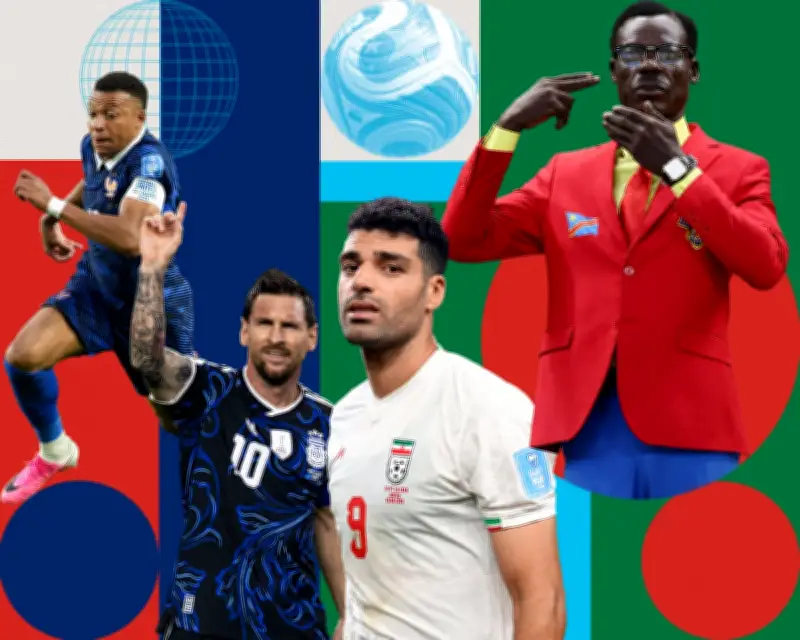
The World Cup has reached the knockout stage after a group stage filled with intrigue, but the tournament is defined by two competing realities: brilliant on-field action and persistent off-field injustices. All critiques of the tournament have proven valid, even as the football delights.
Football's Resilience Amid Controversy
Ultimately, the football has taken over, as it always does. The World Cup has withstood authoritarian leaders, corruption scandals, exploitation of migrant workers, and military dictatorships. It now faces sky-high ticket prices and immigration policies that undermine Gianni Infantino's claim of the most inclusive World Cup ever.
Iran's treatment has been particularly outrageous. They passed through the tournament unbeaten, eliminated only by a last-gasp Austria goal against Algeria. They could have achieved more without having to switch training camps, lacking full backroom staff, and facing punitive travel restrictions.

Visa Issues and Fan Exclusion
Visa rejections have soured the tournament. Reports indicate the US and Canada rejected over 80% of applications from certain countries. Senegal's official photographer couldn't enter Canada. The DRC's most recognizable fan, Michel Nkuka Mboladinga, only attended a game in Mexico. Hundreds of Scotland fans had their Esta authorizations revoked at the last minute.
This sets a dangerous precedent. Host countries should adjust immigration protocols for a global event, as has been done before. Sub-Saharan African journalists and fans faced difficulties for the Cup of Nations in Morocco; what incentive is there to improve for future World Cups? Why shouldn't Saudi Arabia in 2034 be extremely selective?
Supporter Culture Eroded
Decades of supporter culture have been overturned for quick profit. There is no reward for loyalty, no acknowledgment that regular fans creating atmosphere are part of the experience. Ticket prices, transport, and stadium necessities like water are exploitative. A reckoning seems unlikely soon.
Expansion and Competition Format
Expansion has worked with limited quality dilution. Cape Verde topped their qualifying group, and the DRC needed playoffs, but both were assets. Curaçao earned a battling point. However, best third-place teams advancing reduces jeopardy, especially with head-to-head over goal difference. Further expansion to 64 teams seems inevitable, placing additional burden on hosts but potentially benefiting competition.
On-Field Success
The football has been good and will be remembered. The group stage averaged 2.99 goals per game. If maintained in the knockouts, it would be the highest-scoring World Cup since 1958. Big names delivered: Lionel Messi scored five goals, Ousmane Dembélé, Erling Haaland, Kylian Mbappé, and Vinícius Júnior each scored four. Few shocks occurred; Uruguay, Turkey, and South Korea underperformed but exits weren't surprising. The last 32 features intriguing ties.
Drama included Ecuador's win over Germany, the DRC's victory against Uzbekistan, and baffling injury-time in Algeria vs Austria. Fan mobilizations were far more possible than in Qatar: Scots in Boston, Colombians in Guadalajara, Dutch in Kansas City.
Conclusion
All this should be celebrated. But the World Cup runs on two tracks. The football is engaging, but politics, injustices, and problems remain, even if occluded. This is an extract from Soccer Desk: World Cup edition, a newsletter from the Guardian US.