Virginia's Redistricting Referendum: A Critical Battle for Congressional Control
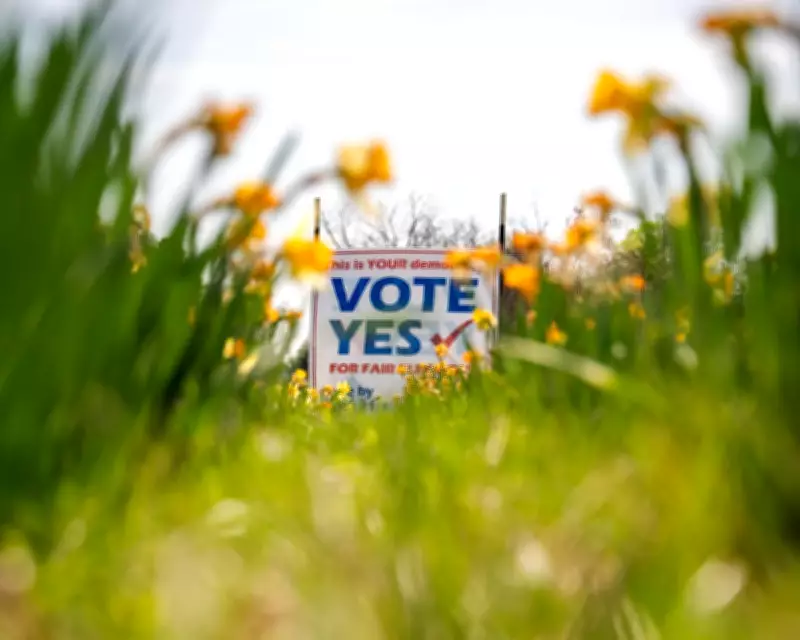
In a pivotal moment for Virginia's political landscape, voters are casting ballots in a special election to decide whether to temporarily replace the state's current congressional maps with new versions that could dramatically shift the balance of power. This referendum, described by former Republican Governor Glenn Youngkin as "the most important election" in the commonwealth's 237-year history, has ignited fierce debate just months after the election of Democratic Governor Abigail Spanberger.
The Stakes of the Redistricting Vote
The proposed maps would redraw Virginia's 11 congressional districts, potentially allowing Democrats to win all but one seat in the November midterm elections. This represents a significant departure from the current delegation, which is split six Democrats to five Republicans. The referendum has become a flashpoint in the nationwide redistricting war, with both parties pouring millions into campaigns.
"They want to override the voice of Virginia and push us into what is now being called the most partisan, most gerrymandered map in America," warned Youngkin during a recent rally in Leesburg, where early voting was underway.

National Implications and Partisan Dynamics
The Virginia referendum represents the latest skirmish in a national redistricting battle that began during Donald Trump's presidency. Trump's efforts to preserve Republican control of Congress sparked tit-for-tat responses across states, with Republican-controlled governments in Texas, North Carolina, and Missouri redrawing maps to imperil Democratic-held seats, while California voters approved maps that could oust Republican lawmakers.
Democrats have framed the Virginia vote as a necessary, temporary response to these national maneuvers. "It is responsive, it is temporary, and a yes vote is our way to stand up and ensure that efforts in other states do not go unmatched," Spanberger declared at a virtual rally.
Polling and Political Calculations
Recent polls show a narrow lead for the pro-redistricting side, with a George Mason University/Washington Post survey finding 52% of voters backing the new maps versus 47% opposed. This represents a much tighter margin than Spanberger's 15-point victory last November, suggesting the issue has energized Republican voters.
"Virginia remains a purplish state. It often swings from D to R and vice versa. That could happen again," noted Mark Rozell, dean of George Mason University's Schar School of Policy and Government. "This issue has energized the Republican base. That's the danger for the Democrats."
Constitutional Questions and Democratic Norms
The referendum raises significant questions about Virginia's redistricting process. In 2020, voters approved a constitutional amendment intended to end partisan gerrymandering by creating a bipartisan commission. When that commission deadlocked, maps were drawn by court-appointed experts. The referendum would set aside this process through the 2030 census.
Some Democrats express concern about undermining democratic norms. "We need to strengthen our democratic norms where we can," said Brian Cannon, a Democrat who campaigned for the voter-approved redistricting process but opposes the referendum. "If you have to burn one for a cause, it damn well better be worth it."
Geographic Realignments and Rural Concerns
The proposed maps would make four Republican-held districts blue-leaning by incorporating heavily Democratic areas of northern Virginia. One district has attracted particular attention for resembling a lobster in shape. These changes have energized right-leaning rural voters who see an "existential threat" to their representation.
Republicans have seized on Spanberger's support for redistricting to accuse her of misleading voters about her political moderation. Some surveys show a drop in the governor's popularity coinciding with the referendum campaign.
Legal Challenges and Future Implications
Even if the referendum passes, the state supreme court could overturn the result in an ongoing case. Meanwhile, Florida Governor Ron DeSantis has called his state's legislature into special session to consider map changes, suggesting redistricting battles will continue nationwide.

James Abrenio, a Democratic appointee to Virginia's bipartisan redistricting commission, argues that states with more complex redistricting processes are at a disadvantage. "My concern is that states like Virginia are being taken advantage of because we have a much more difficult process to respond if somebody is going to be behaving in such an inappropriate way," he said.
With Republicans currently controlling the House by a narrow margin of 217-213, every seat matters in the upcoming midterms. The Virginia referendum represents not just a local political decision but a critical maneuver in the national battle for congressional control, with implications that could extend far beyond the commonwealth's borders.