The US Supreme Court ruled in favor of Monsanto in a decision that blocks thousands of lawsuits alleging the weed killer Roundup causes cancer. The 7-2 ruling, issued in the case Monsanto v. Durnell, held that federal law preempts state-level failure-to-warn claims against pesticide manufacturers when the Environmental Protection Agency (EPA) has not required such warnings.
Majority Opinion and Dissent
Justice Brett Kavanaugh authored the majority opinion, which concluded that the Federal Insecticide, Fungicide, and Rodenticide Act (Fifra) expressly preempts state-law failure-to-warn claims. Justice Ketanji Brown Jackson wrote the dissenting opinion, joined by Justice Neil Gorsuch, arguing that the court misinterpreted Fifra's preemption clause and left the plaintiff without a remedy.
The case centered on glyphosate, the active ingredient in Roundup and other herbicides. The World Health Organization's International Agency for Research on Cancer classified glyphosate as a probable human carcinogen in 2015. Bayer, which acquired Monsanto in 2018, has faced over 100,000 lawsuits from individuals who developed non-Hodgkin lymphoma after exposure. The company has paid billions in settlements and jury awards but maintains that glyphosate does not cause cancer and that EPA approval shields it from liability.

Impact on Pending Lawsuits
The ruling effectively blocks thousands of failure-to-warn claims pending against Monsanto and similarly affects lawsuits against Syngenta, whose paraquat weed killer is linked to Parkinson's disease. Syngenta disputes the evidence linking paraquat to Parkinson's, calling it inconclusive.
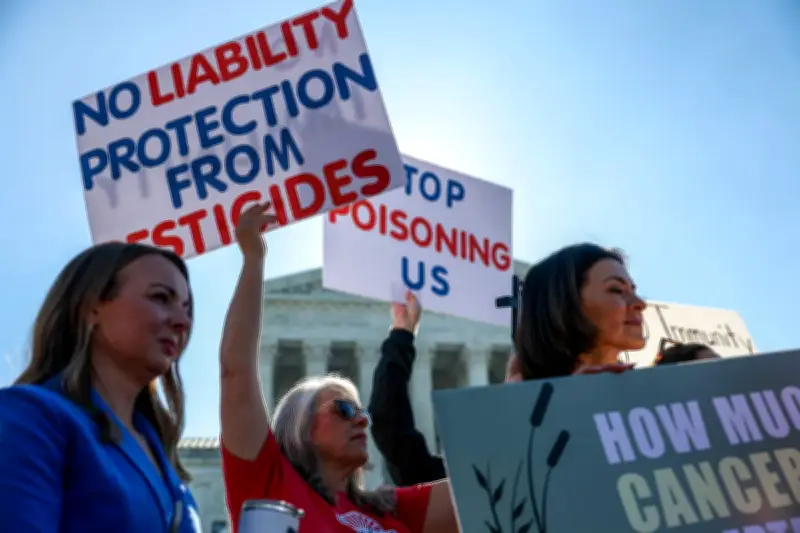
Environmental and public health advocates condemned the decision. Tarah Heinzen, legal director of Food and Water Watch, said in a statement: "Once again, the Supreme Court has sided with big business over people and the environment." Nathan Donley, environmental health science director at the Center for Biological Diversity, called it a "Trump-blessed ruling preventing Americans from seeking justice for serious health problems linked to an EPA-approved pesticide."
Patti Goldman of Earthjustice noted that "EPA approval of a pesticide label does not mean a product is safe, and it should not become a shield for companies that fail to warn about cancer risks." Farmer-led advocacy group Farm Action expressed disappointment but said the fight is not over. President Angela Huffman stated: "No corporation should be allowed to use its market power or political influence to put itself above the law."