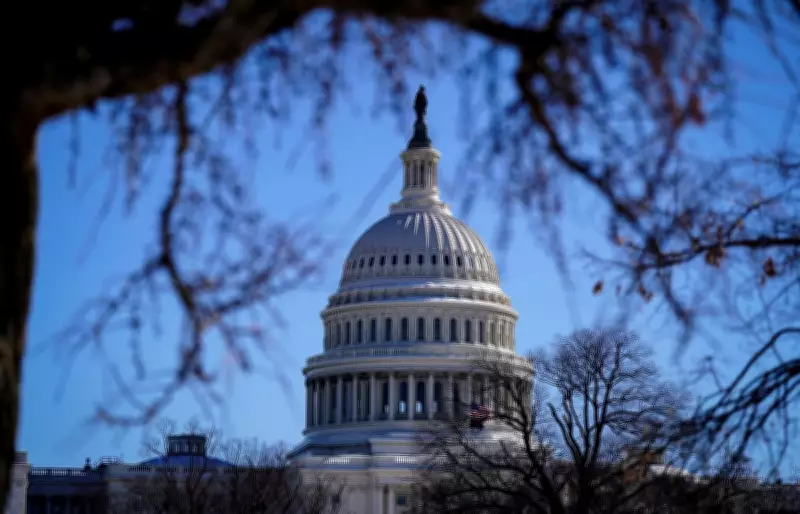
The United States House of Representatives has taken decisive action to resolve a partial government shutdown by passing a substantial $1.2 trillion appropriations measure. This critical vote occurred on Tuesday, with the Republican-controlled chamber approving the funding package by a narrow margin of 217 to 214.
Ending the Government Shutdown
The passage of this comprehensive funding bill is expected to bring an immediate end to the partial government shutdown that commenced after midnight last Friday. This shutdown had significantly disrupted operations across multiple federal departments, including defence, health and human services, labour, and transportation. President Donald Trump is anticipated to sign the legislation promptly, thereby restoring normal governmental functions.
Democratic Negotiations and Demands
While the funding measure provides temporary relief, it simultaneously grants Democrats crucial time to negotiate with both the White House and Republican congressional leaders regarding restrictions on Trump's mass deportation campaign. The funding lapse originally occurred when Democrats refused to approve continued funding for the Department of Homeland Security following tragic incidents in Minneapolis.

Democratic lawmakers have presented a series of specific demands concerning Immigration and Customs Enforcement operations. These requirements include mandating that federal agents wear body cameras during operations, cease wearing masks that obscure their identities, adhere to a strict code of conduct, and obtain proper arrest warrants for individuals suspected of being in the country illegally.
Political Perspectives and Statements
Senate Minority Leader Chuck Schumer emphasised the reasonableness of these demands during a floor speech, stating that what Democrats seek represents "exceedingly commonsense" measures. Meanwhile, House Minority Leader Hakeem Jeffries issued a strong statement following the vote, asserting that the changes his party advocates "must be part of any full-year appropriations bill" for the Department of Homeland Security.
Jeffries further highlighted growing public concern, noting that "Americans from every corner of the country are demanding accountability and an end to the lawless, paramilitary tactics that ICE is using in our communities." He warned that without "bold and meaningful change," there would be no credible path forward for the Department of Homeland Security funding bill scheduled for consideration next week.
Republican Opposition and Policy Developments
Republican House Speaker Mike Johnson, a close ally of President Trump, has expressed opposition to several Democratic demands. During a Tuesday press conference, Johnson argued against requiring federal agents to obtain arrest warrants, questioning the practicality of such measures given judicial system constraints.
In a separate television interview, Johnson raised concerns about Democratic proposals regarding agent identification, suggesting that requirements for ICE agents to stop wearing masks and maintain visible identification "would create further danger" during operations.
Recent Policy Changes and Ongoing Debates
Amid these political discussions, Homeland Security Secretary Kristi Noem announced on Monday that all federal agents in Minneapolis would immediately begin wearing body cameras, with plans to expand this policy nationwide. However, Democratic leaders have criticised this as insufficient, arguing that such measures should be implemented universally without delay.
Schumer particularly emphasised the limitations of executive actions, stating that "executive actions alone will never be enough for the American people. We need to pass legislation. We know how whimsical Donald Trump is. He'll say one thing one day and retract it the next."
The prospects for achieving a bipartisan agreement on federal agents' conduct remain uncertain as negotiations continue. The funding measure's passage represents a temporary resolution while deeper discussions about immigration enforcement policies and accountability measures proceed between congressional leaders and the administration.