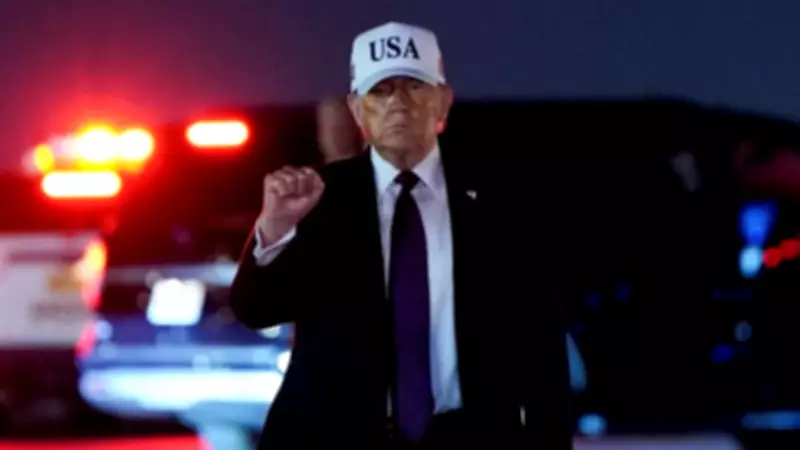
American Deaths Transform Iran Conflict from Abstract to Personal for Trump
The moment American military casualties were officially confirmed on Sunday, the escalating war with Iran ceased to be a distant or abstract geopolitical issue. Three United States personnel were killed and five others seriously wounded in a targeted strike on a US military base located in Kuwait. This tragic development has fundamentally reshaped the political battlefield at home for President Donald Trump, forcing a harsh confrontation between his long-standing campaign rhetoric and the brutal realities of wartime leadership.
Campaign Rhetoric Meets Harsh Reality in the White House
President Trump has consistently portrayed himself as a commander-in-chief who deeply understands the profound human cost of war. He famously mocked the concept of "forever wars" and made solemn vows that American blood would no longer be spilled in distant desert conflicts. However, this carefully crafted narrative met an unyielding reality upon his return to the White House. The confirmed deaths of service members have injected a deeply personal and somber dimension into the ongoing military campaign, moving it beyond strategic discussions into the realm of national mourning and political accountability.
In Washington, the fatalities—coupled with President Trump's stark warning that more casualties could follow—have further polarized an already divided political landscape. Staunch supporters have rallied around the President, arguing vehemently that backing down now would dishonor the fallen and demonstrate weakness. Critics and political opponents, meanwhile, have seized upon the casualties as clear evidence of presidential recklessness and a dangerous escalation of foreign policy.

The Critical Question from the Political Middle
The political middle ground, often quiet but historically decisive in American politics, is now asking the critical and unavoidable question: What are American troops dying for in this conflict? This inquiry strikes at the heart of presidential legitimacy during wartime. There is a palpable risk that further escalation could transform President Trump into the very type of Middle East war president that his own political base has previously rejected. His strategic reversal on military engagement, however justified on tactical or geopolitical grounds, will face its ultimate test in the upcoming mid-term elections, where voter sentiment will be heavily influenced by perceptions of the conflict's purpose and progress.
Historical analysis suggests that American presidents do not automatically lose public support simply because military personnel die on the battlefield. The erosion of support typically occurs when those deaths feel pointless, endless, or poorly explained by the nation's commander-in-chief. In his latest address to the nation, President Trump prepared the American public for a potentially longer war and the grim possibility of additional casualties. The apparent speed with which the conflict is spreading across the broader Middle East region adds another layer of concern for both policymakers and the electorate.
The Paradox of Wartime Leadership and Political Fragility
The longer the military engagement persists, the more lives are lost, and the wider the conflict spreads, the increasingly difficult diplomatic resolutions become. Ultimately, American lives lost in the war with Iran confront President Trump with the profound paradox of leadership during wartime. Executive power is never more absolute than in times of war, yet it is also never more fragile or contingent upon public perception and consent. While missiles and military strategy may shape the physical conflict overseas, it is domestic mourning, collective memory, and the political narrative surrounding sacrifice that will dictate the enduring political cost for the administration. The arrival of the first American flag-draped coffin on home soil will carry a symbolic and emotional impact far greater than any Iranian missile, resonating deeply within the national consciousness and the corridors of political power.