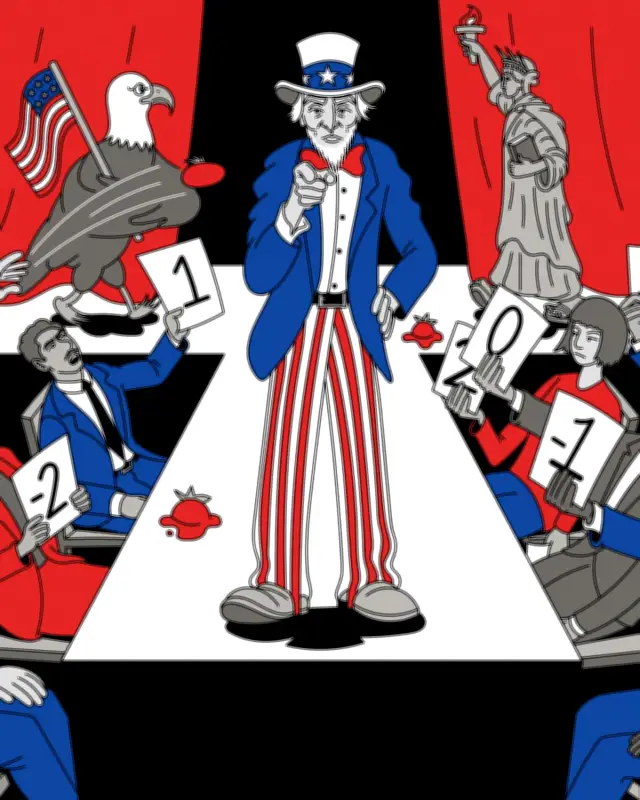
A comprehensive survey conducted by the Pew Research Center has found that the United States' global reputation has plummeted to an all-time low as the country celebrates its 250th anniversary. The study, which polled over 20,000 people in 16 nations, reveals that only 34% of respondents hold a favorable view of the US, a dramatic drop from 64% in 2016.
Sharp Decline in Trust Across Key Allies
Among traditional allies, the decline is particularly stark. In Germany, favorable ratings fell from 57% to 19%; in France, from 63% to 24%; and in Japan, from 78% to 41%. The survey attributes this erosion to perceptions of political instability, rising inequality, and controversial foreign policy decisions.
According to Richard Wike, director of global attitudes research at Pew, “The United States is no longer seen as a reliable partner or a beacon of democracy. The damage to its image has been profound and may take years to repair.”

Impact on Soft Power and Diplomacy
The decline in reputation has tangible consequences for US soft power. International students considering US universities have decreased by 12% since 2020, and tourism revenue has fallen by an estimated $15 billion annually. Diplomatic efforts, including climate change initiatives and trade negotiations, have been hampered by reduced trust.
In contrast, China's global favorability has risen to 45%, and the European Union is viewed favorably by 58% of respondents. This shift indicates a reordering of global influence.
Domestic Factors Driving International Views
The survey highlights that domestic events significantly shape foreign perceptions. The January 6 Capitol riot, ongoing debates over voting rights, and Supreme Court decisions overturning Roe v. Wade were cited by 72% of respondents as reasons for their negative view. Additionally, 68% expressed concern about political polarization in the US.
“When Americans lose faith in their own institutions, the world follows suit,” noted Sarah Binder, a political scientist at the Brookings Institution. “The US image is inextricably linked to the health of its democracy.”
Generational Divide in Perceptions
Younger people globally are more critical of the US. Among those aged 18-29, only 28% hold a favorable view, compared to 42% among those 50 and older. This generational gap suggests long-term challenges for US public diplomacy.
Efforts to counteract the trend, such as increased cultural exchanges and aid programs, have had limited impact. The Biden administration's “Summit for Democracy” failed to shift opinions, with 61% of respondents saying US democracy is not a model for their own countries.
Regional Variations
While the US image has deteriorated in Europe and Asia, it remains relatively stable in parts of Africa and Latin America. In Nigeria, favorability stands at 55%, and in Mexico, at 49%. However, even in these regions, trust in US leadership has declined by an average of 15 percentage points since 2017.
The survey underscores the magnitude of the reputational crisis facing the United States as it reaches a historic milestone. Without significant changes in domestic and foreign policy, experts warn that the US may struggle to regain its standing on the world stage.