
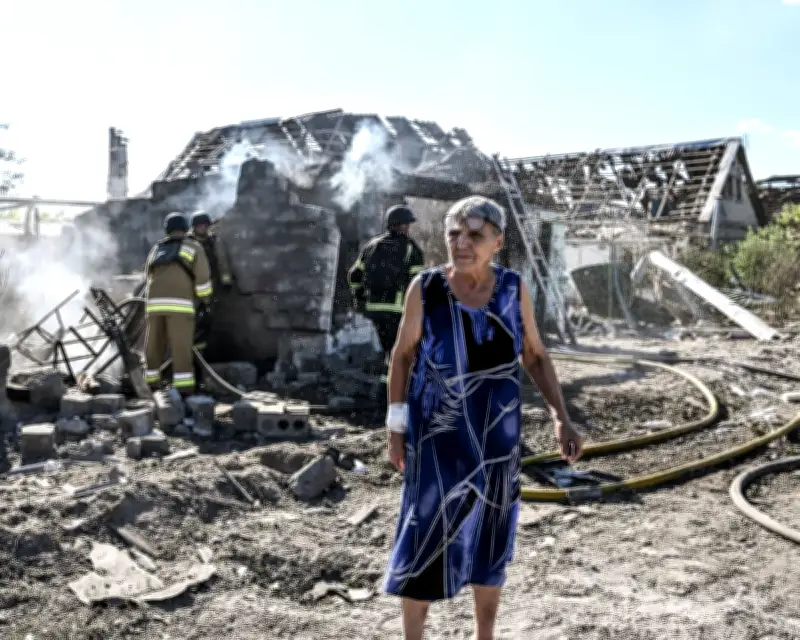
As Russia's assault on Ukraine continues into its fifth year, the political and diplomatic landscape is shifting, with Kyiv facing not only intensified military attacks but also growing tensions with a key ally, Poland. The conflict, which began with Russia's full-scale invasion in February 2022, shows no signs of abating, and the search for a peace deal remains elusive.
Renewed Air Attacks on Kyiv
During a recent trip to Kyiv, the reality of the war was stark: frequent mass drone and missile attacks keep residents awake, and some strikes have penetrated the city center, killing 27 people in a single attack. Thousands seek shelter in the metro to sleep. Ukrainian air defenses, once effective, are now struggling to repel all attacks.
Prospects for Peace in 2025
Questions about a potential end to the war persist. All of Donald Trump's attempts to broker a ceasefire have failed, and attention has shifted to the Middle East. However, there is cautious optimism in some quarters that late autumn 2025 might offer a window for a deal. Ukraine is eager to avoid another winter at war, and Vladimir Putin faces pressure from Kyiv's long-range drone strikes on Russian oil infrastructure. Others remain skeptical, pointing to Putin's aggressive rhetoric and suggesting Moscow is more likely to double down than negotiate.
Domestic Political Turmoil
Domestically, political life is heating up. President Volodymyr Zelenskyy is preparing to reshuffle the government, and rumors circulate that he may seek a renewed mandate through a presidential election, possibly following a ceasefire. However, organizing elections under wartime conditions raises numerous questions: how would frontline communities, Ukrainians under Russian occupation, and millions of refugees abroad vote? Who would challenge Zelenskyy, and is a real political contest feasible?
Fraying Alliance with Poland
A new scandal has erupted: the increasingly acrimonious falling out between Ukraine and Poland. Once one of Kyiv's most reliable allies, Warsaw is now furious over Ukraine's decision to name a military unit after the "Heroes of the UPA"—the Ukrainian Insurgent Army, a wartime nationalist group responsible for massacres of Poles and Jews during World War II. This has sparked outrage in Poland, complicating the bilateral relationship.
Bartosz Cichocki, Poland's former ambassador to Ukraine, warned that Poland may now get tougher on Ukraine's path to joining the European Union. "No more romance, no more naivety," he said, describing the future of the Poland-Ukraine relationship.
Historical Memory Wars
The dispute underscores the complexity of historical memory in the region. While Ukraine has been pushing back against Russian propaganda that paints it as a haven for neo-Nazis, the veneration of the UPA introduces a more complicated element. Many people, not only Poles, take issue with honoring a group that committed atrocities. The depth of animosity among ordinary people on both sides is striking: Ukrainians argue that Poland is playing into Russian hands by focusing on history during wartime, while Poles feel that after four years of supporting Ukraine, they deserve respect for their historical grievances.
As elections loom in Poland and potentially in Ukraine, tensions between Warsaw and Kyiv are expected to worsen before they improve. The handling of historical issues by politicians rather than historians is a worrying trend, according to observers.




