From Love Actually to Contempt Actually: The State of UK-US Relations
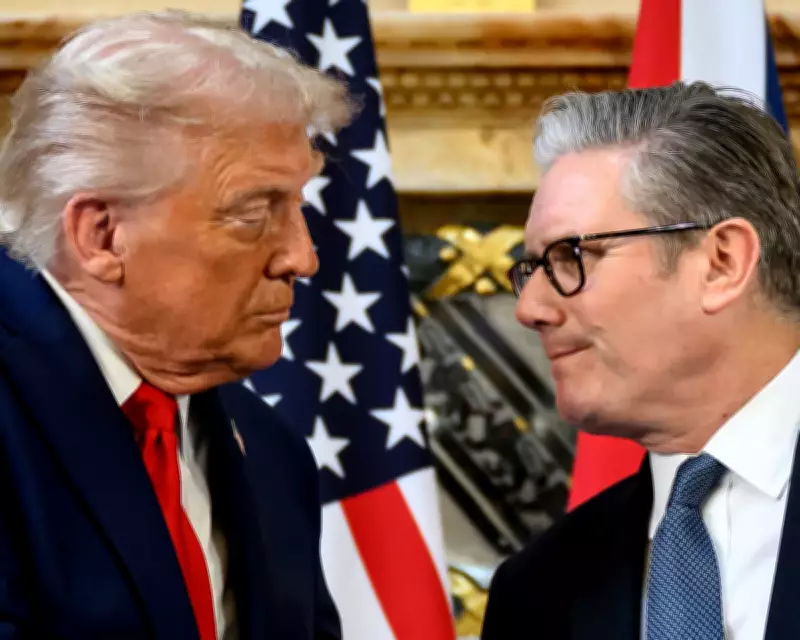
During a press conference at Chequers on September 18, 2025, Donald Trump and Keir Starmer shook hands in what appeared to be a diplomatic gesture. However, beneath the surface, the reality of Washington's current relationship with Britain is far from the romanticized version portrayed in films like Love Actually. Instead, it has evolved into what can only be described as Contempt Actually.
The Illusion of the Special Relationship
In a famous scene from Love Actually, Hugh Grant's British prime minister declares: "A friend who bullies us is no longer a friend. And since bullies only respond to strength, from now onward, I will be prepared to be much stronger." Real-life Prime Minister Keir Starmer has attempted a similar, albeit more subtle, stance against the current occupant of the White House regarding US military actions in the Middle East.
Despite extensive efforts by the British government to flatter Donald Trump since his election, the response to Starmer's mild pushback has been a torrent of contempt. When asked about Britain's nuanced position on defensive versus offensive strikes in the Gulf, MAGA ideologue Steve Bannon responded bluntly: "That's diplomatic bullshit. Fuck you. You're either an ally or you're not. The special relationship is over."

This echoes the long-standing observation that the special relationship is so special that only one side knows it exists—a sentiment first voiced by former West German chancellor Helmut Schmidt four decades ago.
Historical Context and Contemporary Realities
The relationship between the United States and Britain has undergone significant transformations:
- 1776-1917: Characterized as a peculiar rather than special relationship, with the US defining itself against Britain while maintaining mutual fascination
- 1941-1956: A genuine power partnership emerged during World War II and its aftermath, though Britain was never America's equal
- Post-Suez Crisis: France pursued European strategic autonomy while Britain doubled down on its US relationship, becoming "Athens to America's Rome"
Today, Britain finds itself in an increasingly dependent position. As one American critic asked: "Why does your government keep grovelling?" The behavior resembles that of someone trapped in an abusive relationship, clinging desperately to diminishing returns.
The Dual Impact of Military Decline and Brexit
Two critical developments have exacerbated Britain's weakened position:
- Military Decline: American soldiers who fought alongside British forces now remark with pity that "you barely have an army any more." This perception has even entered popular culture, with Netflix's The Diplomat describing Britain as "the little island that couldn't."
- Brexit Consequences: Britain's departure from the European Union has made it significantly less important to the United States. During Tony Blair's era, Britain maintained influence through both transatlantic and European connections. By severing its European leg in 2016, Britain lost crucial leverage.
Unlike France or Germany, Britain now lacks alternative strategic partnerships, creating what appears as peculiar desperation in its foreign policy approach.
The Path Forward: Rebuilding Respect Through Europe
For those who care about Britain's global standing, the current situation is painful to witness. The country has reduced itself to an object of contempt or, at best, pity. However, a viable path exists toward regaining self-respect and international respect.
The solution involves maintaining the best possible relations with the United States while strategically repositioning Britain as a core component of a stronger Europe. This requires:

- Contributing to European defense development, particularly through the Europeanization of NATO
- Considering rejoining the European Union, as suggested by London Mayor Sadiq Khan
- Developing a five-to-ten year strategic plan for reintegration
As Britain navigates this challenging period, the fundamental question remains: Can it rebuild the influence it has steadily lost, or will it continue to be the junior partner in a relationship increasingly characterized by contempt rather than cooperation?