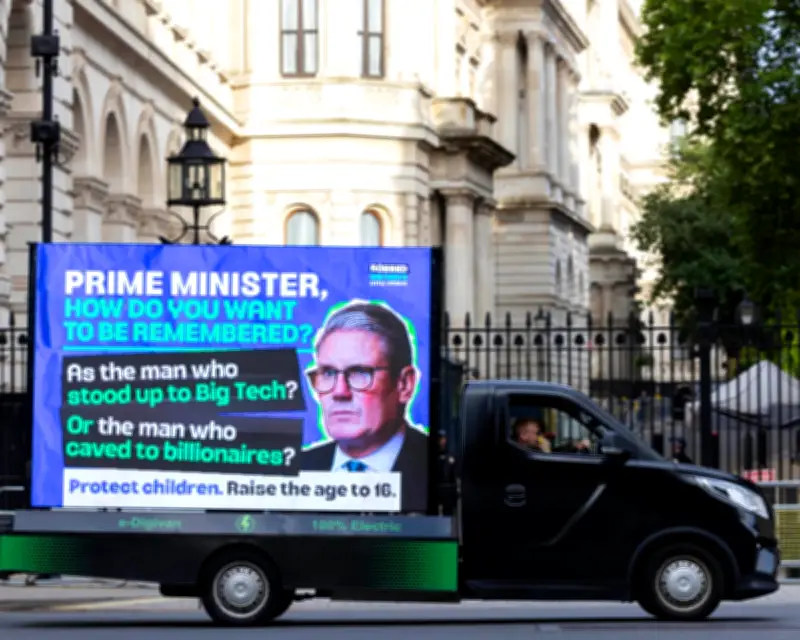
The UK government is set to announce a sweeping crackdown on social media, banning teenagers under 16 from accessing "high-risk" apps and imposing restrictions on safer platforms. Under-18s will also be prohibited from using romantic or sexual AI chatbots, following a consultation on child online safety.
Government Plans and Legal Challenges
Prime Minister Keir Starmer will outline the plans on Monday, with specific platforms facing an under-16 ban to be confirmed later. However, sources warn that the decision to ban some platforms but not others could lead to judicial review. The government received over 116,000 responses to the consultation, with nine out of ten parents supporting an under-16 ban.
Rapid Turnaround and Parental Support
A Downing Street source emphasized the need for a "gamechanger" approach, stating that "it's not going to be an incremental change." The prime minister has listened to parents who feel they are fighting against huge tech giants alone. Restrictions on "safe" apps will include bans on disappearing messages, chats with adult strangers, and livestreaming for under-16s.

Comparisons with Australia
In Australia, where an under-16 social media ban is already in place, the block applies to any service allowing social interaction between users and posting material. This includes TikTok, YouTube, Snapchat, X, Instagram, and Facebook. Pro-ban advocates are cautiously optimistic but question whether the government is ready to take on big tech.
Age Verification and Privacy Concerns
The ban raises questions about age verification. The Online Safety Act currently requires platforms with pornographic or harmful content to verify users are over 18. Companies like Meta use self-reporting and third-party technologies. The new measures may force platforms to collect more data, impacting privacy.
Legal experts note that judicial reviews consider the legality of decisions, not their merits. Mark Jones of Payne Hicks Beach said the speed of the decision is not sufficient grounds for a successful challenge, as the threshold for irrationality, procedural unfairness, or illegality is high.