The impact of the UK's social media ban for under-16s will depend on how strictly it is enforced, with questions remaining over enforcement, privacy risks, and whether it could open the door to even more invasive measures.
How Will the Ban Work?
Prime Minister Keir Starmer has drawn a line in the sand for tech companies. From next spring, under-16s will be barred from accessing major social media platforms. Additionally, 16- and 17-year-olds will face limitations on livestreaming and chatting to strangers. Currently, the minimum age is 13, set by UK data privacy law.
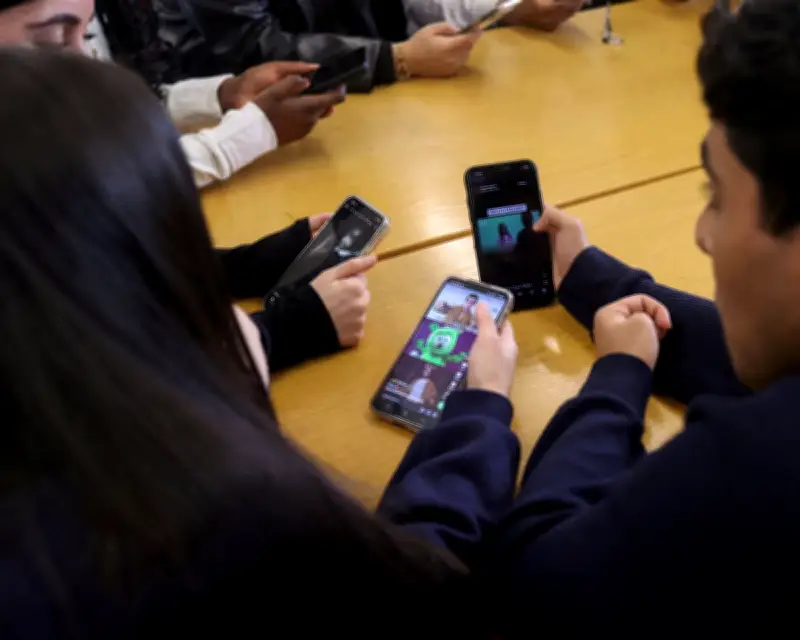
These changes will profoundly affect the digital lives of many young people. According to Ofcom, the UK's media regulator, over 90% of the UK's 2.5 million 13- to 15-year-olds have their own social media profile. Furthermore, 80% of 10- to 12-year-olds—about 2.5 million people—use social media.

This means children and adults will face a strict age-checking regime when the ban comes into force. The government is determined to implement a more effective system than Australia's, where a ban introduced last December has been hampered by a "substantial proportion" of under-16s circumventing restrictions.
Privacy rights campaigners have criticized the announcement. The Open Rights Group says it will be "virtually impossible" to be online in the UK without handing over identity documents or biometric data. Big Brother Watch warns of a "papers please" approach to getting online.
US tech companies affected by the ban, including Google's YouTube and Meta, argue that children will be cut off from vital information sources. TikTok is the biggest single source of news for 12- to 15-year-olds in the UK, followed by YouTube, Facebook, and Instagram.
But all this hinges on whether the ban works. Ofcom has been tasked with developing a robust age-checking regime, building on existing measures for the Online Safety Act (OSA). These include facial age estimation, checking age via credit card providers or mobile network operators, photo ID matching, and digital identity wallets. Device-level verification may also be added, meaning operating systems like Apple OS or Android would verify users' ages, a solution favored by Meta as it would absolve large social media companies from implementing age verification themselves.
What Ofcom currently requires is unremarkable to most but has raised concerns among privacy campaigners, who say age checks under the OSA have already expanded beyond their intended scope. James Baker of the Open Rights Group notes that platforms not covered by the act, such as iPhone, Spotify, Xbox, and PlayStation, have already implemented ID checks to avoid regulatory issues.
Some sites, like Imgur and a guitar builders' forum, have left the UK due to the OSA. There are also questions about the methods tech platforms use to verify identities. Companies providing age verification services are poorly regulated, say campaigners, and some may store data in the US.
Data leaks are another concern. Last year, Discord reported that photo IDs of 70,000 users may have been leaked after hackers targeted a company it used for age verification.
The fear is that a new age-gating regime could lead to even more invasive measures and greater privacy risks. Much will depend on how Ofcom designs its regulation. The government wants to prevent teenagers from bypassing the ban, as in Australia, which could push the regulator toward requiring tech platforms to collect more data on all users, both adults and children.
The discussion has been further complicated by a recent government announcement at London Tech Week, promising to make it impossible for children to "take, share or view naked pictures on their devices." While well-intentioned, the lack of specifics sparked anxiety, with Signal calling the plan "dystopian" and warning of "mass surveillance and censorship capabilities."
Preventing children from sending nude images and banning social media are technically different—one may involve scanning devices, the other does not—but the risks are being conflated, making it harder to identify actual privacy dangers.
Starmer describes Monday's measures as a "new normal for future generations." How firm that line is will determine their impact.