The Transatlantic Epstein Justice Gap: UK Royal Probe Highlights Accountability Divide
The recent arrest of Andrew Mountbatten-Windsor, brother of King Charles, on suspicion of misconduct in public office has brought renewed attention to the Jeffrey Epstein scandal and exposed a stark transatlantic divide in how justice is being pursued. While British authorities have taken significant action against high-profile figures connected to Epstein, their American counterparts have shown markedly less enthusiasm for holding powerful individuals accountable.
A Royal Reckoning Long Overdue
Andrew Mountbatten-Windsor's arrest on his 66th birthday marked a dramatic moment in the ongoing Epstein saga. The disgraced royal was photographed leaving a police station looking visibly shaken, an image that quickly became symbolic of the investigation's seriousness. Although he has since been released from custody, the probe continues into allegations that he shared confidential information with Epstein.
This investigation represents a significant development, particularly given Mountbatten-Windsor's previous avoidance of serious legal consequences. Despite long-standing questions about how he funded his extravagant lifestyle and allegations that he abused his role promoting British trade abroad, he had managed to avoid criminal proceedings until now. His ability to secure £12 million to settle Virginia Giuffre's civil lawsuit without admitting liability further highlighted the protection afforded to powerful figures.

The current investigation only gained momentum following the release of Epstein files, which occurred after Giuffre's death. No formal UK police investigation followed her initial claims, raising questions about whether justice would have been pursued at all without the document release.
British Political Fallout Extends Beyond Royalty
The Epstein revelations have shaken British political circles beyond the royal family. Peter Mandelson, the veteran politician and former UK ambassador to the United States, was dismissed from his diplomatic post last September after emails revealed his close ties to Epstein. He now faces a criminal investigation into allegations that he passed market-sensitive information to the financier.
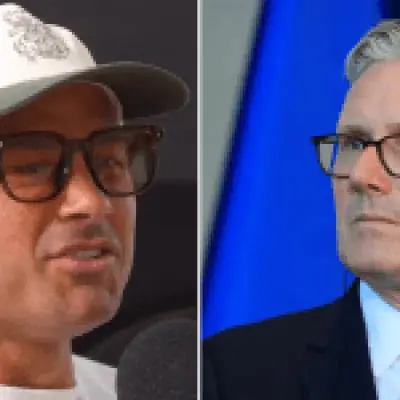
Epstein himself boasted about his British connections in one email, claiming "I've got the UK sewn up" while referencing both Mountbatten-Windsor and Mandelson. The scandal has created significant turmoil for Prime Minister Sir Keir Starmer's government, forcing him to explain why he hired Mandelson despite some knowledge of his Epstein links.
Contrasting American Response
Across the Atlantic, the response to Epstein connections has been markedly different. Despite numerous powerful Americans being linked to the financier, few have faced meaningful consequences. US Commerce Secretary Howard Lutnick has ignored calls for his resignation over Epstein ties, while former Victoria's Secret CEO Les Wexner testified before Congress without facing significant repercussions.
Billionaire Leon Black continues to serve on the Museum of Modern Art trustee board despite his Epstein connections. While some figures like former Treasury Secretary Larry Summers have stepped back from public roles, the only person facing criminal consequences in the US for Epstein dealings remains Ghislaine Maxwell, a British woman.
This discrepancy hasn't gone unnoticed. Skye Roberts, brother of the late Virginia Giuffre, has publicly stated that the UK is doing far more than the US to pursue accountability. "I think that the king can hold his head high when he comes here saying: 'I am doing the most that I can,'" Roberts noted, contrasting this with what he sees as insufficient action from American leadership.
Analyzing the Accountability Divide
Political analysts offer various explanations for why Britain appears to be pursuing Epstein connections more vigorously than the United States. University of Manchester political science professor Rob Ford suggests that Britain may have "a more functional media" and "a more functional accountability structure" that maintains "a degree of shame in politics."

However, this interpretation may be overly charitable toward British institutions. The reality likely reflects how deeply embedded Epstein was within American elite circles and how former President Donald Trump's administration fundamentally altered accountability norms. A New York Times analysis found more than 38,000 references to Trump, his family, and properties in the Epstein files, creating complex political dynamics that may be inhibiting investigations.
Recent polling indicates public skepticism about the American response, with more than half of Americans in an Economist/YouGov survey believing Trump is attempting to conceal crimes committed by Epstein.
International Comparisons and Ongoing Investigations
France has also seen slow progress in Epstein-related cases. Jean-Luc Brunel, a former modeling agent arrested in 2020 for his Epstein connections, was found dead in his Paris prison cell in 2022. Although his case was initially dropped, French authorities announced last weekend they would re-examine it as part of a broader review of Epstein files for evidence implicating French nationals.
The contrast between international responses highlights fundamental questions about how different justice systems handle cases involving powerful, well-connected individuals. While Britain's investigation of Mountbatten-Windsor represents progress, it comes years after initial allegations and follows the death of key accuser Virginia Giuffre.
As investigations continue on both sides of the Atlantic, the Epstein case continues to test the principle that "nobody is above the law"—a sentiment expressed by British officials but increasingly questioned by observers noting the uneven application of justice between nations and across social hierarchies.