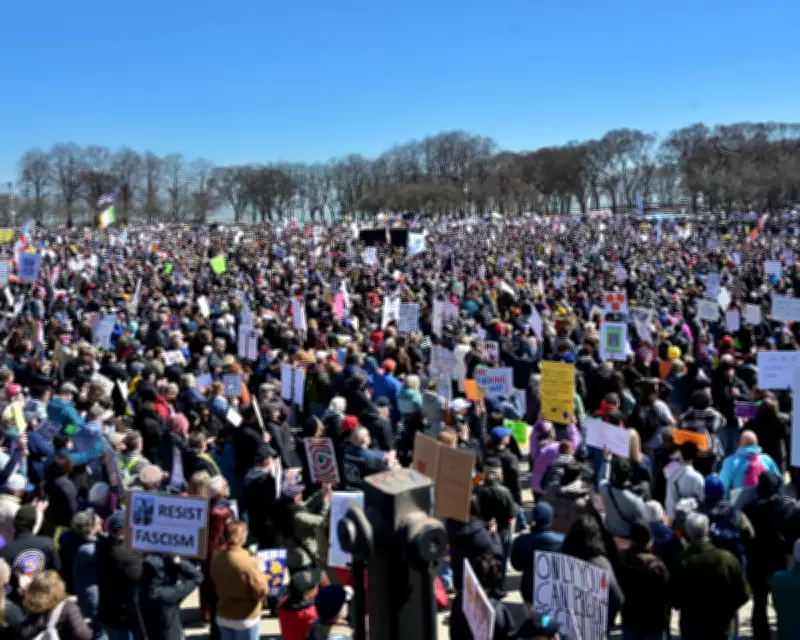
Millions of Americans recently demonstrated their commitment to the common good through nationwide solidarity protests. Across the country, people voiced opposition to Trump's controversial military actions in Iran, stood with immigrants targeted by immigration enforcement, supported public officials facing prosecution, defended academic freedom, advocated for climate action, and rejected authoritarian tendencies.
From Protest to Political Power
The No Kings protests demonstrated widespread opposition to Trump's policies and actions. As midterm elections approach, this solidarity presents a crucial opportunity to translate public sentiment into tangible political influence. The key question remains: how can this energy be effectively channeled into electoral success?
Three Strategic Approaches
All three strategies depend on collaboration with existing activist networks, including connections made during recent protests and participation in local organizations like Indivisible chapters.

First, target vulnerable Republican legislators. Focus efforts on Republican senators and House members representing competitive districts. The goal should be either convincing them to switch party allegiance or become independents aligning with Democrats, or ultimately flipping their seats in upcoming elections. Republican majorities remain extremely narrow in both congressional chambers, creating significant opportunities for strategic gains.
Many Republicans from purple districts face mounting challenges maintaining party loyalty while grappling with their own ethical concerns about supporting what critics describe as Trump's authoritarian approach. This internal conflict creates political vulnerability that can be exploited through organized pressure campaigns.
Midterm Election Mobilization
Second, begin immediate organizing for November's midterm elections. The objective should be securing Democratic control of both congressional chambers with substantial margins, which would significantly constrain Trump's executive power after January 2027. Success depends fundamentally on voter turnout strategies.
Concrete planning should include developing comprehensive get-out-the-vote operations, establishing communication networks through phone trees, organizing postcard campaigns, and arranging transportation for voters needing assistance. Recent electoral trends provide encouraging signs: since January 2025, Democrats have outperformed expectations in special elections within districts Trump previously carried, averaging 17-point margins above typical performance.
Just last month, Democratic candidates secured victories in two Florida state legislative special elections, including flipping the district containing Trump's Mar-a-Lago residence. Concurrently, Trump's approval ratings continue declining across multiple polls. Recent Reuters/Ipsos data shows only 36% approval with 62% disapproval—a new low for his second term. Quinnipiac polling indicates 38% approval versus 56% disapproval, while even Fox News surveys show just 41% approval against 59% disapproval.
Perhaps most significantly, 58% of Americans oppose U.S. military action in Iran according to recent polling. While these trends suggest favorable conditions for Democratic midterm performance, they cannot substitute for meticulous voter identification, registration efforts, motivation campaigns, and logistical support for ballot access.
Protecting Electoral Integrity
Third, actively challenge any attempts to undermine electoral processes. Vigilance is essential against potential voter intimidation tactics or procedural manipulation that could suppress Democratic turnout. Specific concerns include positioning federal agents near polling locations, interference with ballot counting or certification, or regulatory changes creating voting barriers.
Concerned citizens should maintain communication with state and local party officials and election administrators to ensure appropriate safeguards. If adequate protections appear insufficient, legal challenges through federal courts may become necessary. The American Civil Liberties Union maintains 54 state-level offices with local chapters that can provide advocacy support and volunteer coordination for election protection efforts.

Building on Protest Momentum
The energy demonstrated during recent protests reflects growing public engagement that extends beyond traditional political boundaries. From Minneapolis to Portland, communities are responding to political challenges with renewed civic spirit and collaborative rebuilding efforts. Record turnout for the No Kings protests represents just one manifestation of this broader movement, with increasing numbers of Americans embracing social justice activism.
These developments suggest a fundamental reevaluation of democratic capitalism may be underway, potentially heralding a new era of grassroots reform. From the political landscape shaped by the Trump administration emerges potential for reimagined economic systems prioritizing inclusive prosperity, political structures ensuring genuine equality, and power distribution mechanisms that benefit broader segments of society.
The path forward requires transforming inspirational moments into sustained political action. By implementing strategic approaches targeting vulnerable legislators, maximizing midterm election mobilization, and protecting electoral integrity, the solidarity demonstrated in recent protests can evolve into concrete political power capable of reshaping America's governance landscape.