Trump's State of the Union Address Reveals Exhausted Performance
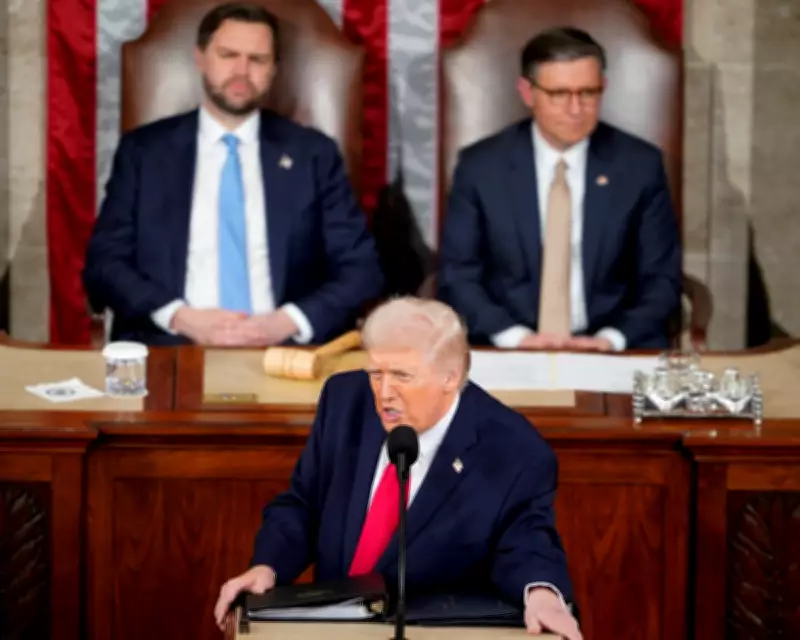
Donald Trump's recent State of the the Union address showcased a president appearing visibly tired and struggling with his delivery. Throughout the nearly two-hour speech, Trump gripped the podium with noticeable tension and experienced difficulty reading from teleprompters, his voice becoming audibly raspy as the evening progressed. The performance highlighted the physical toll of his presidency and raised questions about his capacity for sustained public speaking.
Substance Takes Backseat to Rhetoric
The address offered remarkably little in terms of new policy proposals or substantive solutions to national concerns. Instead, Trump recycled familiar themes, including attacks on immigrants, criticism of political opponents, and self-congratulatory remarks about his administration's achievements. The speech contradicted itself on crucial issues and misrepresented key facts, particularly regarding healthcare costs and immigration enforcement.
Trump claimed to have reduced healthcare expenses, despite his administration's attacks on Affordable Care Act subsidies actually increasing premiums for many Americans in recent months. He made non-sequitur attacks on transgender rights and offered questionable justifications for his administration's actions in Venezuela, claiming economic blackmail was creating opportunities for Venezuelan citizens.

The Entertainment Factor Fades
What was particularly striking about this address was Trump's apparent loss of his once-signature ability to entertain. A decade ago, Trump revolutionized American politics by merging governance with entertainment spectacle. However, Tuesday's speech proved long-winded, repetitive, and ultimately boring—a significant departure from the captivating performances that characterized his earlier political career.
The president frequently interrupted his own speech to address veterans in the audience and present medals as television stunts. He digressed into a lengthy discussion about the U.S. men's hockey team's recent Olympic gold medal victory, with team members parading through the House chambers wearing their awards. These theatrical elements failed to compensate for the speech's overall lack of coherence and substance.
Offensive Rhetoric Remains Intact
While Trump may have lost his entertainment value, he certainly hasn't lost his capacity to offend. The speech contained numerous inflammatory statements, particularly regarding immigration. Trump suggested that immigrants cause reckless driving because they cannot read English road signs and blamed immigrant communities for importing corruption to the United States.
In one particularly troubling segment, Trump singled out Somali-American communities in Minnesota, suggesting that corruption represents a cultural trait that immigrants bring with them to America—a racist line of reasoning previously advanced by Vice President JD Vance. This rhetoric stood in stark contrast to Trump's own administration's ethical challenges and acceptance of large sums from entities with business before the government.
Political Context and Public Reception
The timing of this lackluster performance couldn't be worse for the Trump administration. Recent polling aggregates show the president's approval rating at a concerning 38%, with economic concerns mounting among American voters. Despite Trump's claims of economic success, many Americans feel financially strained, with tariffs impacting consumer prices and inflation remaining stubbornly high.
Perhaps the most telling moment came when Trump berated Democratic representatives in the chamber, calling them "crazy" and accusing them of destroying the country. While Republicans stood and applauded, Democrats remained seated in polite silence—a visual representation of the deep political divisions that characterize contemporary American politics.

Questioning Political Traditions
Trump's State of the Union address raises fundamental questions about political traditions in the modern era. The Constitution requires periodic presidential updates to Congress, but doesn't specify the televised spectacle that has become standard practice. Trump's performance—rambling, factually challenged, and lacking substantive policy—made many viewers wonder about the continued relevance of such events.
The address also highlighted Trump's unique ability to render traditional political norms obsolete. When he separates facts from policymaking, relies on myth rather than expertise, and uses public platforms for personal grievances rather than national leadership, he challenges the very foundations of democratic governance and political discourse.
As the speech concluded, one couldn't help but question not just Trump's performance, but the entire exercise of modern political spectacle. In an era where entertainment once fused with governance, Trump's latest address suggests that even the entertainment value has diminished, leaving only the offensive rhetoric and political division that have come to define his presidency.