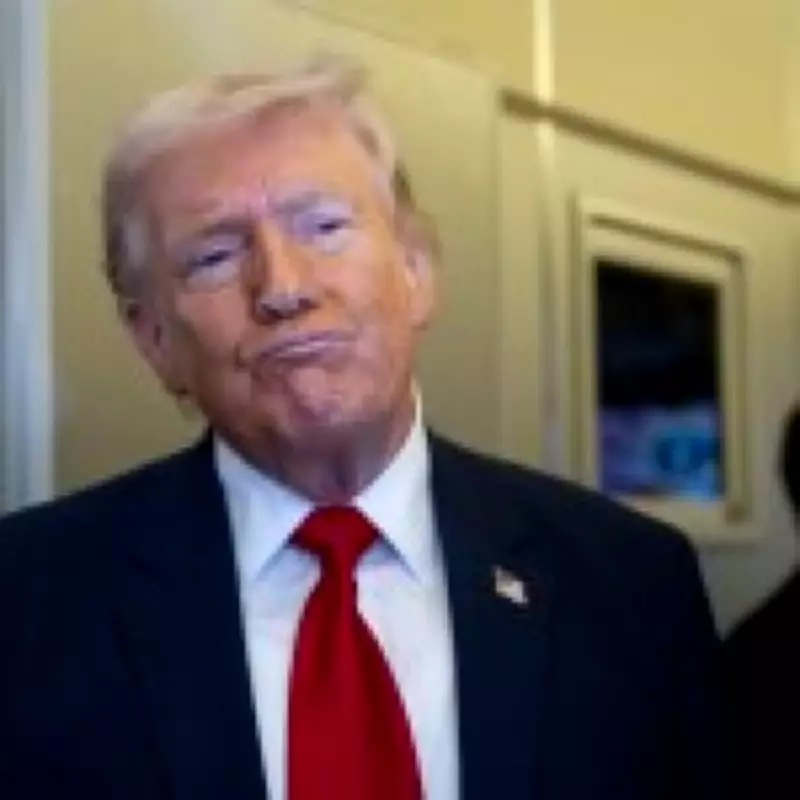
Trump's Accusations Against Media Expose Authoritarian Ambitions
In a recent Truth Social post, former President Donald Trump launched a scathing attack on news organizations, accusing them of spreading misinformation fabricated by Iran regarding the ongoing conflict. Without providing evidence, Trump labeled these outlets as 'criminal' and 'corrupt,' and called for them to face treason charges under U.S. law.
Treason, as legally defined, involves levying war against the United States or aiding its enemies, not merely publishing content that displeases a sitting president. Accurate reporting, especially when it challenges official narratives, is a cornerstone of journalism and essential for a functioning democracy.
Historical Context of Media Manipulation
Trump's strategy is not subtle; it reveals underlying issues with the war's historically low public support and the conflict's progression. This approach mirrors past governments that have attempted to control media during unpopular wars.

- During the Vietnam War, the Pentagon's daily briefings, known as the 'Five O'Clock Follies,' were notoriously detached from reality.
- In the Soviet-Afghan War, state media refused to acknowledge soldier deaths for years.
- George W. Bush's 'Mission Accomplished' banner in Iraq preceded eight more years of conflict.
These examples demonstrate that demanding optimistic headlines does not alter ground realities; it only delays accountability, often leading to increased casualties.
Threats to Media Independence
Trump expressed support for FCC Chair Brendan Carr's review of licenses for 'highly unpatriotic news organizations,' though the FCC lacks authority over national networks like CNN. The real danger lies in the threat itself, which can induce self-censorship in newsrooms.
Defense Secretary Pete Hegseth, a former Fox News host, further exacerbated concerns by calling for 'patriotic' reporters to write more positive headlines, such as replacing 'Mideast war intensifies' with 'Iran increasingly desperate.' This redefines patriotism as blind loyalty to Trump's narrative, rather than rigorous journalism that informs the public about war casualties, base attacks, and economic impacts.
Broader Implications for Democracy
Two weeks into the Iran conflict, Trump has struggled to justify the war's initiation or outline an exit strategy. As his poll numbers fluctuate and support wanes, even some allies express confusion. The media's reporting did not cause these trends; the war itself did.
When leaders demand media compliance, invoke treason charges, and dictate headlines, it signals an attempt to assume control, not demonstrate strength. This behavior underscores Trump's authoritarian desires, posing a threat to democratic principles. If journalists acquiesce, the erosion of free speech accelerates, creating a steeper slope toward autocracy.