Trump Declares 'Fraud' Crackdown in Democratic States, Taps Vance as 'Fraud Czar'
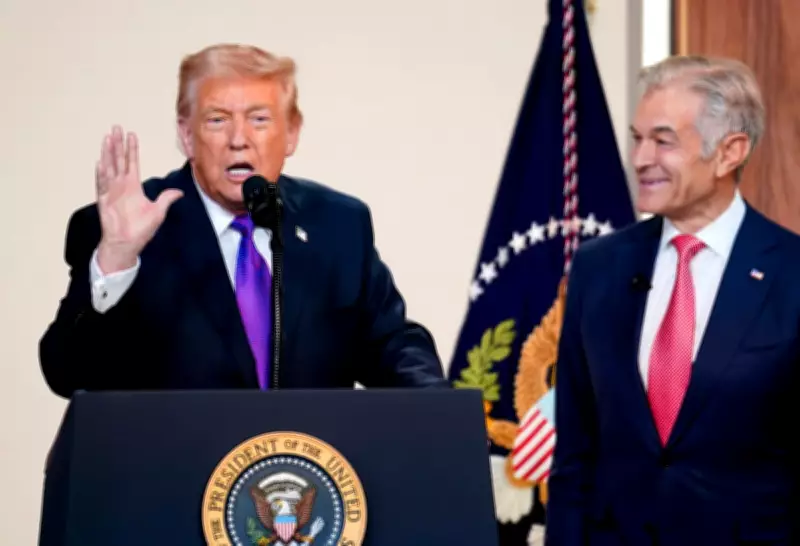
In a move that has sparked immediate controversy, former US President Donald Trump announced a sweeping crackdown on what he termed "fraud" in Democratic-led states, appointing his vice-president, JD Vance, to lead the effort as a newly created "fraud czar." The announcement, made via a Truth Social post on Friday, was swiftly followed by federal officials revealing a series of arrests in California linked to healthcare fraud, though Trump provided no evidence for his broader claims.
Baseless Allegations and Political Targeting
Trump asserted that fraud is "massive and pervasive" across the United States, particularly in "blue states where crooked Democrat politicians ... have had a 'free for all' in the unprecedented theft of taxpayer money." He specifically pointed to California, Illinois, Minnesota, Maine, and New York, alleging that the scale of fraud is so significant it could "literally be able to balance our American budget" if addressed. However, these statements were made without citing any verifiable data or sources, drawing criticism from opponents who view them as politically motivated attacks.
Trump emphasized Vance's role, stating that his vice-president is now "in charge of 'fraud' in the United States" and that this position will be "a major factor in how great the future of our country will be." This appointment comes amid a backdrop of increasing allegations from Trump allies that Democratic states are complicit in fraudulent activities, though such claims have often been disputed by state officials.

Arrests in California and Federal Actions
Coinciding with Trump's announcement, federal authorities arrested eight individuals in southern California for allegedly orchestrating over $50 million in healthcare fraud. According to the US Department of Justice, most of the accused, including healthcare professionals like nurses and a psychologist, schemed to defraud Medicare by operating "sham" hospice care facilities. These facilities reportedly used non-terminally ill individuals as beneficiaries, highlighting ongoing issues in the healthcare sector.
Dr. Mehmet Oz, the administrator for the Centers for Medicare and Medicaid Services, confirmed in a news conference that his agency plans to review every hospice in California as part of the crackdown. Akil Davis, assistant director at the FBI, noted that southern California is a "high-risk environment for hospice-related and many other forms of healthcare fraud," estimating that the US loses "hundreds of billions of dollars annually" to such schemes.
State Responses and Political Backlash
Democratic governors have pushed back strongly against Trump's allegations. California Governor Gavin Newsom defended his state, pointing out that California banned new hospice licenses in 2021 and has revoked over 280 licenses since 2024, while pursuing more than 100 criminal cases. Newsom criticized the Trump administration, stating, "The Trump Administration – home to the biggest fraudsters on Earth – is trying to blame California for issues with THEIR federal programs." He added that federal action came "only 15 months after Trump took office."
In New York, Governor Kathy Hochul's spokesperson, Jen Goodman, highlighted pre-existing efforts to combat fraud, including reforms that saved over $2 billion for taxpayers. She cautioned, "We won’t stand by as Donald Trump and JD Vance use 'fraud' as a disguise for their efforts to cut healthcare and rip critical programs away from New York’s most vulnerable." Minnesota's Democratic governor, Tim Walz, previously dismissed similar claims, arguing that Trump's actions have "nothing to do with fraud" and instead involve controversial measures like immigration raids that have led to protests and fatalities.
Broader Context and Historical Precedents
This crackdown is not Trump's first foray into alleging fraud in Democratic states. In December, he froze federal childcare funding to Minnesota over such accusations, and in February, Vance announced a temporary halt to more than $250 million in Medicaid funds to the state, citing the need to ensure proper stewardship of taxpayer money. Trump has also previously claimed that "there is more fraud in California than there is in Minnesota," though these assertions lack substantiation.

Since retaking office in January, Trump has granted presidential pardons to dozens of individuals convicted of white-collar crimes, including several fraud cases, raising questions about the consistency of his anti-fraud stance. Additionally, in a recent primetime address, Trump suggested that federal programs like Medicaid and Medicare should be handled at the state level, stating, "We’re fighting wars. We can’t take care of daycare," which aligns with his administration's budget proposals that prioritize defense spending while cutting other government programs.
The ongoing war on Iran, which cost $12.7 billion in its first six days, further complicates the fiscal landscape, as Trump's budget seeks to increase defense spending to its highest levels in decades. Critics argue that the focus on fraud in blue states may be a diversion from these broader economic and policy challenges.
As the situation unfolds, the Guardian has reached out to the governors' offices of Illinois, Minnesota, and Maine for comment, underscoring the national scope of this contentious issue. The crackdown, framed by Trump as a necessary measure against fraud, continues to fuel political divisions and debate over the veracity of the claims and the motivations behind them.